 Representative ListInscribed 2008
Description
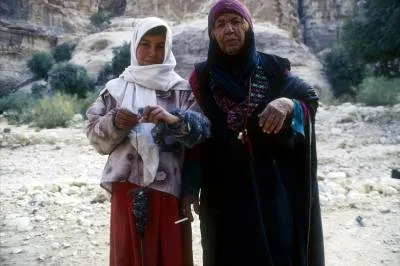
The Bedu are settled and nomadic communities living in the southern part of Jordan, particularly near Petra and Wadi Rum, within a region of semi-arid highlands and deserts. These conditions have allowed for the development and existence in complementary relationship of both types of communities.
Several Bedu tribes, namely the Bdul, the Ammarin and the Sa’idiyyin, continue to use the Nabatean water-collecting cisterns and caves near Petra. The Bedu communities inhabiting this area keep alive a traditional pastoral culture and related skills. The Bedu of Petra and Wadi Rum have preserved specific knowledge related to the flora and fauna of the area, traditional medicine, camel husbandry, tent-making craftsmanship, and tracking and climbing skills. The Bedu have developed an extensive knowledge of their environment and complex moral and social code, all of which is expressed and transmitted orally. Their rich mythology is manifested in various forms of oral expression, comprising poetry, folktales and songs that are closely linked to particular places and the history of these communities.
Over the last fifty years, more and more Bedu groups have settled down. The provision of education, housing, health care and sanitation has made a sedentary existence more attractive for many of them, leading, however, to the erosion of skills developed by the Bedu over generations. The increase of desert tourism and its demand for “authentic Bedu culture” should not be allowed to further degrade the intangible heritage of the Bedu in Petra and Wadi Rum.
Several Bedu tribes, namely the Bdul, the Ammarin and the Sa’idiyyin, continue to use the Nabatean water-collecting cisterns and caves near Petra. The Bedu communities inhabiting this area keep alive a traditional pastoral culture and related skills. The Bedu of Petra and Wadi Rum have preserved specific knowledge related to the flora and fauna of the area, traditional medicine, camel husbandry, tent-making craftsmanship, and tracking and climbing skills. The Bedu have developed an extensive knowledge of their environment and complex moral and social code, all of which is expressed and transmitted orally. Their rich mythology is manifested in various forms of oral expression, comprising poetry, folktales and songs that are closely linked to particular places and the history of these communities.
Over the last fifty years, more and more Bedu groups have settled down. The provision of education, housing, health care and sanitation has made a sedentary existence more attractive for many of them, leading, however, to the erosion of skills developed by the Bedu over generations. The increase of desert tourism and its demand for “authentic Bedu culture” should not be allowed to further degrade the intangible heritage of the Bedu in Petra and Wadi Rum.
Country
JordanOther heritage elements in Jordan
Representative List · Inscribed 2025Al-Mihrass tree: knowledge, skills and rituals associated with itRepresentative List · Inscribed 2025Arabic KohlRepresentative List · Inscribed 2025Bisht (men's Abaa): skills and practicesRepresentative List · Inscribed 2025The zaffa in the traditional weddingRepresentative List · Inscribed 2024Arabic coffee, a symbol of generosityRepresentative List · Inscribed 2024Henna: rituals, aesthetic and social practices
More Representative List elements
Inscribed 2012Al-Taghrooda, traditional Bedouin chanted poetry in the United Arab Emirates and the Sultanate of OmanInscribed 2025The zaffa in the traditional weddingInscribed 2009Katta AshulaInscribed 2025Culture of Sumanak/Sumalak cookingInscribed 2022Al-Mansaf in Jordan, a festive banquet and its social and cultural meaningsInscribed 2018Pottery skills of the women of Sejnane
Also inscribed in 2008
- Cultural space of Boysun District
- Cultural space of Jemaa el-Fna Square
- Mask dance of the drums from Drametse
- Al-Sirah Al-Hilaliyyah epic
- Shashmaqom music
- Ramlila, the traditional performance of the Ramayana
Data Source: UNESCO Intangible Cultural Heritage · UNESCO listing