

 Representative ListInscribed 2025
Description
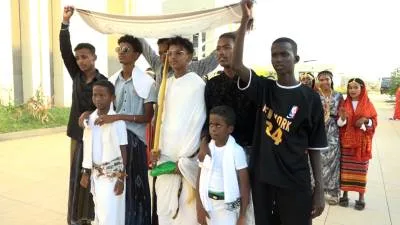
The zaffa is a traditional bridal procession that marks a couple’s transition from single to married life. It involves rituals, music, dance and a festive gathering. The zaffa begins with careful preparations. The bride undergoes cleansing rituals and applies henna, while special clothes, jewellery and other adornments are prepared for both the bride and groom. During the ceremony, symbolic acts are performed to protect the couple and bless their union. These vary according to practising communities and may include drinking milk, cracking an egg or wearing a relative’s cape.
The element involves a procession featuring music, joyful shouts and the throwing of sweets and flowers. The zaffa brings people together, uniting family, friends and the broader community. The related rituals and social practices convey shared cultural values and meanings within each community. People of different ages participate, with community elders ensuring respect for tradition, mothers preparing all stages of the process, and youth accompanying the bride and groom. Artists and craftspeople contribute songs, dances, clothing and decorations. Transmission occurs both informally, through participation and learning within the community, and formally, through schools, workshops and cultural programmes. The zaffa strengthens social bonds, promotes hospitality and supports community solidarity. It also provides a platform for artistic expression and celebration.
The element involves a procession featuring music, joyful shouts and the throwing of sweets and flowers. The zaffa brings people together, uniting family, friends and the broader community. The related rituals and social practices convey shared cultural values and meanings within each community. People of different ages participate, with community elders ensuring respect for tradition, mothers preparing all stages of the process, and youth accompanying the bride and groom. Artists and craftspeople contribute songs, dances, clothing and decorations. Transmission occurs both informally, through participation and learning within the community, and formally, through schools, workshops and cultural programmes. The zaffa strengthens social bonds, promotes hospitality and supports community solidarity. It also provides a platform for artistic expression and celebration.
Countries & Communities
DJKMUnited Arab EmiratesIraqJordanMauritaniaSOMore Representative List elements
Inscribed 2009Art of Azerbaijani AshiqInscribed 2020Art of miniatureInscribed 2017Kushtdepdi rite of singing and dancingInscribed 2017Spring celebration, HıdrellezInscribed 2025Kithul Madeema/Kithul Kapeema, an ancient indigenous technology for tapping Kithul in Sri LankaInscribed 2017Al-Qatt Al-Asiri, female traditional interior wall decoration in Asir, Saudi Arabia
Also inscribed in 2025
- Traditional Saree weaving art of Tangail
- Boreendo, Bhorindo: ancient dying folk musical instrument, its melodies, knowledge, and skills
- Al-Muhaibis: social practices and traditions associated with it
- Bisht (men's Abaa): skills and practices
- Kithul Madeema/Kithul Kapeema, an ancient indigenous technology for tapping Kithul in Sri Lanka
- Culture of Sumanak/Sumalak cooking
Data Source: UNESCO Intangible Cultural Heritage · UNESCO listing