

 Representative ListInscribed 2024
Description
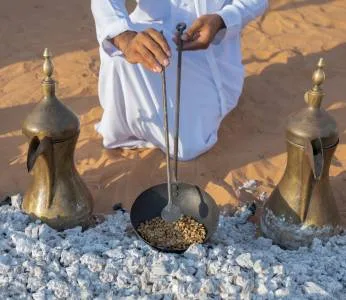
Arabic coffee highlights an important aspect of generosity in Arab societies and the associated traditions of hospitality. Serving and drinking Arabic coffee is a daily ritual for communities, groups and individuals. It is served at weddings and tribal gatherings (reconciliation and conflict resolution majalis) in all submitting States including Jordan (the new submitting State). The practice is associated with specific rituals and rules of etiquette that are passed down informally from one generation to the next. For instance, older people and guests are served first, and the coffee must be poured using the right hand. It is also customary for the person drinking the coffee to shake their cup to signal that they are done. Arabic coffee is a popular practice that is enjoyed by all segments of society. In gatherings, it is often accompanied by the recitation of poetry, stimulating discussions, and the exchange of memories. In Jordan, Arabic coffee is held in high regard as a symbol of generosity and hospitality in the offices of government officials and statesmen, including ministers, representatives, and directors, and is always present in the homes of Jordanians, whether in Jordan or abroad. In addition to being a symbol of generosity, hospitality and respect, it acts as a call for peace and dialogue within and across countries.
Countries & Communities
United Arab EmiratesOmanQatarSaudi ArabiaJordanOther heritage elements in United Arab Emirates
Representative List · Inscribed 2025Al Sadu, traditional weaving skills in the United Arab EmiratesRepresentative List · Inscribed 2025Arabic KohlRegister of Good Safeguarding Practices · Inscribed 2025Safeguarding programme for Al Sadu, traditional weaving skills in the United Arab EmiratesRepresentative List · Inscribed 2025Al Ahalla, a living performing art in the United Arab EmiratesRepresentative List · Inscribed 2025Bisht (men's Abaa): skills and practicesRepresentative List · Inscribed 2025The zaffa in the traditional wedding
More Representative List elements
Inscribed 2019Traditional turkmen carpet making art in TurkmenistanInscribed 2024The Epic of Samba GueladioInscribed 2009Ramman, religious festival and ritual theatre of the Garhwal Himalayas, IndiaInscribed 2021FalakInscribed 2023Midwifery: knowledge, skills and practicesInscribed 2024Henna: rituals, aesthetic and social practices
Also inscribed in 2024
- Henna: rituals, aesthetic and social practices
- Art of crafting and playing rubab/rabab
- Tandir craftsmanship and bread baking in Azerbaijan
- Kebaya: knowledge, skills, traditions and practices
- Breakfast culture in Malaysia: dining experience in a multi-ethnic society
- Myanmar traditional New Year Atā Thingyan festival
Data Source: UNESCO Intangible Cultural Heritage · UNESCO listing