 Representative ListInscribed 2008
Description
The Boysun District located in south-eastern Uzbekistan on the route from Asia Minor to India, is one of the oldest inhabited areas of Central Asia. With the diminishing importance of the Silk Road and the political changes in Central Asia, the region became quite isolated, which favoured the preservation of ancient traditions that show traces of several religions, including shamanistic beliefs, Zoroastrianism, Buddhism and Islam. Today the district is home to about 82,000 inhabitants.
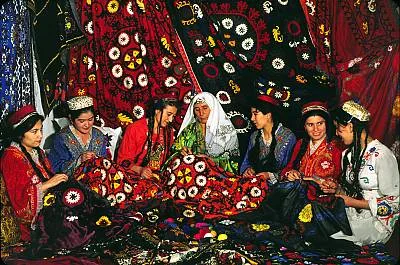
Numerous traditional rituals are still alive: on the eve of the spring festival of Navruz, for instance, a sowing ritual is held with offerings of food. Family rites also persist: 40 days after a birth, the evil spirits are chased away with fire and ashes; the circumcision of boys is accompanied by goat fights and various games, such as wrestling and horse races. Ancient practices are still often used to conduct wedding ceremonies, funeral rites and shamanistic rituals to cure the sick. Among other popular traditions are ritual chants linked to annual festivals, epic legends and dances. Wind or string instruments accompany the lyrical chants. The Shalola folk music ensemble has collected popular songs and made an inventory of traditional instruments and costumes. The members of the group have also documented legends, epics and old melodies in the villages.
The policy of the Soviet era imposed a cultural model which left little room for traditional Boysun cultural and artistic expression. Today, there is a clear need for assistance to provide the communities with musical instruments and with technical equipment to document the various cultural expressions.
Numerous traditional rituals are still alive: on the eve of the spring festival of Navruz, for instance, a sowing ritual is held with offerings of food. Family rites also persist: 40 days after a birth, the evil spirits are chased away with fire and ashes; the circumcision of boys is accompanied by goat fights and various games, such as wrestling and horse races. Ancient practices are still often used to conduct wedding ceremonies, funeral rites and shamanistic rituals to cure the sick. Among other popular traditions are ritual chants linked to annual festivals, epic legends and dances. Wind or string instruments accompany the lyrical chants. The Shalola folk music ensemble has collected popular songs and made an inventory of traditional instruments and costumes. The members of the group have also documented legends, epics and old melodies in the villages.
The policy of the Soviet era imposed a cultural model which left little room for traditional Boysun cultural and artistic expression. Today, there is a clear need for assistance to provide the communities with musical instruments and with technical equipment to document the various cultural expressions.
Country
UzbekistanOther heritage elements in Uzbekistan
Representative List · Inscribed 2025Traditional knowledge and skills in making Kyrgyz, Kazakh and Karakalpak yurts (Turkic nomadic dwellings)Urgent Safeguarding List · Inscribed 2025Art of crafting and playing KobyzRepresentative List · Inscribed 2024Nawrouz, Novruz, Nowrouz, Nowrouz, Nawrouz, Nauryz, Nooruz, Nowruz, Navruz, Nevruz, Nowruz, NavruzRepresentative List · Inscribed 2024Art of crafting and playing rubab/rababRepresentative List · Inscribed 2023Iftar/Eftari/Iftar/Iftor and its socio-cultural traditionsRepresentative List · Inscribed 2023Art of illumination: Təzhib/Tazhib/Zarhalkori/Tezhip/Naqqoshlik
More Representative List elements
Inscribed 2009Ramman, religious festival and ritual theatre of the Garhwal Himalayas, IndiaInscribed 2023Craftsmanship of mother of pearl inlayInscribed 2022Alheda'a, oral traditions of calling camel flocksInscribed 2012Craftsmanship and performance art of the Tar, a long-necked string musical instrumentInscribed 2021FalakInscribed 2025Traditional Saree weaving art of Tangail
Also inscribed in 2008
- Cultural space of Jemaa el-Fna Square
- Mask dance of the drums from Drametse
- Al-Sirah Al-Hilaliyyah epic
- Shashmaqom music
- Ramlila, the traditional performance of the Ramayana
- Cultural space of the Bedu in Petra and Wadi Rum
Data Source: UNESCO Intangible Cultural Heritage · UNESCO listing