 Representative ListInscribed 2008
Description
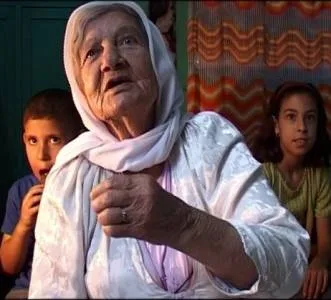
The Palestinian Hikaye is a narratiave expression practised by women.The fictitious tales, which have evolved over the centuries, deal with current concerns of Middle Eastern Arab society and family issues.The Hikaye offers a critique of society from the women’s perspective and draws a portrait of the social structure that directly pertains to the lives of women. Many tales describe women torn between duty and desire.
The Hikaye is usually narrated at home during winter evenings, at spontaneous and convivial events attended by small groups of women and children. Men rarely attend, as this is considered inappropriate. The expressive power of the narration lies in the use of language, emphasis, speech rhythms and vocal inflections as well as in the ability to capture the attention of the listeners and successfully transport them into a world of imagination and fantasy.The technique and style of narration follows linguistic and literary conventions that set it apart from other folk narrative genres. The tales are narrated in Palestinian dialect, either in rural fallahi or in urban madani. Almost every Palestinian woman over the age of 70 is a Hikaye teller, and the tradition is primarily carried on by elderly women. It is not unusual for girls and young boys to tell tales to one another for practice or pleasure.
However, the Hikaye is in decline due to the influence of mass media, which often induce people to regard their native customs as backward and inferior. As a consequence, the elder women tend to change form and content of the narrations. The continued disruption of the social life due to the current political situation in Palestine is another threat to the continuation of the Hikaye.
The Hikaye is usually narrated at home during winter evenings, at spontaneous and convivial events attended by small groups of women and children. Men rarely attend, as this is considered inappropriate. The expressive power of the narration lies in the use of language, emphasis, speech rhythms and vocal inflections as well as in the ability to capture the attention of the listeners and successfully transport them into a world of imagination and fantasy.The technique and style of narration follows linguistic and literary conventions that set it apart from other folk narrative genres. The tales are narrated in Palestinian dialect, either in rural fallahi or in urban madani. Almost every Palestinian woman over the age of 70 is a Hikaye teller, and the tradition is primarily carried on by elderly women. It is not unusual for girls and young boys to tell tales to one another for practice or pleasure.
However, the Hikaye is in decline due to the influence of mass media, which often induce people to regard their native customs as backward and inferior. As a consequence, the elder women tend to change form and content of the narrations. The continued disruption of the social life due to the current political situation in Palestine is another threat to the continuation of the Hikaye.
Country
PalestineOther heritage elements in Palestine
Representative List · Inscribed 2025Arabic KohlRepresentative List · Inscribed 2024Tradition of Nabulsi soap making in PalestineRepresentative List · Inscribed 2024Henna: rituals, aesthetic and social practicesRepresentative List · Inscribed 2023Dabkeh, traditional dance in PalestineRepresentative List · Inscribed 2023Arts, skills and practices associated with engraving on metals (gold, silver and copper)Representative List · Inscribed 2022Date palm, knowledge, skills, traditions and practices
More Representative List elements
Inscribed 2024Arabic coffee, a symbol of generosityInscribed 2021FalakInscribed 2016Tahteeb, stick gameInscribed 2024Tandir craftsmanship and bread baking in AzerbaijanInscribed 2019GnawaInscribed 2023Sadeh/Sada celebration
Also inscribed in 2008
- Cultural space of Boysun District
- Cultural space of Jemaa el-Fna Square
- Mask dance of the drums from Drametse
- Al-Sirah Al-Hilaliyyah epic
- Shashmaqom music
- Ramlila, the traditional performance of the Ramayana
Data Source: UNESCO Intangible Cultural Heritage · UNESCO listing