
 Representative ListInscribed 2023
Description
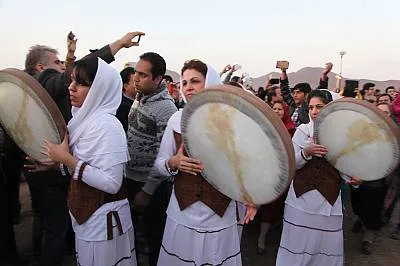
Sadeh, or Sada, is a celebration held annually on 30 January. In the folk calendar, it marks the day when farmlands are prepared for their next spring plantation and when people celebrate the end of the coldest winter days, with 50 days and 50 nights remaining to spring. Accordingly, ‘Sadeh’ means ‘one hundred’. The element enjoys diverse manifestations in Iran and Tajikistan. It involves singing, dancing and praying around a fire and offering blessings and dry or fresh fruits. The day also marks the traditional start of agricultural work for the new season, with farmers sprinkling fertilizer in their lands and gardeners pruning their trees and bushes. After the Sadeh celebration, people in the villages meet outdoors to collectively clean water-streams and pools and to repair bridges. In both countries, the practice, including the preparation of traditional dishes, is transmitted through participation, observation and storytelling. Media, social networks, scientific works, articles, conferences and symposiums also contribute to the transmission of Sadeh. The practice unites people from different cultural, ethnic and religious backgrounds, providing an opportunity for peaceful interactions around agricultural and food traditions and promoting diversity and the continuation of oral expressions and memory.
Countries & Communities
IranTajikistanOther heritage elements in Iran
Representative List · Inscribed 2025Ayeneh-Kari, the art of mirror-work in Persian architectureRepresentative List · Inscribed 2024Nawrouz, Novruz, Nowrouz, Nowrouz, Nawrouz, Nauryz, Nooruz, Nowruz, Navruz, Nevruz, Nowruz, NavruzRepresentative List · Inscribed 2024Ceremony of MehreganRepresentative List · Inscribed 2024Art of crafting and playing rubab/rababRepresentative List · Inscribed 2023Iftar/Eftari/Iftar/Iftor and its socio-cultural traditionsRepresentative List · Inscribed 2023Art of illumination: Təzhib/Tazhib/Zarhalkori/Tezhip/Naqqoshlik
More Representative List elements
Inscribed 2025The art of breeding Turkmen alabayInscribed 2021Traditional craft skills and arts of Al-NaoorInscribed 2024Kebaya: knowledge, skills, traditions and practicesInscribed 2018Pottery skills of the women of SejnaneInscribed 2014Al-Zajal, recited or sung poetryInscribed 2024Ceremony of Mehregan
Also inscribed in 2023
- Traditional knowledge, methods and practices concerning olive cultivation
- Procession and celebrations of Prophet Mohammed's birthday in Sudan
- Art of Akhal-Teke horse breeding and traditions of horses' decoration
- Harees dish: know-how, skills and practices
- Ceramic arts in Uzbekistan
- Craftsmanship of mother of pearl inlay
Data Source: UNESCO Intangible Cultural Heritage · UNESCO listing