 Representative ListInscribed 2016
Description
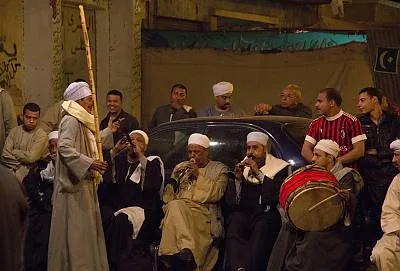
In ancient Egypt, tahteeb was used as a form of martial arts. Its role has since changed to that of a festive game but some of the symbolism and values associated with the practice remain. Performed in front of an audience, it involves a brief, non-violent interchange between two adversaries, each wielding a long stick while folk music plays in the background. Complete control must be exercised as no striking is allowed. Practitioners are male both young and old, mostly from Saeedy populations in upper Egypt, particularly rural areas where the tahteeb stick has been used by inhabitants as part of their daily lives and considered a sign of manhood. The rules of the game are based on values such as mutual respect, friendship, courage, strength, chivalry and pride. Tahteeb is practised in public and private social settings. Sometimes competitions are held to encourage new players and special tahteeb evenings involving different governorates that can last almost a week. Transmission occurs within families, neighbourhoods and to anyone who wishes to learn. The game gives participants confidence from skills acquired and a sense of pride performing before their community. It also helps to strengthen family ties and foster good communal relations.
Country
EgyptOther heritage elements in Egypt
Representative List · Inscribed 2025Koshary, daily life dish and practices associated with itRepresentative List · Inscribed 2024Semsemiah: instrument crafting and playingRepresentative List · Inscribed 2024Henna: rituals, aesthetic and social practicesRepresentative List · Inscribed 2023Arts, skills and practices associated with engraving on metals (gold, silver and copper)Representative List · Inscribed 2022Date palm, knowledge, skills, traditions and practicesRepresentative List · Inscribed 2022Festivals related to the Journey of the Holy family in Egypt
More Representative List elements
Inscribed 2023Procession and celebrations of Prophet Mohammed's birthday in SudanInscribed 2015Alardah Alnajdiyah, dance, drumming and poetry in Saudi ArabiaInscribed 2024The Epic of Samba GueladioInscribed 2016Palov culture and traditionInscribed 2024Arabic coffee, a symbol of generosityInscribed 2013Mediterranean diet
Also inscribed in 2016
- Flatbread making and sharing culture: Lavash, Katyrma, Jupka, Yufka
- Khidr Elias feast and its vows
- Oshi Palav, a traditional meal and its social and cultural contexts in Tajikistan
- Palov culture and tradition
- Mangal Shobhajatra on Pahela Baishakh
- Yoga
Data Source: UNESCO Intangible Cultural Heritage · UNESCO listing