 Representative ListInscribed 2021
Description
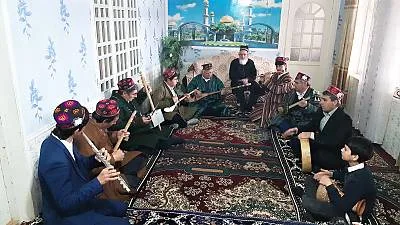
Falak, meaning ‘heaven’, ‘fortune’ and ‘universe’, is the traditional folklore music of the mountain people of Tajikistan. The expressive and philosophical musical genre may be performed by a male or female soloist, either acappella, or with a single instrumental accompaniment or an ensemble and dancers. Characterized by their high range, falak songs most often relate to love, pain, suffering, the homeland, and separation and the hope of reunion between a parent and a child or between two lovers. The instruments used for falak performances include traditional Tajikistani percussion and string instruments, such as violins and flutes. Falak performers, known as falakkhons, are the traditional singers and instrumentalists who perform falak during festivities, ceremonies and ritual events. However, the music may be performed in many contexts, including outdoors while working in the fields or looking after herds in the mountains, or during feasts and social gatherings. It is also performed during the annual ‘Day of Falak’ festival. Falak is viewed as a state of mind and an identity marker for the mountain communities. The tradition is passed from one generation to the next within families and through formal education.
Country
TajikistanOther heritage elements in Tajikistan
Representative List · Inscribed 2025Culture of Sumanak/Sumalak cookingRepresentative List · Inscribed 2024Nawrouz, Novruz, Nowrouz, Nowrouz, Nawrouz, Nauryz, Nooruz, Nowruz, Navruz, Nevruz, Nowruz, NavruzRepresentative List · Inscribed 2024Ceremony of MehreganRepresentative List · Inscribed 2024Art of crafting and playing rubab/rababRepresentative List · Inscribed 2023Art of illumination: Təzhib/Tazhib/Zarhalkori/Tezhip/NaqqoshlikRepresentative List · Inscribed 2023Traditional knowledge and skills of production of the atlas and adras fabrics
More Representative List elements
Inscribed 2014Al-Zajal, recited or sung poetryInscribed 2023Ceramic arts in UzbekistanInscribed 2017Kushtdepdi rite of singing and dancingInscribed 2012Al-Taghrooda, traditional Bedouin chanted poetry in the United Arab Emirates and the Sultanate of OmanInscribed 2008Tradition of Vedic chantingInscribed 2025Al-Muhaibis: social practices and traditions associated with it
Also inscribed in 2021
- Falconry, a living human heritage
- Traditional craft skills and arts of Al-Naoor
- Bakhshi art
- Nomad games, rediscovering heritage, celebrating diversity
- Fjiri
- Durga Puja in Kolkata
Data Source: UNESCO Intangible Cultural Heritage · UNESCO listing