 Representative ListInscribed 2025
Description
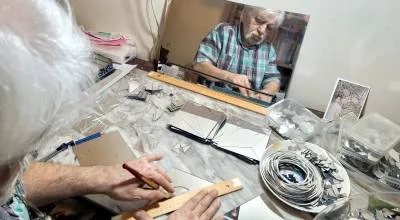
Ayeneh-Kari, or mirror-work, refers to the handcrafted art of decorating architectural surfaces such as ceilings, walls, domes, columns and panels using cut pieces of mirrors. The process entails cutting and shaping mirrors into geometric patterns or organic shapes and gluing them onto the surfaces to create designs that reflect light and brighten the space. The art combines several skills, from design, mirror cutting and plastering to painting and mosaic work. For practising communities, mirrors and water are symbols of purity and illumination, and Ayeneh-Kari embodies the importance of light and enlightenment.
The practice of Ayeneh-Kari is passed down both informally through apprenticeships and workshops and formally through universities, non-governmental organizations and training institutes. In most cases, Ayeneh-Kari is a career transmitted across several generations, taught by grandfathers, fathers and uncles to descendants. Ayeneh-Kari masters occupy a highly respected social position, and the art is recognized simultaneously as a luxurious and spiritual expression, ornamenting all kinds of traditional and contemporary spaces, from holy shrines and religious sites to royal palaces and private residences. An inclusive art form, Ayeneh-Kari is practised across various groups and continues to hold significance in both historical restoration and modern design.
The practice of Ayeneh-Kari is passed down both informally through apprenticeships and workshops and formally through universities, non-governmental organizations and training institutes. In most cases, Ayeneh-Kari is a career transmitted across several generations, taught by grandfathers, fathers and uncles to descendants. Ayeneh-Kari masters occupy a highly respected social position, and the art is recognized simultaneously as a luxurious and spiritual expression, ornamenting all kinds of traditional and contemporary spaces, from holy shrines and religious sites to royal palaces and private residences. An inclusive art form, Ayeneh-Kari is practised across various groups and continues to hold significance in both historical restoration and modern design.
Country
IranOther heritage elements in Iran
Representative List · Inscribed 2024Nawrouz, Novruz, Nowrouz, Nowrouz, Nawrouz, Nauryz, Nooruz, Nowruz, Navruz, Nevruz, Nowruz, NavruzRepresentative List · Inscribed 2024Ceremony of MehreganRepresentative List · Inscribed 2024Art of crafting and playing rubab/rababRepresentative List · Inscribed 2023Iftar/Eftari/Iftar/Iftor and its socio-cultural traditionsRepresentative List · Inscribed 2023Art of illumination: Təzhib/Tazhib/Zarhalkori/Tezhip/NaqqoshlikRepresentative List · Inscribed 2023Sadeh/Sada celebration
More Representative List elements
Inscribed 2020Ong Chun/Wangchuan/Wangkang ceremony, rituals and related practices for maintaining the sustainable connection between man and the oceanInscribed 2022Sericulture and traditional production of silk for weavingInscribed 2017Art of crafting and playing with Kamantcheh/Kamancha, a bowed string musical instrumentInscribed 2022Date palm, knowledge, skills, traditions and practicesInscribed 2024Cultural practices related to Taif rosesInscribed 2023Garba of Gujarat
Also inscribed in 2025
- Traditional Saree weaving art of Tangail
- Boreendo, Bhorindo: ancient dying folk musical instrument, its melodies, knowledge, and skills
- The zaffa in the traditional wedding
- Al-Muhaibis: social practices and traditions associated with it
- Bisht (men's Abaa): skills and practices
- Kithul Madeema/Kithul Kapeema, an ancient indigenous technology for tapping Kithul in Sri Lanka
Data Source: UNESCO Intangible Cultural Heritage · UNESCO listing