

 Representative ListInscribed 2023
Description
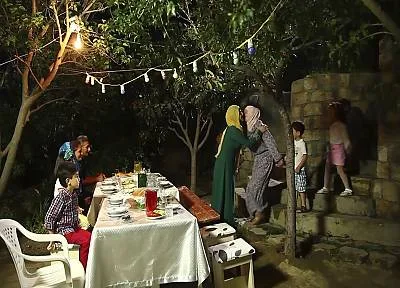
Iftar (also called Eftari, İftar or Iftor in practicing countries) is observed by Muslims at sunset in the month of Ramadan (the ninth month in the lunar calendar), upon completion of all religious and ceremonial rites. Observed by people of all ages, genders and backgrounds, it marks the daily termination of the hardships of fasting from dawn to sunset. The evening prayer is followed by activities such as praying ceremonies, music, storytelling, games, preparing and serving traditional and local meals and marriage arrangements. For communities, it often takes the form of gatherings or meals, strengthening family and community ties and promoting charity, solidarity and social exchange. The ceremonies and rituals related to Iftar are also practised by people who do not necessarily fast during the month of Ramadan. The knowledge and skills are typically transmitted within families through oral instruction, observation and participation, and children and youth are often entrusted with preparing components of traditional meals. During this process, parents also transmit knowledge about the benefits of fasting and the social values and functions of Iftar. Iftar is often supported by governmental entities, NGOs and charities, as well as through television, radio, press and social media.
Countries & Communities
AzerbaijanIranTurkeyUzbekistanOther heritage elements in Azerbaijan
Representative List · Inscribed 2024Nawrouz, Novruz, Nowrouz, Nowrouz, Nawrouz, Nauryz, Nooruz, Nowruz, Navruz, Nevruz, Nowruz, NavruzRepresentative List · Inscribed 2024Tandir craftsmanship and bread baking in AzerbaijanRepresentative List · Inscribed 2023Craftsmanship and performing art of balaban/meyRepresentative List · Inscribed 2023Art of illumination: Təzhib/Tazhib/Zarhalkori/Tezhip/NaqqoshlikRepresentative List · Inscribed 2023Craftsmanship of mother of pearl inlayRepresentative List · Inscribed 2022Telling tradition of Nasreddin Hodja/ Molla Nesreddin/ Molla Ependi/ Apendi/ Afendi Kozhanasyr Anecdotes
More Representative List elements
Inscribed 2016Traditional craftsmanship of Çini-makingInscribed 2022Alheda'a, oral traditions of calling camel flocksInscribed 2008Shashmaqom musicInscribed 2008Arts of the Meddah, public storytellersInscribed 2025Al Sadu, traditional weaving skills in the United Arab EmiratesInscribed 2012Al-Taghrooda, traditional Bedouin chanted poetry in the United Arab Emirates and the Sultanate of Oman
Also inscribed in 2023
- Traditional knowledge, methods and practices concerning olive cultivation
- Procession and celebrations of Prophet Mohammed's birthday in Sudan
- Art of Akhal-Teke horse breeding and traditions of horses' decoration
- Harees dish: know-how, skills and practices
- Ceramic arts in Uzbekistan
- Craftsmanship of mother of pearl inlay
Data Source: UNESCO Intangible Cultural Heritage · UNESCO listing