 Representative ListInscribed 2024
Description
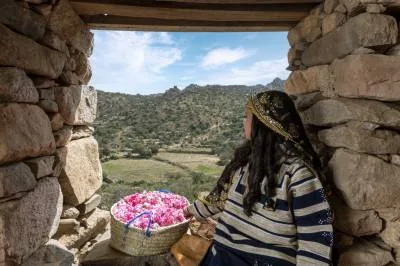
In the Taif region of Saudi Arabia, rose practices are a key part of the inhabitants’ cultural heritage and identity. From December to February, farmers fertilize and water the land, prune the rose bushes, and plant cuttings. The harvest season begins in March and lasts thirty-five to forty-five days. During this time, farmers and their families and friends pick the roses in the early morning and transport them to the local market to be sold or to their houses to be distilled. Communities use rose water and essential oil in beauty products, traditional medicine, traditional dishes, and to flavour drinks. One local custom entails throwing fresh roses or petals in front of guests to celebrate their arrival. Taif roses and rose water are also presented as gifts to family and friends, including outside the Taif region. Rose practices are transmitted within families through observation and participation, with children supporting their parents in the cultivation, harvesting, distillation and preparation of local rose products. Organizations and cooperatives also organize training sessions on Taif rose cultivation. Rose practices reinforce social cohesion in the region, as they are an integral part of social and religious rituals. They are also an important source of income.
Country
Saudi ArabiaOther heritage elements in Saudi Arabia
Representative List · Inscribed 2025Arabic KohlRepresentative List · Inscribed 2025Traditional weaving of Al SaduRepresentative List · Inscribed 2025Bisht (men's Abaa): skills and practicesRepresentative List · Inscribed 2024Semsemiah: instrument crafting and playingRepresentative List · Inscribed 2024Arabic coffee, a symbol of generosityRepresentative List · Inscribed 2024Henna: rituals, aesthetic and social practices
More Representative List elements
Inscribed 2023Mahadra, a community system for transmission of traditional knowledge and oral expressionsInscribed 2012Mesir Macunu festivalInscribed 2009Radif of Iranian musicInscribed 2008Arts of the Meddah, public storytellersInscribed 2008Palestinian HikayeInscribed 2017Al-Qatt Al-Asiri, female traditional interior wall decoration in Asir, Saudi Arabia
Also inscribed in 2024
- Henna: rituals, aesthetic and social practices
- Art of crafting and playing rubab/rabab
- Tandir craftsmanship and bread baking in Azerbaijan
- Kebaya: knowledge, skills, traditions and practices
- Breakfast culture in Malaysia: dining experience in a multi-ethnic society
- Myanmar traditional New Year Atā Thingyan festival
Data Source: UNESCO Intangible Cultural Heritage · UNESCO listing