
 Representative ListInscribed 2024
Description
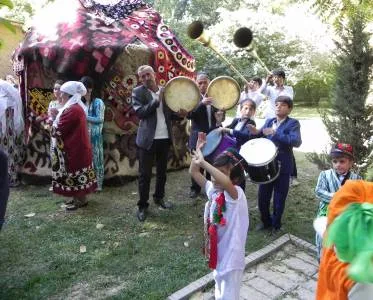
In Tajikistan and the Islamic Republic of Iran, Mehregan is a religious celebration that is tied to the autumn harvest. Every year, from 2 October to 2 November, communities express gratitude to God for their livestock and crops. The rituals performed during the ceremony and the products featured vary according to the region and to the beliefs of the practitioners. For instance, Zoroastrian communities celebrate by reciting parts of their holy book, whereas Muslims recite special prayers. Both communities share the ritual of setting a table of goods, such as pomegranates, watermelons, pears, limes and lemons, grapes, apples, rice and wheat. They prepare various dishes and serve nuts, sweets and special drinks. They also play music, sing and dance. Observed by people regardless of gender and age, the celebrations include music, songs, dances, theatre and local sports performances (such as wrestling). During the ceremony, the communities organize flower exhibitions and sell or display related handicrafts and products. The practice is transmitted informally, through storytelling and participation in the planning and performance of the festivities. Schools and higher education institutes also contribute to its transmission. In addition to celebrating nature, Mehregan promotes social cohesion, as it unites people of different ages, genders, ethnicities, religions and backgrounds.
Countries & Communities
TajikistanIranOther heritage elements in Tajikistan
Representative List · Inscribed 2025Culture of Sumanak/Sumalak cookingRepresentative List · Inscribed 2024Nawrouz, Novruz, Nowrouz, Nowrouz, Nawrouz, Nauryz, Nooruz, Nowruz, Navruz, Nevruz, Nowruz, NavruzRepresentative List · Inscribed 2024Art of crafting and playing rubab/rababRepresentative List · Inscribed 2023Art of illumination: Təzhib/Tazhib/Zarhalkori/Tezhip/NaqqoshlikRepresentative List · Inscribed 2023Traditional knowledge and skills of production of the atlas and adras fabricsRepresentative List · Inscribed 2023Sadeh/Sada celebration
More Representative List elements
Inscribed 2017Dolma making and sharing tradition, a marker of cultural identityInscribed 2021Falconry, a living human heritageInscribed 2023Arts, skills and practices associated with engraving on metals (gold, silver and copper)Inscribed 2016Traditional craftsmanship of Çini-makingInscribed 2020Knowledge, know-how and practices pertaining to the production and consumption of couscousInscribed 2020Charfia fishing in the Kerkennah Islands
Also inscribed in 2024
- Henna: rituals, aesthetic and social practices
- Art of crafting and playing rubab/rabab
- Tandir craftsmanship and bread baking in Azerbaijan
- Kebaya: knowledge, skills, traditions and practices
- Breakfast culture in Malaysia: dining experience in a multi-ethnic society
- Myanmar traditional New Year Atā Thingyan festival
Data Source: UNESCO Intangible Cultural Heritage · UNESCO listing