 Representative ListInscribed 2008
Description
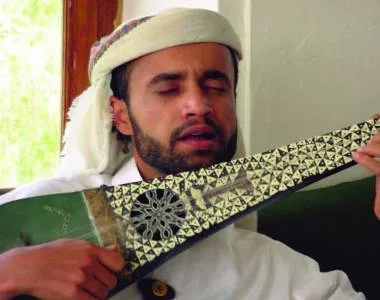
The Song of Sana’a, also known as al-Ghina al-San’ani, designates a group of songs that belongs to a rich musical tradition practised throughout Yemen. Derived from various poetic traditions dating from the fourteenth century, this genre constitutes an integral part of social events, such as the samra marriage evenings and the magyal, the daily afternoon gathering of friends and colleagues.
The songs are interpreted by a solo singer accompanied by two ancient instruments: the qanbus (the Yemeni lute), and the sahn nuhasi, a copper tray which is balanced upon the player’s thumbs and lightly struck with the other eight fingers. There are a large number of melodic types. Modulation from one to another within a single performance is rare, but the artistry of a performer is judged by his ability to embellish a melody in order to highlight the meaning of the text and to move the listeners. The poetic repertory, written in both Yemeni dialect and classical Arabic, abounds in wordplay and is renowned for its emotional content. The texts of the songs constitute the most revered and frequently quoted body of poems in Yemen. Although the songs are directly associated with Yemen’s historical capital, Sana’a, they can be heard in many towns and rural areas throughout Yemen. In fact, the poetic repertory often draws on dialects from different parts of the country. In addition, traditional melodies are regularly borrowed by performers of other genres, including rural dances and contemporary music.
Although Yemenis remain very proud of the Song of Sana’a tradition, attendance has dwindled and today’s musicians – despite their growing numbers – know only a handful of old songs, which they interject in their performances before moving on to lighter contemporary pieces. It is just a few elderly musicians who have preserved the breadth of the Song of Sana’a tradition and the subtleties of its interpretation.
The songs are interpreted by a solo singer accompanied by two ancient instruments: the qanbus (the Yemeni lute), and the sahn nuhasi, a copper tray which is balanced upon the player’s thumbs and lightly struck with the other eight fingers. There are a large number of melodic types. Modulation from one to another within a single performance is rare, but the artistry of a performer is judged by his ability to embellish a melody in order to highlight the meaning of the text and to move the listeners. The poetic repertory, written in both Yemeni dialect and classical Arabic, abounds in wordplay and is renowned for its emotional content. The texts of the songs constitute the most revered and frequently quoted body of poems in Yemen. Although the songs are directly associated with Yemen’s historical capital, Sana’a, they can be heard in many towns and rural areas throughout Yemen. In fact, the poetic repertory often draws on dialects from different parts of the country. In addition, traditional melodies are regularly borrowed by performers of other genres, including rural dances and contemporary music.
Although Yemenis remain very proud of the Song of Sana’a tradition, attendance has dwindled and today’s musicians – despite their growing numbers – know only a handful of old songs, which they interject in their performances before moving on to lighter contemporary pieces. It is just a few elderly musicians who have preserved the breadth of the Song of Sana’a tradition and the subtleties of its interpretation.
Country
YemenOther heritage elements in Yemen
Representative List · Inscribed 2025Hadrami Dan gatheringRepresentative List · Inscribed 2024Henna: rituals, aesthetic and social practicesRepresentative List · Inscribed 2023Arts, skills and practices associated with engraving on metals (gold, silver and copper)Representative List · Inscribed 2022Date palm, knowledge, skills, traditions and practicesRepresentative List · Inscribed 2021Arabic calligraphy: knowledge, skills and practices
More Representative List elements
Inscribed 2023Craftsmanship and performing art of balaban/meyInscribed 2010Kırkpınar oil wrestling festivalInscribed 2009Katta AshulaInscribed 2009Radif of Iranian musicInscribed 2019SilatInscribed 2014Askiya, the art of wit
Also inscribed in 2008
- Cultural space of Boysun District
- Cultural space of Jemaa el-Fna Square
- Mask dance of the drums from Drametse
- Al-Sirah Al-Hilaliyyah epic
- Shashmaqom music
- Ramlila, the traditional performance of the Ramayana
Data Source: UNESCO Intangible Cultural Heritage · UNESCO listing