 Representative ListInscribed 2025
Description
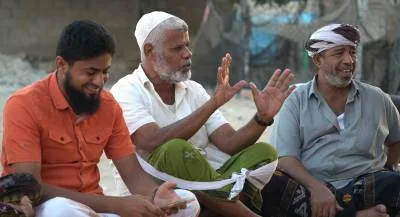
Hadrami Dan is a traditional performance and community gathering that combines spontaneous poetry, music and dance, widespread practiced across Hadhramaut Governorate. A typical Hadrami Dan gathering includes at least one singer and poet, with the audience seated in rows or circles. The performance begins with the rhythmic chanting of the word dan, set to a chosen melody. A poet then improvises a verse that complements the melody. The verse is followed by others, created and performed by the same poet or by other participants. The melodies, called ‘aswat’, vary in rhythm and tone and can be played using traditional and modern instruments like ouds, flutes, violins and traditional drums.
This cultural practice is often accompanied by food and tea, creating a warm, communal atmosphere. It involves many roles, from the performers and the writers who record the lyrics, to the costume makers, tea makers, organizers and technical crews who support the gathering. Hadrami Dan is practised by people of all ages and genders and is passed down informally through families and community events, as well as through training in cultural centres and the media. In addition to being a source of income for practitioners, the gatherings foster social cohesion, mutual understanding and dialogue.
This cultural practice is often accompanied by food and tea, creating a warm, communal atmosphere. It involves many roles, from the performers and the writers who record the lyrics, to the costume makers, tea makers, organizers and technical crews who support the gathering. Hadrami Dan is practised by people of all ages and genders and is passed down informally through families and community events, as well as through training in cultural centres and the media. In addition to being a source of income for practitioners, the gatherings foster social cohesion, mutual understanding and dialogue.
Country
YemenOther heritage elements in Yemen
Representative List · Inscribed 2024Henna: rituals, aesthetic and social practicesRepresentative List · Inscribed 2023Arts, skills and practices associated with engraving on metals (gold, silver and copper)Representative List · Inscribed 2022Date palm, knowledge, skills, traditions and practicesRepresentative List · Inscribed 2021Arabic calligraphy: knowledge, skills and practicesRepresentative List · Inscribed 2008Song of Sana’a
More Representative List elements
Inscribed 2023Al-Man’ouché, an emblematic culinary practice in LebanonInscribed 2010Music of the Bakhshis of KhorasanInscribed 2016Traditional craftsmanship of Çini-makingInscribed 2017Kok boru, traditional horse gameInscribed 2019Khorazm dance, LazgiInscribed 2017Kushtdepdi rite of singing and dancing
Also inscribed in 2025
- Traditional Saree weaving art of Tangail
- Boreendo, Bhorindo: ancient dying folk musical instrument, its melodies, knowledge, and skills
- The zaffa in the traditional wedding
- Al-Muhaibis: social practices and traditions associated with it
- Bisht (men's Abaa): skills and practices
- Kithul Madeema/Kithul Kapeema, an ancient indigenous technology for tapping Kithul in Sri Lanka
Data Source: UNESCO Intangible Cultural Heritage · UNESCO listing