 Representative ListInscribed 2024
Description
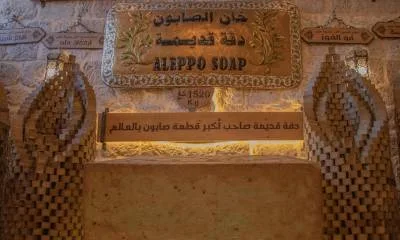
The crafting of Aleppo ghar soap in the Syrian Arab Republic is based on traditional knowledge and skills that combine natural, locally produced olive oil (metraf) and laurel oil (ghar). In autumn, families pick the wild laurel berries from surrounding forests and boil them in water until they split. When the oil rises to the surface, it is skimmed off. The soap production begins in winter. Natural lye, metraf and ghar are combined and cooked. The mixture is poured on the floors of traditional soap factories and allowed to cool. Craftsmen then don large wooden shoes to cut the giant slab into cubes, using their body weight and a rake. Each cube is hand-stamped with the family name in an expression of family legacy and identity. The stamped soap cubes are stacked into cylindrical towers or pyramids to facilitate airflow and are stored to dry for six to nine months. Aleppo craftsmanship is transmitted informally within families, with children helping to collect olives and berries. Girls observe their mothers extracting the oil, and children learn soap-making from their fathers. The collaborative production process promotes community and family unity and intergenerational dialogue.
Country
SyriaOther heritage elements in Syria
Representative List · Inscribed 2025Arabic KohlRepresentative List · Inscribed 2025Bisht (men's Abaa): skills and practicesUrgent Safeguarding List · Inscribed 2023Traditional Syrian glassblowingRepresentative List · Inscribed 2022Crafting and playing the OudRepresentative List · Inscribed 2021Al-Qudoud al-HalabiyaRepresentative List · Inscribed 2021Falconry, a living human heritage
More Representative List elements
Inscribed 2022Knowledge and practices related to cultivating Khawlani coffee beansInscribed 2025The art of breeding Turkmen alabayInscribed 2025Behzad's style of miniature artInscribed 2013Turkish coffee culture and traditionInscribed 2024Cultural practices related to Taif rosesInscribed 2023Traditional knowledge and skills of production of the atlas and adras fabrics
Also inscribed in 2024
- Henna: rituals, aesthetic and social practices
- Art of crafting and playing rubab/rabab
- Tandir craftsmanship and bread baking in Azerbaijan
- Kebaya: knowledge, skills, traditions and practices
- Breakfast culture in Malaysia: dining experience in a multi-ethnic society
- Myanmar traditional New Year Atā Thingyan festival
Data Source: UNESCO Intangible Cultural Heritage · UNESCO listing