 Urgent Safeguarding ListInscribed 2023
Description
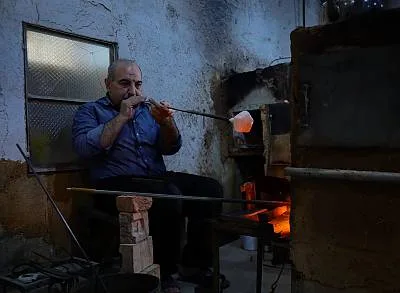
Traditional glassblowing in Damascus is the artisanal craft of creating glass objects using pieces of waste glass. To create an object, pieces of glass are placed inside a handmade brick oven to melt. The craftsman twists the molten glass around a hollow metal rod. He then blows into the rod to inflate the glass, using metal tongs to mould it into the desired shape, such as a cup, vase, lamp or ornament. Powdered dyes are used to colour the glass while it is still melted or to decorate the objects once they have cooled and hardened. Cultural symbols, such as the hand of Fatima, are often painted or engraved on the glass. Damascene glassblowing is characterized by the white, blue, green and crimson colours used, as well as the painted gold motifs. In the past, the practice remained within specific families, with the father passing on the secrets of the craft to his children. Today, the related knowledge and skills are passed down informally through hands-on practice and instruction in workshops. A source of livelihood for artisans, Damascene glassblowing contributes to a sense of continuity and belonging. It is also associated with social, spiritual and historical spaces and with the practices that take place therein.
Country
SyriaOther heritage elements in Syria
Representative List · Inscribed 2025Arabic KohlRepresentative List · Inscribed 2025Bisht (men's Abaa): skills and practicesRepresentative List · Inscribed 2024Craftsmanship of Aleppo Ghar soapRepresentative List · Inscribed 2022Crafting and playing the OudRepresentative List · Inscribed 2021Al-Qudoud al-HalabiyaRepresentative List · Inscribed 2021Falconry, a living human heritage
More Urgent Safeguarding List elements
Inscribed 2012Ala-kiyiz and Shyrdak, art of Kyrgyz traditional felt carpetsInscribed 2017Al Azi, art of performing praise, pride and fortitude poetryInscribed 2025Art of crafting and playing KobyzInscribed 2018Suri Jagek (observing the sun), traditional meteorological and astronomical practice based on the observation of the sun, moon and stars in reference to the local topographyInscribed 2018Yalli (Kochari, Tenzere), traditional group dances of NakhchivanInscribed 2017Taskiwin, martial dance of the western High Atlas
Also inscribed in 2023
- Traditional knowledge, methods and practices concerning olive cultivation
- Procession and celebrations of Prophet Mohammed's birthday in Sudan
- Art of Akhal-Teke horse breeding and traditions of horses' decoration
- Harees dish: know-how, skills and practices
- Ceramic arts in Uzbekistan
- Craftsmanship of mother of pearl inlay
Data Source: UNESCO Intangible Cultural Heritage · UNESCO listing