
 Representative ListInscribed 2022
Description
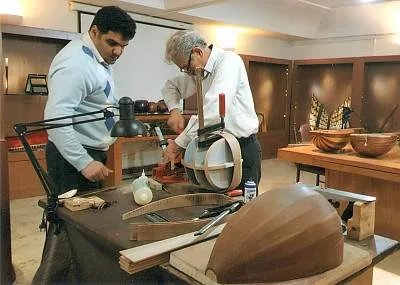
The oud is a traditional, lute-type instrument played in Iran and Syria. The musician places the short-necked instrument on their leg, fretting with one hand and plucking the chords with the other. In both countries, the oud consists of a pear-shaped sound box made of walnut, rose, poplar, ebony or apricot wood. Crafting an oud takes up to twenty-five days, during which the wood is left to dry and harden and is then treated with water and steam for fifteen days to build its durability. Ouds are crafted in different sizes for different sized-bodies and decorated with wooden carvings and mosaic patterns. They typically have five twin strings, though a sixth string can be added. With its bass and baritone ranges, the instrument can produce melodic and harmonic tones. The oud is played solo or in ensembles and is accompanied by traditional songs and dance in a wide range of events. Its practice is transmitted through apprenticeships and in musical centres, colleges and universities in urban areas. Crafters are mostly men, although in recent years young women have developed an interest as well.
Countries & Communities
IranSyriaOther heritage elements in Iran
Representative List · Inscribed 2025Ayeneh-Kari, the art of mirror-work in Persian architectureRepresentative List · Inscribed 2024Nawrouz, Novruz, Nowrouz, Nowrouz, Nawrouz, Nauryz, Nooruz, Nowruz, Navruz, Nevruz, Nowruz, NavruzRepresentative List · Inscribed 2024Ceremony of MehreganRepresentative List · Inscribed 2024Art of crafting and playing rubab/rababRepresentative List · Inscribed 2023Iftar/Eftari/Iftar/Iftor and its socio-cultural traditionsRepresentative List · Inscribed 2023Art of illumination: Təzhib/Tazhib/Zarhalkori/Tezhip/Naqqoshlik
More Representative List elements
Inscribed 2025Traditional weaving of Al SaduInscribed 2025Hadrami Dan gatheringInscribed 2023Harees dish: know-how, skills and practicesInscribed 2024Traditional bagpipe (Gayda/Tulum) making and performingInscribed 2025Al-Mihrass tree: knowledge, skills and rituals associated with itInscribed 2016Yoga
Also inscribed in 2022
- Yaldā/Chella
- Festivals related to the Journey of the Holy family in Egypt
- Al-Mansaf in Jordan, a festive banquet and its social and cultural meanings
- Harissa, knowledge, skills and culinary and social practices
- Date palm, knowledge, skills, traditions and practices
- Al-Khanjar, craft skills and social practices
Data Source: UNESCO Intangible Cultural Heritage · UNESCO listing