 Representative ListInscribed 2020
Description
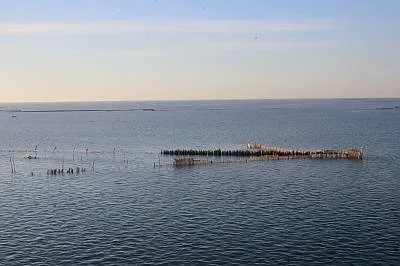
Charfia fishing in the Kerkennah Islands is a traditional, passive fishing technique that capitalises on the hydrographic conditions, seabed contours and natural resources both at sea and on land. The ‘charfia’ is a fixed fishery system consisting of palm fronds embedded in the seabed to create a triangular barrier, blocking the path of the fish pulled in by the ebb tide and channelling them into capture chambers and finally into a net or trap. Unlike bottom trawling systems that scrape the seabed, the traps keep the fish alive and fasting until raised. It is customary to install and operate the charfia only between the autumn equinox and June to ensure the marine wildlife have a biological rest period. The charfias are rebuilt each year, accompanied by social practices such as sharing a meal or rogatory prayers. The practice of charfia fishing requires extensive knowledge of underwater topography and marine currents. Many of the inhabitants of Kerkennah learn to fish from an early age and it is also common for a râїs to leave his fishery to his eldest son to perpetuate ownership. Vocational training centres also provide indirect training. Charfia fishing is the main fishing technique used in the Kerkennah Islands. The entire local community participates in the different phases of the process in varying degrees, from installing the charfia and the accompanying rituals to raising the traps, making this a unifying element for all Kerkennians.
Country
TunisiaOther heritage elements in Tunisia
Representative List · Inscribed 2025Arabic KohlRepresentative List · Inscribed 2024Performing arts among the Twāyef of GhbontenRepresentative List · Inscribed 2024Henna: rituals, aesthetic and social practicesRepresentative List · Inscribed 2023Arts, skills and practices associated with engraving on metals (gold, silver and copper)Representative List · Inscribed 2022Date palm, knowledge, skills, traditions and practicesRepresentative List · Inscribed 2022Harissa, knowledge, skills and culinary and social practices
More Representative List elements
Inscribed 2008Azerbaijani MughamInscribed 2010Traditional skills of carpet weaving in KashanInscribed 2013Mediterranean dietInscribed 2009Ramman, religious festival and ritual theatre of the Garhwal Himalayas, IndiaInscribed 2025DeepavaliInscribed 2024Craftsmanship of Aleppo Ghar soap
Also inscribed in 2020
- Al Aflaj, traditional irrigation network system in the UAE, oral traditions, knowledge and skills of construction, maintenance and equitable water distribution
- Camel racing, a social practice and a festive heritage associated with camels
- Knowledge, know-how and practices pertaining to the production and consumption of couscous
- Handmade weaving in Upper Egypt (Sa'eed)
- Nar Bayrami, traditional pomegranate festivity and culture
- Ong Chun/Wangchuan/Wangkang ceremony, rituals and related practices for maintaining the sustainable connection between man and the ocean
Data Source: UNESCO Intangible Cultural Heritage · UNESCO listing