

 Representative ListInscribed 2020
Description
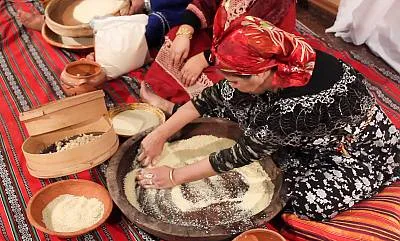
The knowledge, know-how and practices pertaining to the production and consumption of couscous encompass the methods of preparation, manufacturing conditions and tools, associated artefacts and circumstances of consumption of couscous in the communities concerned. Preparing couscous is a ceremonial process involving several different operations. These begin with growing the cereal, after which the seeds are ground to obtain a semolina that is rolled by hand, steamed and then cooked. These practices are associated with a set of exclusive tools, instruments and utensils. The dish is accompanied by a variety of vegetables and meats, depending on the region, season and occasion. Nowadays, as in the past, the methods involved in preparing couscous constitute a sum of knowledge and know-how that is transmitted informally through observation and imitation. For the manufacture of the utensils: clay utensils are made by potters while wooden utensils are produced by cooperatives or artisanal factories, which are often family-owned. In recent decades, however, more formal transmission has also developed outside the family circle or home. The non-culinary aspects of the element – namely rituals, oral expressions and certain social practices – are also transmitted by the bearers. Couscous is a dish replete with symbols, meanings and social and cultural dimensions all linked to solidarity, conviviality, sharing meals and togetherness.
Countries & Communities
DZMauritaniaMoroccoTunisiaOther heritage elements in DZ
Representative List · Inscribed 2024Henna: rituals, aesthetic and social practicesRepresentative List · Inscribed 2023Arts, skills and practices associated with engraving on metals (gold, silver and copper)Representative List · Inscribed 2021Arabic calligraphy: knowledge, skills and practices
More Representative List elements
Inscribed 2008Art of Akyns, Kyrgyz epic tellersInscribed 2022Festivals related to the Journey of the Holy family in EgyptInscribed 2024Traditional bagpipe (Gayda/Tulum) making and performingInscribed 2009Radif of Iranian musicInscribed 2015Majlis, a cultural and social spaceInscribed 2025Moroccan Caftan: art, traditions and skills
Also inscribed in 2020
- Al Aflaj, traditional irrigation network system in the UAE, oral traditions, knowledge and skills of construction, maintenance and equitable water distribution
- Camel racing, a social practice and a festive heritage associated with camels
- Handmade weaving in Upper Egypt (Sa'eed)
- Charfia fishing in the Kerkennah Islands
- Nar Bayrami, traditional pomegranate festivity and culture
- Ong Chun/Wangchuan/Wangkang ceremony, rituals and related practices for maintaining the sustainable connection between man and the ocean
Data Source: UNESCO Intangible Cultural Heritage · UNESCO listing