 Representative ListInscribed 2016
Description
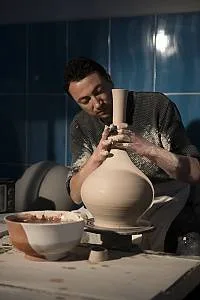
Çini are traditional, handmade glazed tiles and ceramics made in Turkey featuring colourful motifs of plants, animals and geometric patterns often found on facades of buildings and in homes throughout the country. Producing çini involves a series of processes. The clay is first shaped, lined, dried and fired in ovens specifically for çini making. Designs representing local customs and beliefs are then drilled on paper and transferred to the surface with coal dust. Outer contours of the patterns are hand drawn, the surface dyed in various colours and then the work is glazed and fired. Çini-making workshops involve craftspeople, supervisors and apprentices. Each craftsperson has a specific role – shaping, design and dye, polishing and undercoating or firing. Practitioners consider çini making as an outlet for self-expression, development and healing, as well as a means of maintaining an art form that is a symbolic aspect of Turkey’s cultural identity, strengthening links from the past to the present providing continuity. Çini making is not confined to workshop spaces. The tradition is also practised in the home, public education centres, vocation schools and universities throughout the country where neither age, gender nor ethnicity are barriers to knowledge sharing, transmission and skills development.
Country
TurkeyOther heritage elements in Turkey
Representative List · Inscribed 2025Antep İşi, drawn thread embroidery of GaziantepRepresentative List · Inscribed 2024Nawrouz, Novruz, Nowrouz, Nowrouz, Nawrouz, Nauryz, Nooruz, Nowruz, Navruz, Nevruz, Nowruz, NavruzRepresentative List · Inscribed 2024Traditional bagpipe (Gayda/Tulum) making and performingRepresentative List · Inscribed 2023Craftsmanship and performing art of balaban/meyRepresentative List · Inscribed 2023Iftar/Eftari/Iftar/Iftor and its socio-cultural traditionsRepresentative List · Inscribed 2023Art of illumination: Təzhib/Tazhib/Zarhalkori/Tezhip/Naqqoshlik
More Representative List elements
Inscribed 2013Mediterranean dietInscribed 2014Al-Ayyala, a traditional performing art of the Sultanate of Oman and the United Arab EmiratesInscribed 2010Ritual dramatic art of Ta‘zīyeInscribed 2023Art of illumination: Təzhib/Tazhib/Zarhalkori/Tezhip/NaqqoshlikInscribed 2015Alardah Alnajdiyah, dance, drumming and poetry in Saudi ArabiaInscribed 2019Ak-kalpak craftsmanship, traditional knowledge and skills in making and wearing Kyrgyz men’s headwear
Also inscribed in 2016
- Flatbread making and sharing culture: Lavash, Katyrma, Jupka, Yufka
- Khidr Elias feast and its vows
- Oshi Palav, a traditional meal and its social and cultural contexts in Tajikistan
- Palov culture and tradition
- Mangal Shobhajatra on Pahela Baishakh
- Tahteeb, stick game
Data Source: UNESCO Intangible Cultural Heritage · UNESCO listing