 Representative ListInscribed 2008
Description
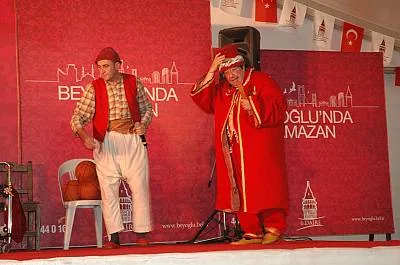
Meddahlik was a Turkish theatre form performed by a single storyteller called a meddah and practised throughout Turkey and Turkishspeaking countries. Through the ages, similar narrative genres have flourished due to interaction among the peoples of Asia, the Caucasus and the Middle East within this wide geographical area.
Historically, meddahs were expected to illuminate, educate, and entertain. Performing in caravanserais, markets, coffeehouses, mosques and churches, these storytellers transmitted values and ideas among a predominantly illiterate population. Their social and political criticism regularly provoked lively discussions about contemporary issues. The term meddah, borrowed from Arabic maddah “to praise”, can be translated as “storyteller”. The meddah selects songs and comic tales from a repertory of popular romances, legends and epics and adapts his material according to the specific venue and audience. However, the quality of the performance largely depends on the atmosphere created between storyteller and spectators, as well as the meddah’s ability to integrate imitations, jokes and improvisation often relating to contemporary events. This art, which places great value on the mastery of rhetoric, is highly regarded in Turkey.
Although some meddahs still perform at a number of religious and secular celebrations and appear on television shows, the genre has lost much of its original educational and social function due to the development of the mass media and in particular because of the appearance of TV sets in cafés.
Historically, meddahs were expected to illuminate, educate, and entertain. Performing in caravanserais, markets, coffeehouses, mosques and churches, these storytellers transmitted values and ideas among a predominantly illiterate population. Their social and political criticism regularly provoked lively discussions about contemporary issues. The term meddah, borrowed from Arabic maddah “to praise”, can be translated as “storyteller”. The meddah selects songs and comic tales from a repertory of popular romances, legends and epics and adapts his material according to the specific venue and audience. However, the quality of the performance largely depends on the atmosphere created between storyteller and spectators, as well as the meddah’s ability to integrate imitations, jokes and improvisation often relating to contemporary events. This art, which places great value on the mastery of rhetoric, is highly regarded in Turkey.
Although some meddahs still perform at a number of religious and secular celebrations and appear on television shows, the genre has lost much of its original educational and social function due to the development of the mass media and in particular because of the appearance of TV sets in cafés.
Country
TurkeyOther heritage elements in Turkey
Representative List · Inscribed 2025Antep İşi, drawn thread embroidery of GaziantepRepresentative List · Inscribed 2024Nawrouz, Novruz, Nowrouz, Nowrouz, Nawrouz, Nauryz, Nooruz, Nowruz, Navruz, Nevruz, Nowruz, NavruzRepresentative List · Inscribed 2024Traditional bagpipe (Gayda/Tulum) making and performingRepresentative List · Inscribed 2023Craftsmanship and performing art of balaban/meyRepresentative List · Inscribed 2023Iftar/Eftari/Iftar/Iftor and its socio-cultural traditionsRepresentative List · Inscribed 2023Art of illumination: Təzhib/Tazhib/Zarhalkori/Tezhip/Naqqoshlik
More Representative List elements
Inscribed 2014Al-Ayyala, a traditional performing art of the Sultanate of Oman and the United Arab EmiratesInscribed 2017Art of crafting and playing with Kamantcheh/Kamancha, a bowed string musical instrumentInscribed 2016Flatbread making and sharing culture: Lavash, Katyrma, Jupka, YufkaInscribed 2024Art of crafting and playing rubab/rababInscribed 2022Sericulture and traditional production of silk for weavingInscribed 2018Horse and camel Ardhah
Also inscribed in 2008
- Cultural space of Boysun District
- Cultural space of Jemaa el-Fna Square
- Mask dance of the drums from Drametse
- Al-Sirah Al-Hilaliyyah epic
- Shashmaqom music
- Ramlila, the traditional performance of the Ramayana
Data Source: UNESCO Intangible Cultural Heritage · UNESCO listing