

 Representative ListInscribed 2016
Description
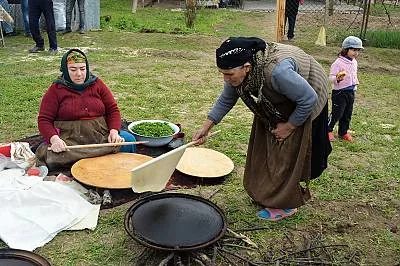
The culture of making and sharing flatbread in communities of Azerbaijan, Iran, Kazakhstan, Kyrgyzstan and Turkey carries social functions that have enabled it to continue as a widely-practised tradition. Making the bread (lavash, katyrma, jupka or yufka) involves at least three people, often family members, with each having a role in its preparation and baking. In rural areas, neighbours participate in the process together. Traditional bakeries also make the bread. It is baked using a tandyr/tanūr (an earth or stone oven in the ground), sāj (a metal plate) or kazan (a cauldron). Besides regular meals, flatbread is shared at weddings, births, funerals, various holidays and during prayers. In Azerbaijan and Iran, it is put on the bride’s shoulders or crumbled over her head to wish the couple prosperity while in Turkey it is given to the couple’s neighbours. At funerals in Kazakhstan it is believed the bread should be prepared to protect the deceased while a decision is made from God and in Kyrgyzstan sharing the bread provides a better afterlife for the deceased. The practice, transmitted by participation within families and from master to apprentice, expresses hospitality, solidarity and certain beliefs that symbolize common cultural roots reinforcing community belonging.
Countries & Communities
AzerbaijanIranKZKyrgyzstanTurkeyOther heritage elements in Azerbaijan
Representative List · Inscribed 2024Nawrouz, Novruz, Nowrouz, Nowrouz, Nawrouz, Nauryz, Nooruz, Nowruz, Navruz, Nevruz, Nowruz, NavruzRepresentative List · Inscribed 2024Tandir craftsmanship and bread baking in AzerbaijanRepresentative List · Inscribed 2023Craftsmanship and performing art of balaban/meyRepresentative List · Inscribed 2023Iftar/Eftari/Iftar/Iftor and its socio-cultural traditionsRepresentative List · Inscribed 2023Art of illumination: Təzhib/Tazhib/Zarhalkori/Tezhip/NaqqoshlikRepresentative List · Inscribed 2023Craftsmanship of mother of pearl inlay
More Representative List elements
Inscribed 2019Provision of services and hospitality during the Arba'in visitationInscribed 2025Al-Mihrass tree: knowledge, skills and rituals associated with itInscribed 2017Spring celebration, HıdrellezInscribed 2025PantunInscribed 2021Al-Qudoud al-HalabiyaInscribed 2018Dondang Sayang
Also inscribed in 2016
- Khidr Elias feast and its vows
- Oshi Palav, a traditional meal and its social and cultural contexts in Tajikistan
- Palov culture and tradition
- Mangal Shobhajatra on Pahela Baishakh
- Tahteeb, stick game
- Yoga
Data Source: UNESCO Intangible Cultural Heritage · UNESCO listing