 Representative ListInscribed 2015
Description
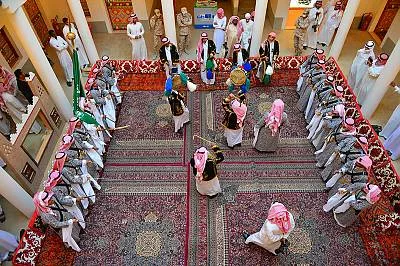
Alardah is a traditional performance combining dance, drumming and chanting poetry that signifies the start and end of notable occasions, such as religious holidays, weddings, births, graduation ceremonies, or events of national or local significance. It is considered a fundamental component of the cultural expressions of the practicing communities. Alardah performers include drummers, dancers and poets. Males performing Alardah carry light swords and stand shoulder to shoulder in two sets of facing rows, leaving space between them to accommodate drummers. One performer in full costume carries a flag. A poet chants verses specific to the occasion in a loud voice, which are then sung antiphonally by the participants. Large dance drums then strike strokes in quick succession, followed by smaller drums. While singing, all performers rock back and forth, side to side and move their swords up and down in rhythmic movements in harmony with the drumbeats and verses. As the poem ends, the men gather around the flag. Males may participate, regardless of social status, age or professional background. Women also participate as costume-makers. While fostering a sense of mutual respect, the performance consolidates social cohesion. Troupes and local citizens, schools, provinces and neighbourhood communities all engage in teaching, performing, popularizing and transmitting Alardah.
Country
Saudi ArabiaOther heritage elements in Saudi Arabia
Representative List · Inscribed 2025Arabic KohlRepresentative List · Inscribed 2025Traditional weaving of Al SaduRepresentative List · Inscribed 2025Bisht (men's Abaa): skills and practicesRepresentative List · Inscribed 2024Semsemiah: instrument crafting and playingRepresentative List · Inscribed 2024Arabic coffee, a symbol of generosityRepresentative List · Inscribed 2024Cultural practices related to Taif roses
More Representative List elements
Inscribed 2025Kithul Madeema/Kithul Kapeema, an ancient indigenous technology for tapping Kithul in Sri LankaInscribed 2010Traditional art of Azerbaijani carpet weaving in the Republic of AzerbaijanInscribed 2025The zaffa in the traditional weddingInscribed 2025Al-Muhaibis: social practices and traditions associated with itInscribed 2009Katta AshulaInscribed 2019Traditional skills of crafting and playing Dotār
Also inscribed in 2015
- Aitysh/Aitys, art of improvisation
- Majlis, a cultural and social space
- Copper craftsmanship of Lahij
- Epic art of Gorogly
- Al-Razfa, a traditional performing art
Data Source: UNESCO Intangible Cultural Heritage · UNESCO listing