 Representative ListInscribed 2016
Description
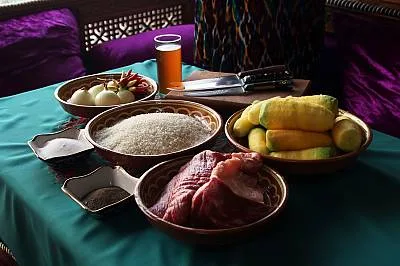
There is a saying in Uzbekistan that guests can only leave their host’s house after palov has been offered. Palov is a traditional dish made and shared throughout rural and urban communities of Uzbekistan. It is prepared with ingredients such as rice, meat, spices and vegetables and in addition to be enjoyed as a regular meal, is served as a gesture of hospitality, to celebrate special occasions like weddings and new year, to help those in need who are underprivileged, or to honour loved ones who have passed away. Palov may also feature at events alongside other rituals taking place such as prayer and performances of traditional music. It is a dish that is cooked by men and women regardless of age or social status. Knowledge and skills associated with the practice are handed down from older to younger generations formally and informally using a master-apprentice model or by demonstration and participation within families, peer groups, community-based establishments, religious organizations and vocational educational institutions. The making and sharing of the traditional dish acts to strengthen social ties, promote values including solidarity and unity and assist in the continuity of local traditions that form a part of the community’s cultural identity.
Country
UzbekistanOther heritage elements in Uzbekistan
Representative List · Inscribed 2025Traditional knowledge and skills in making Kyrgyz, Kazakh and Karakalpak yurts (Turkic nomadic dwellings)Urgent Safeguarding List · Inscribed 2025Art of crafting and playing KobyzRepresentative List · Inscribed 2024Nawrouz, Novruz, Nowrouz, Nowrouz, Nawrouz, Nauryz, Nooruz, Nowruz, Navruz, Nevruz, Nowruz, NavruzRepresentative List · Inscribed 2024Art of crafting and playing rubab/rababRepresentative List · Inscribed 2023Iftar/Eftari/Iftar/Iftor and its socio-cultural traditionsRepresentative List · Inscribed 2023Art of illumination: Təzhib/Tazhib/Zarhalkori/Tezhip/Naqqoshlik
More Representative List elements
Inscribed 2010Chhau danceInscribed 2010Music of the Bakhshis of KhorasanInscribed 2019Traditional skills of crafting and playing DotārInscribed 2017Kushtdepdi rite of singing and dancingInscribed 2016Mangal Shobhajatra on Pahela BaishakhInscribed 2022Knowledge and practices related to cultivating Khawlani coffee beans
Also inscribed in 2016
- Flatbread making and sharing culture: Lavash, Katyrma, Jupka, Yufka
- Khidr Elias feast and its vows
- Oshi Palav, a traditional meal and its social and cultural contexts in Tajikistan
- Mangal Shobhajatra on Pahela Baishakh
- Tahteeb, stick game
- Yoga
Data Source: UNESCO Intangible Cultural Heritage · UNESCO listing