 Representative ListInscribed 2016
Description
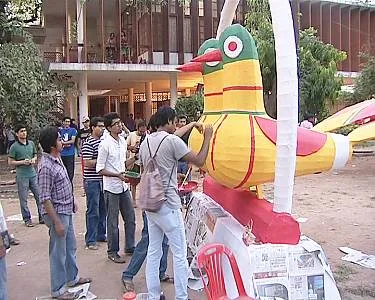
Mangal Shobhajatra is a festival organized by students and teachers of Dhaka University’s Faculty of Fine Art in Bangladesh open to the public to celebrate Pahela Baishakh (New Year’s Day). Taking place on April 14, the tradition of Mangal Shobhajatra began in 1989 when students, frustrated with having to live under military rule, wanted to bring people in the community hope for a better future. Members of the university faculty work together a month before the festival to create masks (said to drive away evil forces and allow for progress) and floats. Among works made for the festival at least one will represent evil, another courage and strength and a third, peace. Items to sell on the day are also produced as a source of funding, such as paintings on Bangladesh folk heritage. The Mangal Shobhajatra festival symbolizes the pride the people of Bangladesh have in their folk heritage, as well as their strength and courage to fight against sinister forces, and their vindication of truth and justice. It also represents solidarity and a shared value for democracy, uniting people irrespective of caste, creed, religion, gender or age. Knowledge and skills are transmitted by students and teachers within the community.
Country
BangladeshOther heritage elements in Bangladesh
Representative List · Inscribed 2025Traditional Saree weaving art of TangailRepresentative List · Inscribed 2023Rickshaws and rickshaw painting in DhakaRepresentative List · Inscribed 2017Traditional art of Shital Pati weaving of SylhetRepresentative List · Inscribed 2013Traditional art of Jamdani weavingRepresentative List · Inscribed 2008Baul songs
More Representative List elements
Inscribed 2022Al Talli, traditional embroidery skills in the United Arab EmiratesInscribed 2018As-Samer in JordanInscribed 2014Traditional art and symbolism of Kelaghayi, making and wearing women’s silk headscarvesInscribed 2015Epic art of GoroglyInscribed 2023Harees dish: know-how, skills and practicesInscribed 2023Craftsmanship and performing art of balaban/mey
Also inscribed in 2016
- Flatbread making and sharing culture: Lavash, Katyrma, Jupka, Yufka
- Khidr Elias feast and its vows
- Oshi Palav, a traditional meal and its social and cultural contexts in Tajikistan
- Palov culture and tradition
- Tahteeb, stick game
- Yoga
Data Source: UNESCO Intangible Cultural Heritage · UNESCO listing