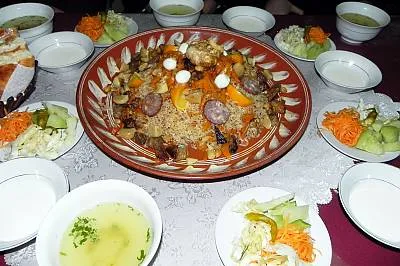
 Representative ListInscribed 2016
Description
Oshi palav (pilaf) is a traditional dish of communities in Tajikistan recognized as a part of their cultural heritage. Otherwise known as the ‘King of meals’, it is based on a recipe using vegetables, rice, meat and spices but up to 200 varieties of the dish exist. Considered an inclusive practice that aims to bring people of different backgrounds together, oshi palav is prepared to be enjoyed at regular mealtimes, as well as social gatherings, celebrations and rituals. The importance of the dish to communities in Tajikistan is indicative in sayings such as “No Osh, no acquaintance” or “If you have eaten Osh from somebody, you must respect them for 40 years”. Groups of men or women prepare the dish either in their homes or at teahouses while socalizing or playing music and singing. Knowledge and skills associated with the practice is transmitted on an intergenerational basis in families, in addition to cooking schools from master to apprentice. Once an apprentice masters oshi palav, the apprentice hosts a dinner for the trainer and guests during which the trainer receives a skull-cap and traditional dress while the apprentice receives a skimmer (a tool for cooking oshi palav) symbolizing the apprentice’s independence.
Country
TajikistanOther heritage elements in Tajikistan
Representative List · Inscribed 2025Culture of Sumanak/Sumalak cookingRepresentative List · Inscribed 2024Nawrouz, Novruz, Nowrouz, Nowrouz, Nawrouz, Nauryz, Nooruz, Nowruz, Navruz, Nevruz, Nowruz, NavruzRepresentative List · Inscribed 2024Ceremony of MehreganRepresentative List · Inscribed 2024Art of crafting and playing rubab/rababRepresentative List · Inscribed 2023Art of illumination: Təzhib/Tazhib/Zarhalkori/Tezhip/NaqqoshlikRepresentative List · Inscribed 2023Traditional knowledge and skills of production of the atlas and adras fabrics
More Representative List elements
Inscribed 2022Alheda'a, oral traditions of calling camel flocksInscribed 2010Mudiyettu, ritual theatre and dance drama of KeralaInscribed 2023Mahadra, a community system for transmission of traditional knowledge and oral expressionsInscribed 2008Mask dance of the drums from DrametseInscribed 2024Art of crafting and playing rubab/rababInscribed 2014Traditional brass and copper craft of utensil making among the Thatheras of Jandiala Guru, Punjab, India
Also inscribed in 2016
- Flatbread making and sharing culture: Lavash, Katyrma, Jupka, Yufka
- Khidr Elias feast and its vows
- Palov culture and tradition
- Mangal Shobhajatra on Pahela Baishakh
- Tahteeb, stick game
- Yoga
Data Source: UNESCO Intangible Cultural Heritage · UNESCO listing