 Representative ListInscribed 2019
Description
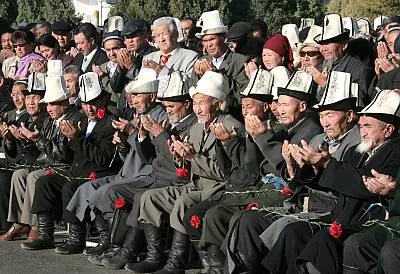
Ak-kalpak craftsmanship is a traditional Kyrgyz handicraft. The Ak-kalpak is a traditional male hat made with white felt, which bears deep sacral meanings. Ak-kalpak craftsmanship is a cumulative, ever-evolving body of knowledge and skills passed down by craftswomen in the communities concerned comprising felting, cutting and sewing and pattern embroidery. Related knowledge and skills are transmitted via oral coaching, hands-on training and joint making in workshops. More than eighty kinds of Ak-kalpak can be distinguished, decorated with various patterns bearing a sacred meaning and history. Environmentally friendly and comfortable, the Ak-kalpak resembles a snow peak, with four sides representing the four elements: air, water, fire and earth. The four edging lines symbolize life, with the tassels on the top symbolizing ancestors’ posterity and memory, and the pattern symbolizing the family tree. Ak-kalpak unites different Kyrgyz tribes and communities and makes Kyrgyz people recognizable to other ethnic groups. It also fosters inclusivity when representatives of other ethnic groups wear it on holidays or days of mourning to express unity and sympathy. There are workshops all over the country where related knowledge and skills are passed down, and in 2013 a project entitled ‘From generation to generation’ was conducted on traditional Ak-kalpak-making techniques nationwide, resulting in an exhibition and published book.
Country
KyrgyzstanOther heritage elements in Kyrgyzstan
Representative List · Inscribed 2025Traditional knowledge and skills in making Kyrgyz, Kazakh and Karakalpak yurts (Turkic nomadic dwellings)Representative List · Inscribed 2025Traditional knowledge and cultural contexts of making Maksym, a traditional Kyrgyz beverageRepresentative List · Inscribed 2024Nawrouz, Novruz, Nowrouz, Nowrouz, Nawrouz, Nauryz, Nooruz, Nowruz, Navruz, Nevruz, Nowruz, NavruzRepresentative List · Inscribed 2023Elechek, Kyrgyz female headwear: traditional knowledge and ritualsRepresentative List · Inscribed 2023Midwifery: knowledge, skills and practicesRepresentative List · Inscribed 2022Telling tradition of Nasreddin Hodja/ Molla Nesreddin/ Molla Ependi/ Apendi/ Afendi Kozhanasyr Anecdotes
More Representative List elements
Inscribed 2008Cultural space of Jemaa el-Fna SquareInscribed 2010Traditional skills of carpet weaving in KashanInscribed 2025Traditional knowledge and cultural contexts of making Maksym, a traditional Kyrgyz beverageInscribed 2023Malhun, a popular poetic and musical artInscribed 2020Al Aflaj, traditional irrigation network system in the UAE, oral traditions, knowledge and skills of construction, maintenance and equitable water distributionInscribed 2009Katta Ashula
Also inscribed in 2019
- Traditional skills of crafting and playing Dotār
- Provision of services and hospitality during the Arba'in visitation
- Practices and craftsmanship associated with the Damascene rose in Al-Mrah
- Traditional Turkish archery
- Gnawa
- Khorazm dance, Lazgi
Data Source: UNESCO Intangible Cultural Heritage · UNESCO listing