 Representative ListInscribed 2010
Description
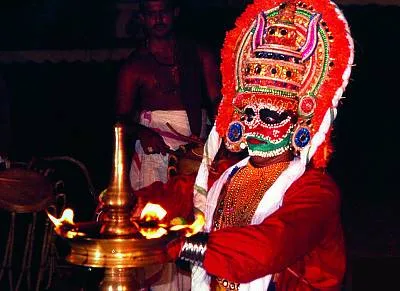
Mudiyettu is a ritual dance drama from Kerala based on the mythological tale of a battle between the goddess Kali and the demon Darika. It is a community ritual in which the entire village participates. After the summer crops have been harvested, the villagers reach the temple in the early morning on an appointed day. Mudiyettu performers purify themselves through fasting and prayer, then draw a huge image of goddess Kali, called as ''kalam'', on the temple floor with coloured powders, wherein the spirit of the goddess is invoked. This prepares the ground for the lively enactment to follow, in which the divine sage Narada importunes Shiva to contain the demon Darika, who is immune to defeat by mortals. Shiva instead commands that Darika will die at the hand of the goddess Kali. Mudiyettu is performed annually in ‘Bhagavati Kavus’, the temples of the goddess, in different villages along the rivers Chalakkudy Puzha, Periyar and Moovattupuzha. Mutual cooperation and collective participation of each caste in the ritual instils and strengthens common identity and mutual bonding in the community. Responsibility for its transmission lies with the elders and senior performers, who engage the younger generation as apprentices during the course of the performance. Mudiyettu serves as an important cultural site for transmission of traditional values, ethics, moral codes and aesthetic norms of the community to the next generation, thereby ensuring its continuity and relevance in present times.
Country
IndiaOther heritage elements in India
Representative List · Inscribed 2025DeepavaliRepresentative List · Inscribed 2024Nawrouz, Novruz, Nowrouz, Nowrouz, Nawrouz, Nauryz, Nooruz, Nowruz, Navruz, Nevruz, Nowruz, NavruzRepresentative List · Inscribed 2023Garba of GujaratRepresentative List · Inscribed 2021Durga Puja in KolkataRepresentative List · Inscribed 2017Kumbh MelaRepresentative List · Inscribed 2016Yoga
More Representative List elements
Inscribed 2022Telling tradition of Nasreddin Hodja/ Molla Nesreddin/ Molla Ependi/ Apendi/ Afendi Kozhanasyr AnecdotesInscribed 2015Al-Razfa, a traditional performing artInscribed 2023Sadeh/Sada celebrationInscribed 2025Culture of Sumanak/Sumalak cookingInscribed 2025Koshary, daily life dish and practices associated with itInscribed 2010Kırkpınar oil wrestling festival
Also inscribed in 2010
- Chhau dance
- Kalbelia folk songs and dances of Rajasthan
- Ritual dramatic art of Ta‘zīye
- Semah, Alevi-Bektaşi ritual
- Music of the Bakhshis of Khorasan
- Pahlevani and Zoorkhanei rituals
Data Source: UNESCO Intangible Cultural Heritage · UNESCO listing