 Representative ListInscribed 2008
Description
The Mevleviye is an ascetic Sufi order founded in 1273 in Konya, from where it gradually spread throughout the Ottoman Empire. Today, the Mevleviye can be found in many Turkish communities throughout the world, but the most active and famous centres of the order’s activity are in Konya and Istanbul.
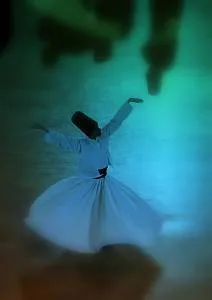
The Mevleviye are renowned for their whirling dances. Following a recommended fast of several hours, the whirlers begin to rotate on their left feet in short twists, using the right foot to drive their bodies around the left foot. The body of the whirler is meant to be supple, with eyes open but unfocused so that images become blurred and flowing. At their dancing ceremonies, or Sema, a particular musical repertoire called ay›n is played. Based on four sections of both vocal and instrumental compositions, it is performed by at least one singer, a flute-player, called neyzen, a kettledrummer and a cymbal player. Dancers used to receive 1,001 days of reclusive training within the mevlevi-houses (mevlevihane), where they learned about ethics, codes of behaviour and beliefs by practising prayer, religious music, poetry and dance. After this training, they remained members of the order but returned to their work and families.
As a result of secularization policies, all mevlevihane were closed in 1925.The Turkish government began to allow performances again, though only in public, in the 1950s, restrictions were eased in the 1990s. Some private groups are re-establishing the original spiritual and intimate character of the Sema ceremony. However, over the thirty years the tradition was practised clandestinely, transmission focused rather on music and songs than on spiritual and religious traditions, which has deprived performances of part of their religious significance. Consequently, many sema ceremonies are no longer performed in their traditional context but for tourist audiences, and have been shortened and simplified to meet commercial requirements.
The Mevleviye are renowned for their whirling dances. Following a recommended fast of several hours, the whirlers begin to rotate on their left feet in short twists, using the right foot to drive their bodies around the left foot. The body of the whirler is meant to be supple, with eyes open but unfocused so that images become blurred and flowing. At their dancing ceremonies, or Sema, a particular musical repertoire called ay›n is played. Based on four sections of both vocal and instrumental compositions, it is performed by at least one singer, a flute-player, called neyzen, a kettledrummer and a cymbal player. Dancers used to receive 1,001 days of reclusive training within the mevlevi-houses (mevlevihane), where they learned about ethics, codes of behaviour and beliefs by practising prayer, religious music, poetry and dance. After this training, they remained members of the order but returned to their work and families.
As a result of secularization policies, all mevlevihane were closed in 1925.The Turkish government began to allow performances again, though only in public, in the 1950s, restrictions were eased in the 1990s. Some private groups are re-establishing the original spiritual and intimate character of the Sema ceremony. However, over the thirty years the tradition was practised clandestinely, transmission focused rather on music and songs than on spiritual and religious traditions, which has deprived performances of part of their religious significance. Consequently, many sema ceremonies are no longer performed in their traditional context but for tourist audiences, and have been shortened and simplified to meet commercial requirements.
Country
TurkeyOther heritage elements in Turkey
Representative List · Inscribed 2025Antep İşi, drawn thread embroidery of GaziantepRepresentative List · Inscribed 2024Nawrouz, Novruz, Nowrouz, Nowrouz, Nawrouz, Nauryz, Nooruz, Nowruz, Navruz, Nevruz, Nowruz, NavruzRepresentative List · Inscribed 2024Traditional bagpipe (Gayda/Tulum) making and performingRepresentative List · Inscribed 2023Craftsmanship and performing art of balaban/meyRepresentative List · Inscribed 2023Iftar/Eftari/Iftar/Iftor and its socio-cultural traditionsRepresentative List · Inscribed 2023Art of illumination: Təzhib/Tazhib/Zarhalkori/Tezhip/Naqqoshlik
More Representative List elements
Inscribed 2025Bisht (men's Abaa): skills and practicesInscribed 2008Shashmaqom musicInscribed 2009KaragözInscribed 2014Argan, practices and know-how concerning the argan treeInscribed 2023Harees dish: know-how, skills and practicesInscribed 2024Henna: rituals, aesthetic and social practices
Also inscribed in 2008
- Cultural space of Boysun District
- Cultural space of Jemaa el-Fna Square
- Mask dance of the drums from Drametse
- Al-Sirah Al-Hilaliyyah epic
- Shashmaqom music
- Ramlila, the traditional performance of the Ramayana
Data Source: UNESCO Intangible Cultural Heritage · UNESCO listing