 Representative ListInscribed 2019
Description
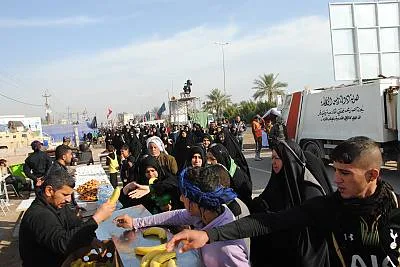
Provision of services and hospitality during the Arba’in visitation is a social practice performed across the central and southern regions of Iraq, from where processions of visitors and pilgrims converge towards the Holy City of Karbala. The tradition – a social practice with deep roots in the Iraqi and Arab tradition of hospitality – is an immense display of charity through volunteering and social mobilization and considered to be a defining element of Iraq’s cultural identity. Every year, around the 20th of the Islamic month of Safar, the Iraqi province of Karbala receives millions of visitors in one of the world’s most populous religious pilgrimages. Hailing from different regions in Iraq and abroad, visitors walk to the Holy Shrine of Imam Hussein. A vast number of people contribute their time and resources to providing the pilgrims with free services along the route. Starting at least two weeks before the date of Arba’in, associations set up temporary facilities or reopen more permanent ones along the pilgrimage routes, including prayer halls, guest houses and stands offering various services. Many people also open their houses for free overnight accommodation. Bearers and practitioners include cooks, families offering hospitality, the administration of the two Holy Shrines in Karbala, volunteer guides, volunteer medical teams, and benefactors contributing generous donations.
Country
IraqOther heritage elements in Iraq
Representative List · Inscribed 2025Arabic KohlRepresentative List · Inscribed 2025Bisht (men's Abaa): skills and practicesRepresentative List · Inscribed 2025Al-Muhaibis: social practices and traditions associated with itRepresentative List · Inscribed 2025The zaffa in the traditional weddingRepresentative List · Inscribed 2024Nawrouz, Novruz, Nowrouz, Nowrouz, Nawrouz, Nauryz, Nooruz, Nowruz, Navruz, Nevruz, Nowruz, NavruzRepresentative List · Inscribed 2024Henna: rituals, aesthetic and social practices
More Representative List elements
Inscribed 2021The art of embroidery in Palestine, practices, skills, knowledge and ritualsInscribed 2008Cultural space of Jemaa el-Fna SquareInscribed 2024Breakfast culture in Malaysia: dining experience in a multi-ethnic societyInscribed 2023Iftar/Eftari/Iftar/Iftor and its socio-cultural traditionsInscribed 2012Buddhist chanting of Ladakh: recitation of sacred Buddhist texts in the trans-Himalayan Ladakh region, Jammu and Kashmir, IndiaInscribed 2025Pantun
Also inscribed in 2019
- Traditional skills of crafting and playing Dotār
- Practices and craftsmanship associated with the Damascene rose in Al-Mrah
- Traditional Turkish archery
- Ak-kalpak craftsmanship, traditional knowledge and skills in making and wearing Kyrgyz men’s headwear
- Gnawa
- Khorazm dance, Lazgi
Data Source: UNESCO Intangible Cultural Heritage · UNESCO listing