 Representative ListInscribed 2025
Description
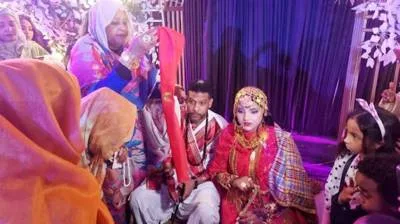
Among the Nubian populations residing in northern Sudan, along the Nile, up to the Egyptian border, Al-Jertiq is a ritual for protection, fertility and abundance that is held during significant life events such as marriage, childbirth and circumcision, or to mourn the death of a young, unmarried man. Although the ritual has adapted over time to different environments and social changes, its core meanings and functions have remained intact. Al-Jertiq involves a variety of ornate tools that hold symbolic meaning and are tailored to specific occasions. Each tool has a distinct purpose, such as protecting practitioners from the evil eye, bringing good fortune or promoting fertility.
The ritual is believed to be incomplete and unlucky if anything is missing. The ceremonies are led by older women, and participants include brides, grooms, new mothers, children and others involved in or connected to the ceremony. Al-Jertiq is transmitted informally, with girls observing and imitating their grandmothers, mothers and older sisters during the ceremonies and for related activities such as cleaning, counting, sorting and preserving the various objects related to the ritual. The practice is also transmitted through school and university events, as well as on social media. A rite of passage, Al-Jertiq plays an important role in building identity, guiding people through important life transitions, and strengthening community ties.
The ritual is believed to be incomplete and unlucky if anything is missing. The ceremonies are led by older women, and participants include brides, grooms, new mothers, children and others involved in or connected to the ceremony. Al-Jertiq is transmitted informally, with girls observing and imitating their grandmothers, mothers and older sisters during the ceremonies and for related activities such as cleaning, counting, sorting and preserving the various objects related to the ritual. The practice is also transmitted through school and university events, as well as on social media. A rite of passage, Al-Jertiq plays an important role in building identity, guiding people through important life transitions, and strengthening community ties.
Country
SudanOther heritage elements in Sudan
Representative List · Inscribed 2024Henna: rituals, aesthetic and social practicesRepresentative List · Inscribed 2023Arts, skills and practices associated with engraving on metals (gold, silver and copper)Representative List · Inscribed 2023Procession and celebrations of Prophet Mohammed's birthday in SudanRepresentative List · Inscribed 2022Date palm, knowledge, skills, traditions and practicesRepresentative List · Inscribed 2021Arabic calligraphy: knowledge, skills and practices
More Representative List elements
Inscribed 2014Al-Ayyala, a traditional performing art of the Sultanate of Oman and the United Arab EmiratesInscribed 2008Palestinian HikayeInscribed 2021Al-Qudoud al-HalabiyaInscribed 2017Dolma making and sharing tradition, a marker of cultural identityInscribed 2016Almezmar, drumming and dancing with sticksInscribed 2015Majlis, a cultural and social space
Also inscribed in 2025
- Traditional Saree weaving art of Tangail
- Boreendo, Bhorindo: ancient dying folk musical instrument, its melodies, knowledge, and skills
- The zaffa in the traditional wedding
- Al-Muhaibis: social practices and traditions associated with it
- Bisht (men's Abaa): skills and practices
- Kithul Madeema/Kithul Kapeema, an ancient indigenous technology for tapping Kithul in Sri Lanka
Data Source: UNESCO Intangible Cultural Heritage · UNESCO listing