 Representative ListInscribed 2021
Description
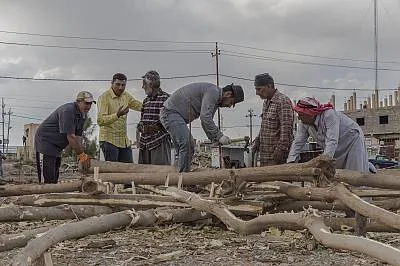
Al-naoor is a wooden wheel that rotates on its axis. It is used on the streams of the Euphrates River in Iraq, where water levels are lower than the adjacent fields. In order to raise the river water to the fields, the communities devised the al-naoor wheel. The wheel is made of twenty-four columns of wooden sticks and twenty-four clay jugs attached to the outer circumference with palm leaf ropes. Ranging between eight and twelve metres in diameter, the wheel is installed vertically between two stone pedestals on the streams of the river. As the current causes the wheel to rotate, the jugs collect the water from the river, carry the water to the top of the wheel, and pour it into the waterways leading to the fields. The day of the al-naoor mounting is marked by celebrations, including traditional poetry performances, singing and dancing. More recently, the energy produced by the al-naoor wheel has also been used to generate electricity and to operate the water mills used to grind grain for flour. Al-naoor is a source of livelihood for many, including the artisan carpenters, pottery makers and builders involved in its construction.
Country
IraqOther heritage elements in Iraq
Representative List · Inscribed 2025Arabic KohlRepresentative List · Inscribed 2025Bisht (men's Abaa): skills and practicesRepresentative List · Inscribed 2025Al-Muhaibis: social practices and traditions associated with itRepresentative List · Inscribed 2025The zaffa in the traditional weddingRepresentative List · Inscribed 2024Nawrouz, Novruz, Nowrouz, Nowrouz, Nawrouz, Nauryz, Nooruz, Nowruz, Navruz, Nevruz, Nowruz, NavruzRepresentative List · Inscribed 2024Henna: rituals, aesthetic and social practices
More Representative List elements
Inscribed 2016Palov culture and traditionInscribed 2008Palestinian HikayeInscribed 2015Aitysh/Aitys, art of improvisationInscribed 2010Traditional art of Azerbaijani carpet weaving in the Republic of AzerbaijanInscribed 2008Song of Sana’aInscribed 2025The zaffa in the traditional wedding
Also inscribed in 2021
- Falconry, a living human heritage
- Bakhshi art
- Nomad games, rediscovering heritage, celebrating diversity
- Fjiri
- Durga Puja in Kolkata
- The art of embroidery in Palestine, practices, skills, knowledge and rituals
Data Source: UNESCO Intangible Cultural Heritage · UNESCO listing