 Representative ListInscribed 2021
Description
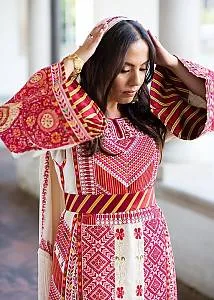
The art of traditional embroidery is widespread in Palestine. Originally made and worn in rural areas, the practice is now common in all of Palestine and among members of the diaspora. Women’s village clothing usually consists of a long dress, trousers, a jacket, a headdress and a veil. Each of these garments is embroidered with a variety of symbols including birds, trees and flowers. The choice of colours and designs indicates the woman’s regional identity and marital and economic status. On the main garment, the loose-fitting dress called a thob, the chest, sleeves and cuffs are covered with embroidery. Embroidered, vertical panels run down the dress from the waist. The embroidery is sewn with silk thread on wool, linen or cotton. Embroidery is a social and intergenerational practice, as women gather in each other’s homes to practise embroidery and sewing, often with their daughters. Many women embroider as a hobby, and some produce and sell embroidered pieces to supplement their family’s income, either on their own or in collaboration with other women. These groups gather in each other’s homes or in community centres, where they may also market their work. The practice is transmitted from mother to daughter and through formal training courses.
Country
PalestineOther heritage elements in Palestine
Representative List · Inscribed 2025Arabic KohlRepresentative List · Inscribed 2024Tradition of Nabulsi soap making in PalestineRepresentative List · Inscribed 2024Henna: rituals, aesthetic and social practicesRepresentative List · Inscribed 2023Dabkeh, traditional dance in PalestineRepresentative List · Inscribed 2023Arts, skills and practices associated with engraving on metals (gold, silver and copper)Representative List · Inscribed 2022Date palm, knowledge, skills, traditions and practices
More Representative List elements
Inscribed 2010Traditional art of Azerbaijani carpet weaving in the Republic of AzerbaijanInscribed 2023Iftar/Eftari/Iftar/Iftor and its socio-cultural traditionsInscribed 2023Procession and celebrations of Prophet Mohammed's birthday in SudanInscribed 2025Antep İşi, drawn thread embroidery of GaziantepInscribed 2008Moussem of Tan-TanInscribed 2023Dabkeh, traditional dance in Palestine
Also inscribed in 2021
- Falconry, a living human heritage
- Traditional craft skills and arts of Al-Naoor
- Bakhshi art
- Nomad games, rediscovering heritage, celebrating diversity
- Fjiri
- Durga Puja in Kolkata
Data Source: UNESCO Intangible Cultural Heritage · UNESCO listing