 Urgent Safeguarding ListInscribed 2017
Description
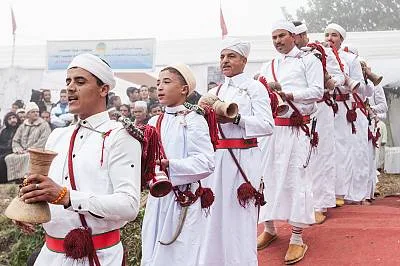
Taskiwin is a martial dance specific to the western High Atlas mountain range in Central Morocco. The dance gets its name from the richly decorated horn each dancer carries – the Tiskt – and involves the art of shaking one’s shoulders to the rhythm of tambourines and flutes. The practice fosters social cohesion and harmony and provides a key means of socialization for young people. Transmission to young generations mainly occurs informally through direct learning. Due to several factors, however, the dance is now limited to a small number of villages and is at risk of disappearing. Globalization has driven it closer to oblivion, as reflected by young people’s increasing disdain for traditional heritage in favour of modern artistic practices. The dance is no longer practised by several communities and the remaining enthusiasts and bearers cannot find aspirants to whom they can transmit their know-how. Craftsmanship relating to the instruments and accessories is also in decline. Nonetheless, the last two decades have seen an increased collective awareness of the need to ensure the viability of Taskiwin among some communities. To this end, the first dedicated association in the region was created in 1993, an initiative followed by several other villages, and several local associations are now being created.
Country
MoroccoOther heritage elements in Morocco
Representative List · Inscribed 2025Moroccan Caftan: art, traditions and skillsRepresentative List · Inscribed 2024Henna: rituals, aesthetic and social practicesRepresentative List · Inscribed 2023Malhun, a popular poetic and musical artRepresentative List · Inscribed 2023Arts, skills and practices associated with engraving on metals (gold, silver and copper)Representative List · Inscribed 2022Date palm, knowledge, skills, traditions and practicesRepresentative List · Inscribed 2021Tbourida
More Urgent Safeguarding List elements
Inscribed 2018Suri Jagek (observing the sun), traditional meteorological and astronomical practice based on the observation of the sun, moon and stars in reference to the local topographyInscribed 2023Traditional Syrian glassblowingInscribed 2025Art of crafting and playing KobyzInscribed 2018Yalli (Kochari, Tenzere), traditional group dances of NakhchivanInscribed 2018Traditional hand puppetryInscribed 2011Naqqāli, Iranian dramatic story-telling
Also inscribed in 2017
- Kumbh Mela
- Dolma making and sharing tradition, a marker of cultural identity
- Whistled language
- Al Azi, art of performing praise, pride and fortitude poetry
- Traditional art of Shital Pati weaving of Sylhet
- Art of crafting and playing with Kamantcheh/Kamancha, a bowed string musical instrument
Data Source: UNESCO Intangible Cultural Heritage · UNESCO listing