 Representative ListInscribed 2025
Description
The caftan is a long tunic worn by people of all genders and ages for special occasions and celebrations. It comes in different styles and fabrics and can be worn with or without a decorative belt. Emanating from diverse cultural backgrounds, the traditional garment is known for its central opening, buttons and rich, hand-made decorations, often including embroidery, beads and sequins. The caftan is worn during important social and religious events such as weddings, baptisms, coming-of-age rituals and festivals.
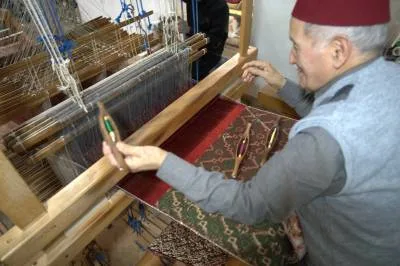
The production of the caftan involves skilled craftspeople, including the weavers who produce the fabrics (brocade, velvet and silk), the tailors who shape the garment, and the artisans who create the buttons, braids and embroidery. The related knowledge and skills are passed down informally, both within families and through apprenticeships taking place in workshops, as well as through formal education in training centres and fashion schools. A meaningful element of community life and shared heritage, the caftan is a marker of social status and belonging. It is also a source of income for the many people involved in its production and sale.
The production of the caftan involves skilled craftspeople, including the weavers who produce the fabrics (brocade, velvet and silk), the tailors who shape the garment, and the artisans who create the buttons, braids and embroidery. The related knowledge and skills are passed down informally, both within families and through apprenticeships taking place in workshops, as well as through formal education in training centres and fashion schools. A meaningful element of community life and shared heritage, the caftan is a marker of social status and belonging. It is also a source of income for the many people involved in its production and sale.
Country
MoroccoOther heritage elements in Morocco
Representative List · Inscribed 2024Henna: rituals, aesthetic and social practicesRepresentative List · Inscribed 2023Malhun, a popular poetic and musical artRepresentative List · Inscribed 2023Arts, skills and practices associated with engraving on metals (gold, silver and copper)Representative List · Inscribed 2022Date palm, knowledge, skills, traditions and practicesRepresentative List · Inscribed 2021TbouridaRepresentative List · Inscribed 2021Arabic calligraphy: knowledge, skills and practices
More Representative List elements
Inscribed 2024Cultural practices related to Taif rosesInscribed 2015Aitysh/Aitys, art of improvisationInscribed 2014Al-Ayyala, a traditional performing art of the Sultanate of Oman and the United Arab EmiratesInscribed 2025Traditional Saree weaving art of TangailInscribed 2015Al-Razfa, a traditional performing artInscribed 2008Kutiyattam, Sanskrit theatre
Also inscribed in 2025
- Traditional Saree weaving art of Tangail
- Boreendo, Bhorindo: ancient dying folk musical instrument, its melodies, knowledge, and skills
- The zaffa in the traditional wedding
- Al-Muhaibis: social practices and traditions associated with it
- Bisht (men's Abaa): skills and practices
- Kithul Madeema/Kithul Kapeema, an ancient indigenous technology for tapping Kithul in Sri Lanka
Data Source: UNESCO Intangible Cultural Heritage · UNESCO listing