 Representative ListInscribed 2022
Description
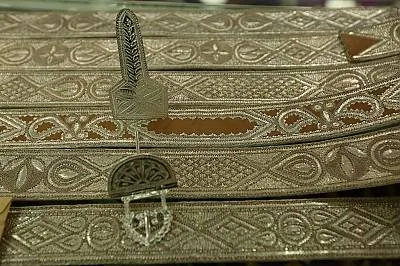
Al-Khanjar is a part of traditional dress worn by men in Oman during national and religious events and special occasions such as weddings. An essential element of Omani culture, its manufacture requires significant knowledge and skills that are transmitted from one generation to next. The Omani khanjar is attached around the waist and includes a belt, handle, blade, scabbard and cover, all made from a variety of materials including wood, leather, cloth and silver. The materials, which are engraved with unique designs, are viewed as a reflection of the connection to the land. The khanjar is a part of the state emblem and plays a key role in many Omani customs and traditions. Historical sources and archaeological discoveries indicate that Omanis have worn the khanjar for centuries. Formal workshops and trainings also contribute to its transmission. A highly appreciated gift, the khanjar is one of the gifts that Omanis give to official guests as an expression of the cultural connection between nations. Many poems in the Omani literature also describe and praise the khanjar, and Omani artists and photographers have competed in documenting the object and the craft. Wearing the khanjar is also associated with many, if not all, Omani folk arts.
Country
OmanOther heritage elements in Oman
Representative List · Inscribed 2025Arabic KohlRepresentative List · Inscribed 2025Bisht (men's Abaa): skills and practicesRegister of Good Safeguarding Practices · Inscribed 2024Oman Youth Sail Training Ship (Safinat Shabab Oman) programme for peace and sustainable cultural dialogueRepresentative List · Inscribed 2024Arabic coffee, a symbol of generosityRepresentative List · Inscribed 2024Henna: rituals, aesthetic and social practicesRepresentative List · Inscribed 2023Harees dish: know-how, skills and practices
More Representative List elements
Inscribed 2018Heritage of Dede Qorqud/Korkyt Ata/Dede Korkut, epic culture, folk tales and musicInscribed 2012Craftsmanship and performance art of the Tar, a long-necked string musical instrumentInscribed 2015Al-Razfa, a traditional performing artInscribed 2014Askiya, the art of witInscribed 2010Kırkpınar oil wrestling festivalInscribed 2020Charfia fishing in the Kerkennah Islands
Also inscribed in 2022
- Yaldā/Chella
- Festivals related to the Journey of the Holy family in Egypt
- Al-Mansaf in Jordan, a festive banquet and its social and cultural meanings
- Harissa, knowledge, skills and culinary and social practices
- Date palm, knowledge, skills, traditions and practices
- Crafting and playing the Oud
Data Source: UNESCO Intangible Cultural Heritage · UNESCO listing