 Representative ListInscribed 2018
Description
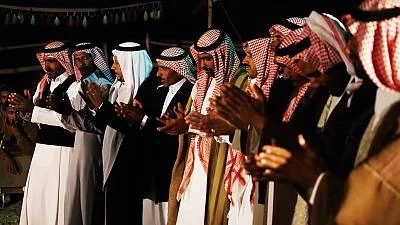
Practised across many areas of Jordan, As-Samer consists mainly of dancing and singing and is performed on various occasions, most commonly during marriage ceremonies. Practitioners range from young to older individuals, with children being encouraged to take part during performances. On the wedding day, the father of the groom instructs the attendees to line up and start applauding and singing. The performance that follows involves specific roles for certain people. The Al-Hashi is a veiled woman, always one of the inviters’ relatives, who sings and dances in front of the Al-Samer row while wearing an Abaya (a loose, black garment worn over the traditional garment). Another person is the ‘Wasq Al-Hashi’, one of the Al-Hashi’s relatives, who takes hold of her sleeve or Abaya and asks her to sit down. Then comes the role of the Al-Badda, a man who starts singing by directly addressing Al-Hashi, to resume the dancing with poetry. The lines of poetry uttered during the performance form an integral part of the tradition, expressing feelings of joy, peace, intimacy and empathy among attendees. Practising As-Samer consolidates social bonds and promotes cohesion, and attendees of all ages are encouraged to participate spontaneously, in an effort to transmit the related skills and knowledge to the next generations.
Country
JordanOther heritage elements in Jordan
Representative List · Inscribed 2025Al-Mihrass tree: knowledge, skills and rituals associated with itRepresentative List · Inscribed 2025Arabic KohlRepresentative List · Inscribed 2025Bisht (men's Abaa): skills and practicesRepresentative List · Inscribed 2025The zaffa in the traditional weddingRepresentative List · Inscribed 2024Arabic coffee, a symbol of generosityRepresentative List · Inscribed 2024Henna: rituals, aesthetic and social practices
More Representative List elements
Inscribed 2020Al Aflaj, traditional irrigation network system in the UAE, oral traditions, knowledge and skills of construction, maintenance and equitable water distributionInscribed 2023Harees dish: know-how, skills and practicesInscribed 2009Katta AshulaInscribed 2021SongketInscribed 2014Argan, practices and know-how concerning the argan treeInscribed 2010Kalbelia folk songs and dances of Rajasthan
Also inscribed in 2018
- Suri Jagek (observing the sun), traditional meteorological and astronomical practice based on the observation of the sun, moon and stars in reference to the local topography
- Heritage of Dede Qorqud/Korkyt Ata/Dede Korkut, epic culture, folk tales and music
- Rūkada Nātya, traditional string puppet drama in Sri Lanka
- Pottery skills of the women of Sejnane
- Shadow play
- Horse and camel Ardhah
Data Source: UNESCO Intangible Cultural Heritage · UNESCO listing