 Representative ListInscribed 2008
Description
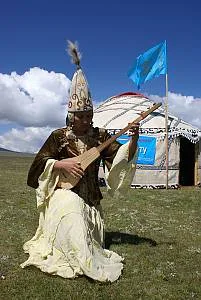
The predominant form of cultural expression among the Kyrgyz nomads is the narration of epics. The art of the Akyns, the Kyrgyz epic tellers, combines singing, improvisation and musical composition. The epics are performed at religious and private festivities, seasonal ceremonies and national holidays and have survived over the centuries by oral transmission.
The value of the Kyrgyz epics lies largely in their dramatic plots and philosophical underpinnings. They represent an oral encyclopaedia of Kyrgyz social values, cultural knowledge and history. The pre-eminent Kyrgyz epic is the 1000-year-old Manas trilogy, which is noteworthy not only for its great length (sixteen times longer than Homer’s Iliad and Odyssey), but also for its rich content. Blending fact and legend, the Manas immortalizes important events in Kyrgyz’s history since the ninth century. The Kyrgyzs have also preserved over forty “smaller” epics. While the Manas is a solo narration, these shorter works are generally performed to the accompaniment of the komuz, the three-stringed Kyrgyz lute. Each epic possesses a distinctive theme, melody and narrative style. Akyns were once highly respected figures who toured from region to region and frequently participated in storytelling contests. They were appreciated for their proficiency in narration, expressive gestures, intonation and lively mimicry, so well suited to the epics’ emotionally charged content.
During the 1920s, the first part of the Manas trilogy was recorded in written form based on the oral interpretation of the great epic singer, Sagynbay. The epics remain an essential component of Kyrgyz identity and continue to inspire contemporary writers, poets, and composers; even today, the traditional performances are still linked to sacred cultural spaces. Although there are fewer practitioners nowadays, master akyns continue to train young apprentices and are helped by recent revitalization initiatives supported by the Kyrgyz government.
The value of the Kyrgyz epics lies largely in their dramatic plots and philosophical underpinnings. They represent an oral encyclopaedia of Kyrgyz social values, cultural knowledge and history. The pre-eminent Kyrgyz epic is the 1000-year-old Manas trilogy, which is noteworthy not only for its great length (sixteen times longer than Homer’s Iliad and Odyssey), but also for its rich content. Blending fact and legend, the Manas immortalizes important events in Kyrgyz’s history since the ninth century. The Kyrgyzs have also preserved over forty “smaller” epics. While the Manas is a solo narration, these shorter works are generally performed to the accompaniment of the komuz, the three-stringed Kyrgyz lute. Each epic possesses a distinctive theme, melody and narrative style. Akyns were once highly respected figures who toured from region to region and frequently participated in storytelling contests. They were appreciated for their proficiency in narration, expressive gestures, intonation and lively mimicry, so well suited to the epics’ emotionally charged content.
During the 1920s, the first part of the Manas trilogy was recorded in written form based on the oral interpretation of the great epic singer, Sagynbay. The epics remain an essential component of Kyrgyz identity and continue to inspire contemporary writers, poets, and composers; even today, the traditional performances are still linked to sacred cultural spaces. Although there are fewer practitioners nowadays, master akyns continue to train young apprentices and are helped by recent revitalization initiatives supported by the Kyrgyz government.
Country
KyrgyzstanOther heritage elements in Kyrgyzstan
Representative List · Inscribed 2025Traditional knowledge and skills in making Kyrgyz, Kazakh and Karakalpak yurts (Turkic nomadic dwellings)Representative List · Inscribed 2025Traditional knowledge and cultural contexts of making Maksym, a traditional Kyrgyz beverageRepresentative List · Inscribed 2024Nawrouz, Novruz, Nowrouz, Nowrouz, Nawrouz, Nauryz, Nooruz, Nowruz, Navruz, Nevruz, Nowruz, NavruzRepresentative List · Inscribed 2023Elechek, Kyrgyz female headwear: traditional knowledge and ritualsRepresentative List · Inscribed 2023Midwifery: knowledge, skills and practicesRepresentative List · Inscribed 2022Telling tradition of Nasreddin Hodja/ Molla Nesreddin/ Molla Ependi/ Apendi/ Afendi Kozhanasyr Anecdotes
More Representative List elements
Inscribed 2023Procession and celebrations of Prophet Mohammed's birthday in SudanInscribed 2025Moroccan Caftan: art, traditions and skillsInscribed 2022Pehlevanliq culture: traditional zorkhana games, sports and wrestlingInscribed 2023Art of Akhal-Teke horse breeding and traditions of horses' decorationInscribed 2023Midwifery: knowledge, skills and practicesInscribed 2014Al-Zajal, recited or sung poetry
Also inscribed in 2008
- Cultural space of Boysun District
- Cultural space of Jemaa el-Fna Square
- Mask dance of the drums from Drametse
- Al-Sirah Al-Hilaliyyah epic
- Shashmaqom music
- Ramlila, the traditional performance of the Ramayana
Data Source: UNESCO Intangible Cultural Heritage · UNESCO listing