 Representative ListInscribed 2014
Description
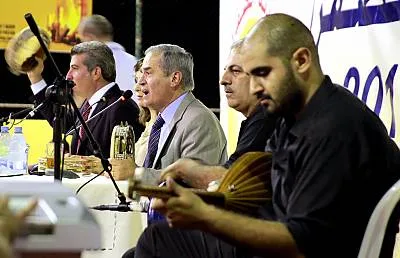
Al-Zajal is a form of Lebanese folk poetry declaimed or sung at social and family celebrations and in daily life. The performers, both men and women, express themselves either individually or collectively on a variety of themes including life, love, nostalgia, death, politics and daily events. During poetic jousts, troupes of poets and musicians gather around a table laden with dishes of meze and arrack to perform verses in front of a mixed audience to the rhythm of the tambourine and derbouka. The poets declaim verses, often in the form of challenges, which are then repeated by the singers and audience. These verbal exchanges evoke the beauty of Lebanon, the importance of tolerance, dialogue between communities and religions, and the right to difference. Transmission of Al-Zajal is largely informal, transmitted and renewed within the family or in a spontaneous manner through observation, imitation and participation. Troupes and non-governmental organizations are also actively involved in its practice and recreation. The religious and communitarian inclusiveness of Al-Zajal promotes its continuity, with poetic jousts serving as a safety valve and playing an important role in resolving conflicts and strengthening social cohesion.
Country
LebanonMore Representative List elements
Inscribed 2008Arts of the Meddah, public storytellersInscribed 2014Argan, practices and know-how concerning the argan treeInscribed 2021The art of embroidery in Palestine, practices, skills, knowledge and ritualsInscribed 2020Art of miniatureInscribed 2018Heritage of Dede Qorqud/Korkyt Ata/Dede Korkut, epic culture, folk tales and musicInscribed 2022Date palm, knowledge, skills, traditions and practices
Also inscribed in 2014
- Al-Ayyala, a traditional performing art of the Sultanate of Oman and the United Arab Emirates
- Askiya, the art of wit
- Traditional brass and copper craft of utensil making among the Thatheras of Jandiala Guru, Punjab, India
- Argan, practices and know-how concerning the argan tree
- Traditional art and symbolism of Kelaghayi, making and wearing women’s silk headscarves
- Ebru, Turkish art of marbling
Data Source: UNESCO Intangible Cultural Heritage · UNESCO listing