 Representative ListInscribed 2022
Description
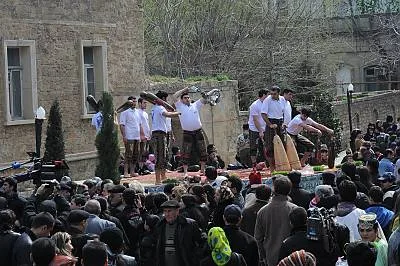
Pehlevanliq culture in Azerbaijan includes games and sports, such as wrestling, and individual performances. Pehlevans use specific tools that resemble medieval weapons (such as swords, shields and bows), but are heavier (originally, to allow pehlevans to handle real weapons easily). The competitions are overseen by referees and accompanied by music or fast-beating drums. The main practitioners of the element are the pehlevans, the men who practise, perform and transmit their knowledge and skills. The community also includes local organizations, trainers and students at local physical education institutions, as well as the spectators and the craftsmen who create the tools. The main driver for the transmission of the element has been the interest of local communities in the games, sports and performances. An integral part of popular culture, folk events and outdoor celebrations, Pehlevanliq culture provides a strong sense of identity to communities in Azerbaijan. For many years, pehlevans have been a symbol of determination, promoting social cohesion and providing a sense of pride and shared identity to local communities.
Country
AzerbaijanOther heritage elements in Azerbaijan
Representative List · Inscribed 2024Nawrouz, Novruz, Nowrouz, Nowrouz, Nawrouz, Nauryz, Nooruz, Nowruz, Navruz, Nevruz, Nowruz, NavruzRepresentative List · Inscribed 2024Tandir craftsmanship and bread baking in AzerbaijanRepresentative List · Inscribed 2023Craftsmanship and performing art of balaban/meyRepresentative List · Inscribed 2023Iftar/Eftari/Iftar/Iftor and its socio-cultural traditionsRepresentative List · Inscribed 2023Art of illumination: Təzhib/Tazhib/Zarhalkori/Tezhip/NaqqoshlikRepresentative List · Inscribed 2023Craftsmanship of mother of pearl inlay
More Representative List elements
Inscribed 2025PantunInscribed 2022Al-Mansaf in Jordan, a festive banquet and its social and cultural meaningsInscribed 2022Festivals related to the Journey of the Holy family in EgyptInscribed 2008Kutiyattam, Sanskrit theatreInscribed 2008Cultural space of Boysun DistrictInscribed 2016Tahteeb, stick game
Also inscribed in 2022
- Yaldā/Chella
- Festivals related to the Journey of the Holy family in Egypt
- Al-Mansaf in Jordan, a festive banquet and its social and cultural meanings
- Harissa, knowledge, skills and culinary and social practices
- Date palm, knowledge, skills, traditions and practices
- Al-Khanjar, craft skills and social practices
Data Source: UNESCO Intangible Cultural Heritage · UNESCO listing