UNESCO Intangible Cultural Heritage Definition Explained
Walk into a museum and you see cultural heritage — paintings, sculptures, ancient tools, preserved manuscripts. Walk out, and you encounter a different kind entirely: a street musician playing a centuries-old melody, a grandmother teaching her granddaughter to weave, a community gathering for a festival that marks the rhythm of the year. This second kind — the living, practiced, transmitted kind — is what UNESCO calls intangible cultural heritage. Unlike artifacts, it cannot be put on a shelf. It exists only in human practice, and without active transmission across generations, it disappears. As of the 2025 session, UNESCO’s intangible cultural heritage lists encompass 849 practices across 157 countries — each one a living tradition rather than a historical object.
- UNESCO’s official definition covers practices, expressions, knowledge, and skills that communities themselves recognize as part of their cultural heritage.
- The concept has three core criteria: community-based, living and dynamic, and transmissible across generations.
- The 2003 Convention — adopted October 17, 2003 and in force from April 20, 2006 — is the legal backbone of the system.
- Five domains classify all ICH: oral traditions, performing arts, social practices, knowledge about nature, and traditional craftsmanship.
- China leads all nations with 45 inscribed elements; Japan introduced the first national ICH protection law in 1950.
What UNESCO’s Official Definition of Intangible Cultural Heritage Actually Means
The word “intangible” does the heavy lifting in this concept. UNESCO’s Intergovernmental Committee was deliberate in choosing it: they needed to signal that what they were protecting was fundamentally different from the tangible heritage — monuments, buildings, artifacts — that the 1972 World Heritage Convention already covered. The 2003 Convention established a parallel framework specifically for the living dimension of culture, the part that cannot survive in preservation without continued human participation.
The Verbatim Definition from Article 2 of the 2003 Convention
Article 2 of the Convention for the Safeguarding of the Intangible Cultural Heritage provides the legal definition:
“The ‘intangible cultural heritage’ means the practices, representations, expressions, knowledge, skills — as well as the instruments, objects, artefacts and cultural spaces associated therewith — that communities, groups and, in some cases, individuals recognize as part of their cultural heritage.”
UNESCO also uses the shorthand “living heritage” — traditions or living expressions inherited from ancestors and passed on to descendants. The Convention was adopted on October 17, 2003, at UNESCO’s General Conference, and entered into force on April 20, 2006, after achieving the required 30 instruments of ratification from UNESCO member states. Today, 193+ countries participate in the convention’s mechanisms.
Three Core Criteria That Qualify a Practice as Intangible Heritage
Not every old or traditional practice qualifies. The definition carries three embedded requirements that a practice must satisfy:
- Community recognition: It is “heritage” only when the communities, groups, or individuals who create, maintain, and transmit it recognize it as part of their cultural identity. External scholars, governments, or UNESCO itself cannot unilaterally declare something intangible heritage — the claim must come from the community.
- Living and dynamic: ICH is continuously recreated by communities in response to their environment, their interaction with nature, and their history. It is not a fixed artifact — it evolves. A traditional dance that changes its choreography across generations is still intangible heritage; a dance frozen in a notation system is a museum piece.
- Transmissible across generations: The practice must be passed on through non-formal and formal education, apprenticeship, mentorship, or community ceremony. Transmission — not just existence — is what makes it heritage. UNESCO’s safeguarding definition specifically includes “transmission, particularly through formal and non-formal education” as an essential element.
When a practice satisfies all three criteria, it provides communities with “a sense of identity and continuity” and promotes “respect for cultural diversity and human creativity” — which are the twin purposes the Convention was designed to serve.
How Intangible Cultural Heritage Differs from Tangible Heritage
The distinction is foundational. Tangible cultural heritage — the Colosseum, the Pyramids, the Acropolis — can be conserved through physical intervention: structural reinforcement, climate control, restoration. Its value is anchored in the physical object. If you save the object, you preserve the heritage.
Intangible cultural heritage works in the opposite direction. Consider the artisanal knowledge surrounding sake-making in Japan, inscribed on UNESCO’s lists in December 2025. No bottle of sake, however old, preserves that heritage. What preserves it is the master brewer teaching the apprentice — the transmission of embodied skill, ecological knowledge, and ritualized practice. Destroy every sake brewery but keep a single master teaching students, and the heritage survives. The convention protects the skill of the maker, not the object made.
A Brief History: From Japan’s 1950 Law to the 2003 UNESCO Convention
The idea that living cultural practices need formal legal protection is not new. Japan pioneered it in 1950 with its Law for the Protection of Cultural Properties — the first national legislation to recognize living human practitioners (designated “Living National Treasures”) as heritage in their own right. South Korea followed in 1962 with a similar framework.
UNESCO moved toward a global equivalent through a series of incremental steps. The UNESCO Masterpieces program, launched in 2001 with an initial list of 19 exceptional elements, expanded to 28 in 2003 and 43 in 2005. An International Round Table in Turin in March 2001 built the conceptual groundwork. The 2003 Convention ultimately superseded the Masterpieces program, absorbing all those elements into the new framework and establishing the systematic inscription process that continues today — most recently adding 67 more elements at the December 2025 session in New Delhi.
The Five Official Domains of UNESCO Intangible Cultural Heritage
The 2003 Convention does not leave the scope of ICH open-ended. Article 2 enumerates exactly five domains — areas of human activity where intangible cultural heritage manifests. Every element inscribed on UNESCO’s lists falls into one or more of these domains. Understanding them is essential to understanding how UNESCO applies its definition in practice.
Domain 1: Oral Traditions and Expressions
UNESCO’s first domain covers the spoken word as a carrier of heritage: proverbs, riddles, legends, myths, epic poetry, folk narratives, lullabies, and verbal art forms that communities use to transmit history, values, and knowledge. Language itself falls under this domain — not because a language is an “expression” in the performance sense, but because endangered languages frequently serve as the vehicle through which all other ICH domains (oral narratives, ceremonial songs, ritual formulae) are transmitted. When a language disappears, the oral ICH carried inside it often disappears with it.
The domain is broad by design: an Irish storyteller at a fireside, a Mongolian epic reciter, and a Haitian community elder maintaining an oral legal tradition are all practicing ICH under Domain 1, even though their forms look nothing alike.
Domains 2 and 3: Performing Arts and Social Practices, Rituals, Festive Events
These two domains are often grouped in discussion because they share a core characteristic: both are enacted in front of, and often with the participation of, a community audience. Performing arts (Domain 2) covers music, dance, theater, puppetry, and acrobatics. Representative List examples include:
- Flamenco — Spain (inscribed 2010)
- Rumba — Cuba (inscribed 2016)
- Tango — Argentina and Uruguay
- Noh theater — Japan
- Intore dance — Rwanda (inscribed December 2025)
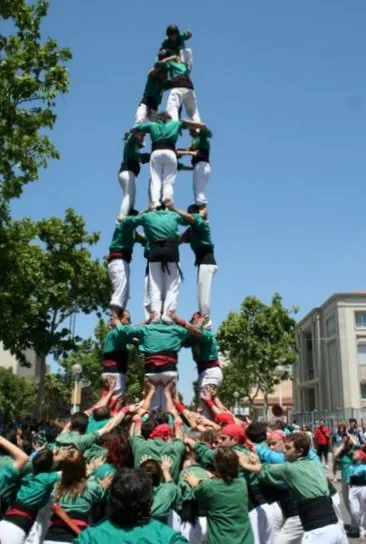
Social practices, rituals, and festive events (Domain 3) covers the customary habits and ceremonial events that mark the rhythm of community life: harvest festivals, rites of passage, customary law practices, and large-scale festive gatherings. Deepavali was inscribed under this domain in December 2025, as was the Castells (human tower-building) tradition of Catalonia. The domain captures how communities celebrate and enact their identity, not just how they perform.
Domain 4: Knowledge and Practices Concerning Nature and the Universe
This domain encompasses traditional ecological knowledge, cosmologies, healing practices, astronomical knowledge embedded in ceremony, and the profound relationship between communities and their natural environment. It is the domain most likely to intersect with contemporary debates about biodiversity and environmental sustainability.
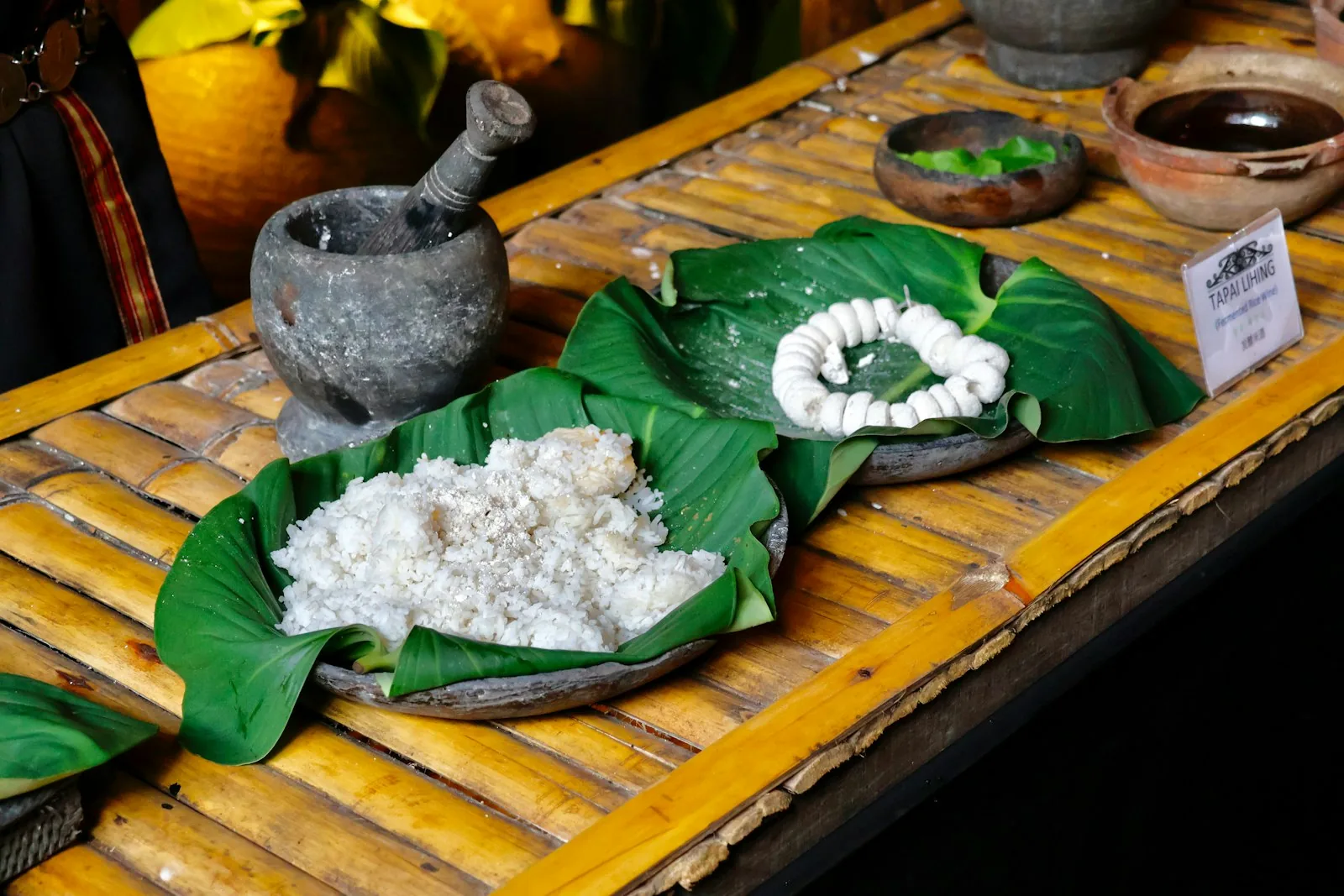
Food heritage falls prominently here. UNESCO’s Representative List includes:
- Kimchi-making — South Korea
- The tradition of the French baguette — France
- Thieboudienne (rice and fish dish) — Senegal
- Mediterranean diet — inscribed as a multinational element
- Tomyum soup preparation — Thailand (inscribed December 2025)
The inclusion of food traditions reflects UNESCO’s understanding that culinary knowledge is not trivial — it encodes ecological intelligence about local ingredients, seasonal rhythms, and social bonding practices accumulated over centuries.
Domain 5: Traditional Craftsmanship
The fifth and perhaps most tangible-seeming domain focuses on the skills and knowledge required to produce traditional crafts — not the objects themselves. This distinction matters: UNESCO protects the practice of making, not the product. A master potter’s knowledge of clay composition, firing temperatures, and decorative technique is Domain 5 heritage; the pot they produce is not.
China leads all countries with 45 inscribed elements on UNESCO’s lists, many in the craftsmanship domain. Turkey holds 32 inscribed elements, and France holds 30. The December 2025 session explicitly themed around this domain — “practice by hand” — inscribing elements including sake artisanal knowledge (Japan), Đông Hồ folk woodblock printing (Vietnam), Blaudruck blue-resist textile printing (Central Europe), and Tangail saree weaving (Bangladesh).
For a full exploration of India’s 16 inscribed intangible heritage elements spanning multiple domains, the diversity of practices recognized under a single nation illustrates how the five-domain framework applies across an entire cultural landscape. The most counterintuitive aspect of the definition is that protecting ICH means protecting people and processes rather than objects — the moment transmission stops, the heritage is lost, no matter how many recordings, photographs, or museum exhibits survive.
Frequently Asked Questions
How does UNESCO define intangible cultural heritage?
UNESCO defines ICH as ‘practices, representations, expressions, knowledge, and skills that communities recognize as part of their cultural heritage’ — living traditions transmitted across generations, continuously recreated, not fixed in objects.
What are the five domains of UNESCO intangible cultural heritage?
The five domains are: (1) oral traditions and expressions, (2) performing arts, (3) social practices, rituals and festive events, (4) knowledge about nature and the universe, and (5) traditional craftsmanship.
What is the 2003 UNESCO Convention for the Safeguarding of Intangible Cultural Heritage?
It is a UNESCO treaty adopted on October 17, 2003, which entered into force on April 20, 2006. It establishes the legal framework for identifying, protecting, and transmitting intangible cultural heritage worldwide.
Which country has the most UNESCO intangible cultural heritage inscriptions?
China leads with 45 inscribed elements on UNESCO’s lists, followed by Turkey with 32 and France with 30.
What is the difference between tangible and intangible cultural heritage?
Tangible heritage refers to physical objects and sites (monuments, artifacts). Intangible heritage refers to living practices — skills, traditions, and knowledge that exist only through human practice and transmission, not in a preserved object.