India’s 16 UNESCO Intangible Cultural Heritage Elements: Complete List
India has 16 elements inscribed on UNESCO’s Representative List of the Intangible Cultural Heritage of Humanity — a tally that reached its current count on 10 December 2025, when Deepavali was inscribed at the 20th session of the Intergovernmental Committee, held for the first time in India at New Delhi’s Red Fort. That session evaluated 67 global nominations and added 55 to the Representative List. India’s journey on this list stretches from 2008, when three inaugural elements entered together, through performing arts, living festivals, oral traditions, a solitary craft, and two knowledge systems that span the entire subcontinent.
- India holds 16 inscribed elements on UNESCO’s ICH Representative List as of December 2025.
- Deepavali (2025) is the most recent addition; Garba of Gujarat (2023) was the one before it.
- All 16 Indian elements are on the Representative List — none are on the Urgent Safeguarding List.
- The Sangeet Natak Akademi, under India’s Ministry of Culture, prepares every nomination dossier.
- Chhath Mahaparva is India’s next nomination, targeting the 2026–27 cycle in a multinational bid.
The complete list of India’s 16 UNESCO ICH elements from 2008 to 2025
The table below is the definitive reference. Each row records the element’s official UNESCO name, the year it was inscribed, its primary domain under the 2003 Convention for the Safeguarding of Intangible Cultural Heritage, and its geographic base within India.
| # | Element | Year | Domain | Region |
|---|---|---|---|---|
| 1 | Tradition of Vedic Chanting | 2008 | Oral traditions | Pan-India |
| 2 | Kutiyattam, Sanskrit Theatre | 2008 | Performing arts | Kerala |
| 3 | Ramlila, traditional performance of the Ramayana | 2008 | Performing arts | North India |
| 4 | Ramman, religious festival and ritual theatre of the Garhwal Himalayas | 2009 | Social practices & festivals | Uttarakhand |
| 5 | Chhau dance | 2010 | Performing arts | West Bengal, Jharkhand, Odisha |
| 6 | Kalbelia folk songs and dances of Rajasthan | 2010 | Performing arts | Rajasthan |
| 7 | Mudiyettu, ritual theatre and dance drama of Kerala | 2010 | Performing arts | Kerala |
| 8 | Buddhist chanting of Ladakh | 2012 | Oral traditions | Ladakh |
| 9 | Sankirtana, ritual singing, drumming and dancing of Manipur | 2013 | Performing arts | Manipur |
| 10 | Traditional brass and copper craft of utensil making among the Thatheras of Jandiala Guru, Punjab | 2014 | Traditional craftsmanship | Punjab |
| 11 | Yoga | 2016 | Knowledge about nature | Pan-India |
| 12 | Nowruz (Navroz) | 2016 | Social practices & festivals | Pan-India (multinational) |
| 13 | Kumbh Mela | 2017 | Social practices & festivals | Uttar Pradesh, Uttarakhand, Maharashtra, Madhya Pradesh |
| 14 | Durga Puja in Kolkata | 2021 | Social practices & festivals | West Bengal |
| 15 | Garba of Gujarat | 2023 | Social practices & festivals | Gujarat |
| 16 | Deepavali | 2025 | Social practices & festivals | Pan-India |
2008 foundations: Kutiyattam, Vedic Chanting and Ramlila
India’s three inaugural inscriptions in 2008 were selected for their depth of antiquity and unbroken transmission chains. Kutiyattam is recognised as the world’s oldest surviving classical theatre form; performed exclusively in temple theatres called koothambalam in Kerala, its gestural language and Sanskrit-based script trace back over 2,000 years. The Tradition of Vedic Chanting encodes a 3,500-year oral corpus — the Rigveda, Samaveda, Yajurveda and Atharvaveda — transmitted through the Guru-Shishya (teacher-disciple) system without a single written note; UNESCO flagged it as urgently needing safeguarding because the number of practitioners was already declining at the time of the Convention’s adoption. Ramlila, the dramatic re-enactment of Valmiki’s Ramayana, is performed over nine or ten nights across hundreds of towns during the Dussehra period, combining music, narration, dialogue and elaborate costume to retell Lord Rama’s life.
2009 to 2017: dance forms, sacred festivals, a lone craft and Kumbh Mela
The next eight years brought nine more inscriptions spanning every major domain of the 2003 Convention. Ramman (2009) is a village-level religious festival and ritual theatre in Uttarakhand’s Garhwal Himalayas; unusually for India’s list, it is tied to a single locality — the Saloor Dungra villages. The 2010 cohort brought three performing arts forms at once: Chhau dance, practiced in three distinct styles across West Bengal, Jharkhand and Odisha, performed by male dancers wearing elaborate masks during the spring festival of Chaitra Parva; Kalbelia folk songs and dances from Rajasthan, belonging to the Kalbelia community of snake charmers whose spiral movements replicate a serpent’s sinuous motion; and Mudiyettu, a ritual theatre form from Kerala’s river valleys depicting the battle between the goddess Kali and the demon Darika.
Buddhist Chanting of Ladakh (2012) — encompassing prayer recitations, masked Cham dances and instrument-based ritual music of Ladakhi Buddhist monasteries — represents India’s northeastern Buddhist tradition on the list. Sankirtana (2013) from Manipur is a complex of ritual singing, drumming and dancing performed at every stage of life, from birth to death, in the Vaishnava tradition. The Thatheras’ brass and copper craft (2014) stands alone on India’s entire list as the sole traditional craftsmanship inscription: the hereditary Thathera community of Jandiala Guru, Punjab, uses hammer-and-anvil techniques unchanged for centuries to produce utensils used in religious and daily life.
Yoga (2016) brought India a recognition that spans its broadest geographic and social reach. Nowruz (2016) — the Persian New Year celebrated by India’s Parsi community — is the only element India shares with other countries, co-inscribed with 12 nations including Iran, Afghanistan, Azerbaijan and Kazakhstan. Kumbh Mela (2017) is the world’s largest peaceful gathering of people; the pilgrimage cycle rotates across Prayagraj, Haridwar, Nashik and Ujjain, drawing tens of millions of pilgrims — about 660 million attended the 2025 Maha Kumbh Mela alone.
2021 to 2025: Durga Puja, Garba and Deepavali complete the 16
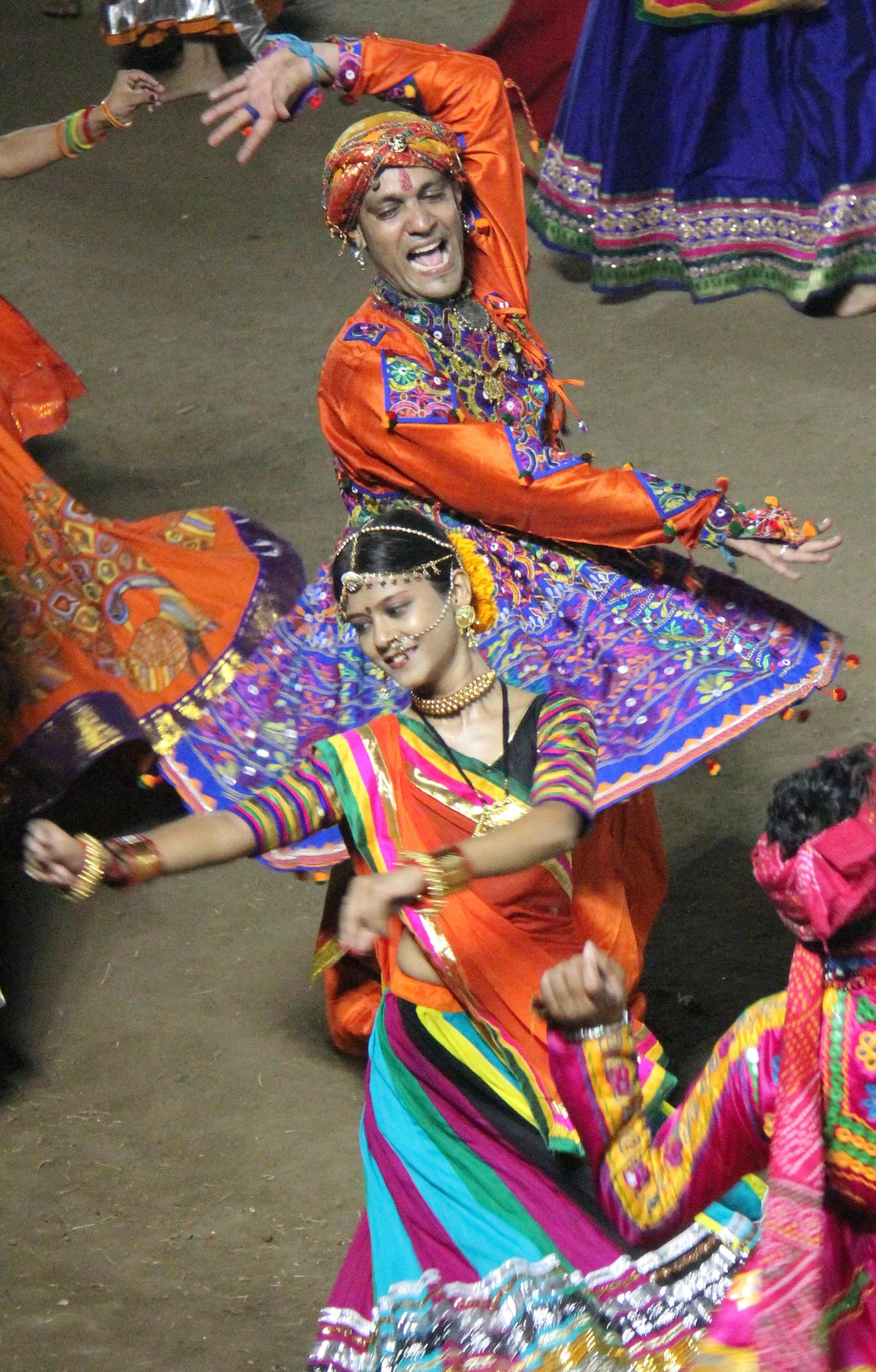
After a four-year gap, three more inscriptions followed in quick succession. Durga Puja in Kolkata (2021) was recognised for its role as a living festival that transcends class and community — the ten-day event mobilises thousands of neighbourhood committees, each erecting intricately crafted pandals (temporary structures). Garba of Gujarat was inscribed in December 2023 at the 18th session of the Intergovernmental Committee; the circular devotional dance performed during the nine nights of Navratri is central to Gujarati identity and practiced by millions of diaspora communities worldwide.
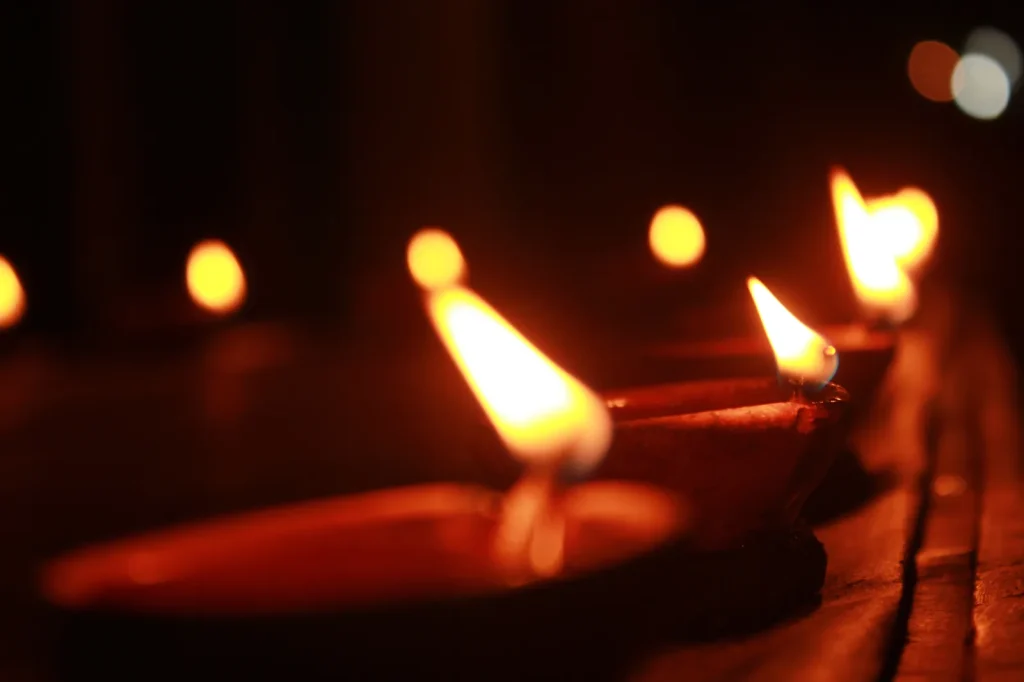
Deepavali became India’s 16th element on 10 December 2025, inscribed at the 20th session of the Intergovernmental Committee — the first session ever held in India, with the ceremony at the Red Fort in New Delhi. UNESCO described Deepavali as a light festival that “marks the last harvest of the year and the start of a new year and new season,” falling on the new moon in October or November and lasting several days.
How India nominates elements and what comes next for Indian cultural heritage
Inscription on UNESCO’s ICH list is not automatic. India follows a structured pipeline overseen by a dedicated national body, and the next element in the queue — Chhath Mahaparva — is already deep into the nomination process with international partners confirmed.
The role of Sangeet Natak Akademi and the National Register in UNESCO nominations
The Sangeet Natak Akademi, an autonomous institution established in 1952 under India’s Ministry of Culture, serves as the national nodal agency for all UNESCO ICH matters. It prepares the nomination dossiers — detailed documents that must demonstrate a cultural practice’s vitality, community-led transmission, and existing safeguarding measures — before submitting them to UNESCO. A critical procedural requirement is that an element must first be formally entered into India’s National Inventory of Intangible Cultural Heritage; without that domestic registration, no UNESCO dossier can be submitted.
UNESCO evaluates nominations against five domains defined in the 2003 Convention:
- Oral traditions and expressions — e.g. Vedic Chanting, Buddhist Chanting of Ladakh
- Performing arts — e.g. Kutiyattam, Chhau Dance, Kalbelia, Mudiyettu, Sankirtana
- Social practices, rituals and festive events — e.g. Kumbh Mela, Durga Puja, Garba, Deepavali
- Knowledge and practices concerning nature and the universe — e.g. Yoga
- Traditional craftsmanship — e.g. Thatheras’ brass and copper craft
India’s 16 elements touch all five domains, but festivals and performing arts dominate: seven inscriptions fall under social practices and festivals, and five under performing arts.
Chhath Mahaparva: India’s next UNESCO nomination for the 2026–27 cycle
India is pursuing a multinational nomination for Chhath Mahaparva targeting the 2026–27 inscription cycle. The Ministry of Culture convened a consultation at the Indira Gandhi National Centre for the Arts (IGNCA) in New Delhi with diplomatic representatives of the United Arab Emirates, Suriname and the Netherlands — countries with significant Indian diaspora communities where Chhath is actively practiced. All three confirmed their cooperation for the joint nomination.
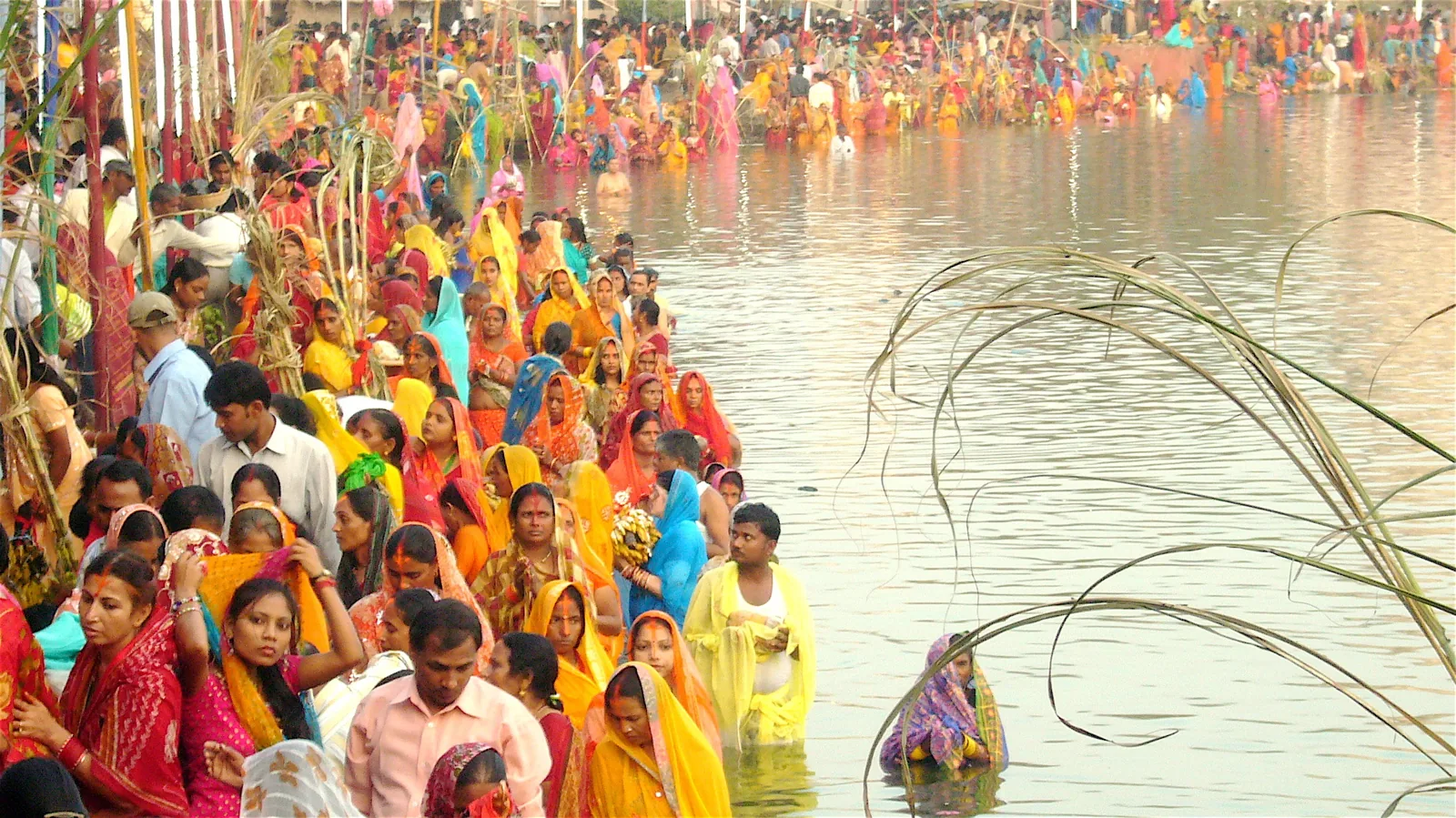
Chhath Mahaparva is dedicated to the Sun God and Goddess Chhathi Maiya and is observed primarily in Bihar, Jharkhand, Uttar Pradesh and West Bengal, with diaspora communities in Mauritius, Fiji, Suriname, the UAE and the Netherlands carrying the tradition overseas. UNESCO would recognise it for its ecological ethos — rituals are performed on riverbanks — and its egalitarian character: participation transcends caste, creed and religion, with no priestly intermediary required.
India’s standing among 157 countries and 849 global ICH practices
To place India’s 16 in context: UNESCO’s combined ICH lists now cover 849 cultural practices across 157 countries that have ratified the 2003 Convention. All 16 of India’s inscribed elements sit on the Representative List; none have been placed on the Urgent Safeguarding List, which signals that India’s national safeguarding mechanisms are considered adequate for every practice it has nominated so far.
The 2025 session, hosted in New Delhi, added 67 new global elements across the lists — a significant single-session addition that reflects UNESCO’s accelerating pace of recognition as more countries ratify the Convention and build nomination capacity.
India both hosted the 2025 Committee session and had Deepavali inscribed at it — a combination that has not occurred for any other country in the programme’s history. The Ministry of Culture’s website publishes updates on the Chhath Mahaparva dossier as it moves through UNESCO’s review cycle for 2026–27, making it the clearest signal yet of where India’s cultural diplomacy is headed next.
Frequently Asked Questions
How many UNESCO intangible cultural heritage elements does India have?
India has 16 elements inscribed on UNESCO’s Representative List of the Intangible Cultural Heritage of Humanity as of December 2025, when Deepavali became the most recent addition at the 20th Committee session in New Delhi.
What is the latest UNESCO intangible cultural heritage addition from India?
Deepavali was inscribed on 10 December 2025 at the 20th session of the Intergovernmental Committee, held at the Red Fort in New Delhi. It is recognised under the domain of social practices, rituals and festive events.
Which Indian element is shared with other countries on the UNESCO ICH list?
Nowruz (Navroz), the Persian New Year celebrated by India’s Parsi community, was inscribed in 2016 as a multinational element co-shared with 12 other countries including Iran, Afghanistan, Azerbaijan and Kazakhstan.
What is India’s next UNESCO intangible cultural heritage nomination?
India is pursuing a multinational nomination for Chhath Mahaparva in the 2026–27 cycle, in partnership with the UAE, Suriname and the Netherlands, where the festival is practiced by Indian diaspora communities.
Which body prepares India’s UNESCO ICH nominations?
The Sangeet Natak Akademi, an autonomous institution under India’s Ministry of Culture, is the national nodal agency that prepares all UNESCO ICH nomination dossiers. An element must first enter India’s National Inventory before a UNESCO dossier can be submitted.
Is there any UNESCO ICH element from India on the Urgent Safeguarding List?
No. All 16 of India’s inscribed elements are on the Representative List. None are on the Urgent Safeguarding List, which indicates that India’s national safeguarding measures are considered adequate for each practice.