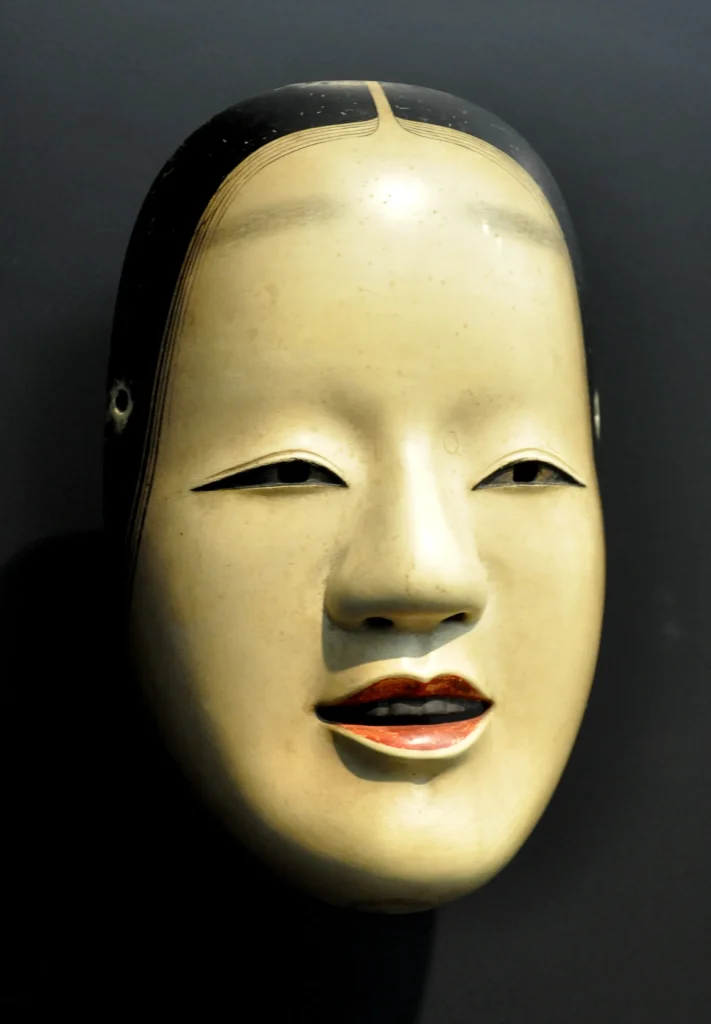
What Is UNESCO Intangible Cultural Heritage?
UNESCO Intangible Cultural Heritage (ICH) refers to living practices — not physical objects — that communities transmit across generations: songs, dances, craft knowledge, rituals, and culinary traditions. Protected under the 2003 Convention for the Safeguarding of the Intangible Cultural Heritage, which entered into force on April 20, 2006, the program now encompasses 849 living cultural practices practiced in 157 countries. Unlike a monument that can be fenced off and preserved, intangible heritage disappears the moment it stops being practised and taught.
- UNESCO’s ICH program operates under a 2003 Convention ratified by 182 countries — the broadest cultural treaty in UNESCO’s history.
- Three separate lists exist: the Representative List, the Urgent Safeguarding List, and the Register of Good Safeguarding Practices.
- ICH is organised into 5 official domains — from oral traditions to traditional craftsmanship.
- China leads all nations with 44 inscribed elements; the 2025 New Delhi session added 67 new inscriptions from 78 countries.
- Food alone accounts for roughly 50 inscribed culinary traditions, including the Mediterranean diet, the Neapolitan pizzaiuolo, and the French baguette.
What UNESCO Classifies as Intangible Cultural Heritage

The term “intangible cultural heritage” can sound abstract, but UNESCO’s definition is precise. It covers any practice that a community recognises as its own living heritage — something kept alive through active teaching and performance rather than physical preservation. Understanding exactly what qualifies — and what doesn’t — starts with the Convention’s own text and the five domains it establishes.
The Official UNESCO Definition of Intangible Cultural Heritage
Article 2 of the 2003 Convention defines intangible cultural heritage as “the practices, representations, expressions, knowledge, skills — as well as the instruments, objects, artifacts and cultural spaces associated therewith — that communities, groups and, in some cases, individuals recognize as part of their cultural heritage.” Three conditions must be met: the heritage must be transmitted across generations, it must be constantly recreated by communities in response to their environment, and it must provide them with a sense of identity and continuity.
Critically, the Convention specifies that ICH is “compatible with existing international human rights instruments, as well as with the requirements of mutual respect among communities.” This clause prevents the shield of “cultural heritage” from being used to justify practices that violate human rights.
The 5 Official ICH Domains with Examples
UNESCO organises all inscribed elements into five broad domains. Each domain can encompass a vast range of practices; many inscribed elements straddle more than one:
- Oral traditions and expressions — language itself, including proverbs, poems, epics, and tales passed down verbally. Example: the oral heritage of Gelede masquerade in West Africa.
- Performing arts — music, dance, and theatre. Examples: tango (Argentina and Uruguay), flamenco (Spain), Peking Opera (China).
- Social practices, rituals and festive events — community ceremonies and seasonal celebrations. Example: Nowruz, the Persian New Year, co-inscribed by 13 countries across Central Asia, the Caucasus, the Balkans, and the Middle East.
- Knowledge and practices concerning nature and the universe — traditional ecological knowledge, astronomy, and healing practices. Example: traditional knowledge of the jaguar shamans of Yuruparí (Colombia and Brazil).
- Traditional craftsmanship — skills and techniques behind handmade objects. Example: Viennese coffee house culture (Austria), which bridges craftsmanship and social ritual.
Intangible vs. Tangible Heritage: Core Distinctions
UNESCO’s World Heritage Sites programme (tangible heritage) protects physical places — the Pyramids of Giza, the Colosseum, the Taj Mahal. These can be fenced, stabilised, and managed as static monuments. Intangible heritage is fundamentally different: it exists only when people perform it. A dance tradition dies not when its stage is demolished but when no one teaches it to the next generation.
Japan was the first country to legislate protection for ICH, enacting its Law for the Protection of Cultural Properties in 1950, more than half a century before the global Convention. South Korea followed in 1962. These early national frameworks later influenced the structure of UNESCO’s own 2003 Convention.
How UNESCO’s 2003 Convention and Inscription Process Work
Getting a cultural practice onto a UNESCO ICH list is not automatic — it requires a formal nomination, a national inventory, and evaluation by an independent expert body. The system rests on a single multilateral treaty that has become one of UNESCO’s most widely ratified conventions in the field of culture.
The 2003 Convention: Adoption, Ratification, and Four Core Purposes
The Convention for the Safeguarding of the Intangible Cultural Heritage was adopted on October 17, 2003, at UNESCO’s 32nd General Conference. It entered into force on April 20, 2006, after the required 30 instruments of ratification were deposited. As of 2024, 182 states have ratified the Convention — making it one of the most broadly subscribed cultural treaties in the UN system.
The Convention sets out four core purposes: (1) to safeguard ICH; (2) to ensure respect for the ICH of communities; (3) to raise awareness at local, national, and international levels; and (4) to provide international cooperation and assistance for safeguarding. States party to the Convention are required to maintain national inventories of their ICH as a precondition for nomination.
The Three UNESCO ICH Lists and What Each Means
Most people know only the Representative List, but the Convention actually created three distinct mechanisms:
- Representative List of the Intangible Cultural Heritage of Humanity — The largest list. Its goal is not to say these practices are endangered, but to raise visibility and promote appreciation of living heritage worldwide. The vast majority of inscriptions land here.
- List of Intangible Cultural Heritage in Need of Urgent Safeguarding — For elements whose viability is at serious risk. Inscription triggers international assistance and monitoring. The Urgent Safeguarding List currently holds more than 35 elements.
- Register of Good Safeguarding Practices — Recognises programmes and projects — not practices themselves — that have successfully safeguarded ICH. One programme was added in the 2025 session.
The December 2025 session in New Delhi, India examined 68 nominations and inscribed 67 elements from 78 countries — the largest number of inscriptions in a single Committee session. Seven nations — Barbados, Chad, the Comoros, El Salvador, Gabon, Libya, and Sao Tome and Principe — received their very first UNESCO ICH inscription. After this session, the total stands at 849 cultural practices in 157 countries.
Countries with the Most UNESCO ICH Inscriptions
Inscription counts reflect a mix of cultural diversity, national nomination capacity, and the length of time a country has been party to the Convention. China has invested heavily in nominations and consistently leads the global ranking:
| Country | ICH Inscriptions |
|---|---|
| China | 44 |
| Turkey | 32 |
| France | 30 |
| Iran | 27 |
| Spain | 26 |
| Azerbaijan | 24 |
| Croatia | 23 |
| Japan | 23 |
| South Korea | 23 |
| Belgium | 21 |
| Italy | 21 |
| UAE | 21 |
The dominance of China (44) over the second-ranked Turkey (32) is significant: China’s 44 inscribed elements span all five ICH domains and include the Spring Festival, added in December 2024. The spread also shows that ICH inscription is not confined to ancient civilisations — Belgium’s 21 inscriptions include the Carnival of Binche and the tradition of Gilles de Binche.
Notable Examples of UNESCO Intangible Cultural Heritage Worldwide

With 849 inscribed elements spanning oral epics, sacred dances, cheese-making techniques, and New Year festivals, the scope of UNESCO ICH can feel overwhelming. Looking at specific examples by category helps illustrate what “intangible” actually means in practice — and why these traditions were considered worth a global treaty.
Food and Culinary Traditions Inscribed on the UNESCO ICH List
Food is one of the most intuitive forms of intangible heritage: a dish embodies not just a recipe but a knowledge system, a seasonal calendar, and a set of social rituals around preparation and sharing. Around 50 traditional culinary practices are now inscribed on UNESCO’s lists. Key examples include:
- Mediterranean diet (2013) — Inscribed jointly by 7 countries: Cyprus, Croatia, Spain, Greece, Italy, Morocco, and Portugal. Recognised not as a menu but as a set of skills, knowledge, rituals, and traditions around crops, fishing, cooking, and communal eating.
- Art of the Neapolitan Pizzaiuolo (Italy, 2017) — The craft of preparing and baking the Neapolitan pizza in a wood-fired oven, recognised as both artisanal skill and social identity for Naples.
- Craftsmanship and culture of the French baguette (France, 2022) — The knowledge and practices associated with artisanal baguette production.
- Couscous (2020) — Co-inscribed by Algeria, Mauritania, Morocco, and Tunisia as a shared culinary tradition stretching across North Africa.
- Traditional Mexican cuisine (2010) and Peruvian ceviche preparation represent Latin American culinary heritage on the list.
- Washoku (Japan, 2013) — Traditional Japanese dietary cultures, emphasising seasonality, presentation, and the use of dashi stock.
Performing Arts and Music Traditions on the UNESCO ICH List
Performing arts account for some of the most globally recognised ICH inscriptions. These elements tie communities to historical identity and to one another through shared performance:
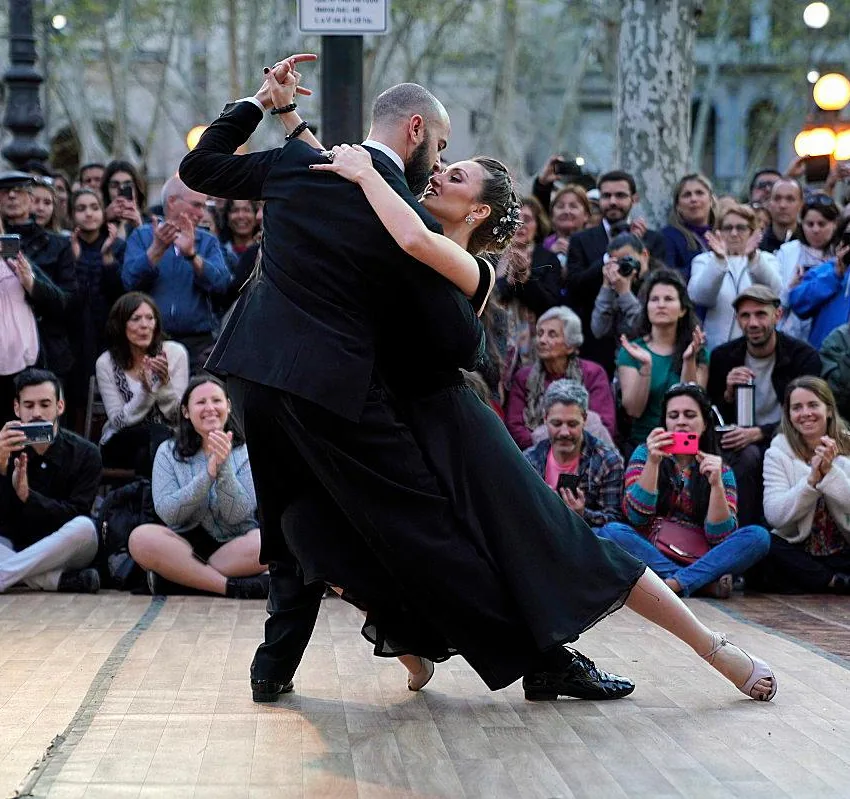
- Tango (Argentina and Uruguay, 2009) — Inscribed as a musical genre and dance form born in the Río de la Plata region; involves music, poetry, dance, and a distinctive philosophy of encounter.
- Flamenco (Spain, 2010) — Song, dance, and guitar playing rooted in Andalusian culture, combining influences from Roma, Moorish, and Jewish traditions.
- Capoeira (Brazil, 2014) — Afro-Brazilian martial art and cultural expression combining fight, dance, and music.
- Cuban rumba (Cuba, 2016) — A set of musical and dance practices of African origin, linked to Havana and Matanzas communities.
- Peking Opera (China, 2010) — One of China’s most famous classical theatre forms, combining music, vocal performance, mime, acrobatics, and dance.
- Kalbelia folk songs and dances (India, 2010) — Performed by the Kalbelia community of Rajasthan, drawing on the community’s traditional identity as snake charmers.
Festivals, Rituals, and Craft Traditions Recognised by UNESCO
Some of the most politically significant ICH inscriptions are multi-country, demonstrating that cultural heritage does not stop at borders:
- Nowruz — The Persian New Year and spring festival, co-inscribed by 13 countries including Afghanistan, Azerbaijan, India, Iran, Iraq, Kazakhstan, Kyrgyzstan, Pakistan, Tajikistan, Turkey, Turkmenistan, and Uzbekistan. Celebrated on or around March 21, it represents one of the largest ICH inscriptions in terms of geographic reach.
- Carnival of Binche (Belgium, 2008) — One of the oldest and most authentic carnivals in the world, centred on the costume of the Gilles and the throwing of blood oranges.
- Viennese coffee house culture (Austria, 2011) — The tradition of the Viennese café as a place of meeting, social exchange, and unhurried reading recognised as a distinct cultural space.
- Falconry — A multi-country inscription spanning 25 nations, including many in the Middle East, recognised as a living human heritage and a symbol of cultural exchange across continents.
The next Committee session is scheduled for December 2026 in Xiamen, China, where further nominations will be evaluated and new elements inscribed onto the lists.
The most striking finding from the entire UNESCO ICH programme is how many traditions exist at the edge of disappearance: the Urgent Safeguarding List captures practices kept alive by only a handful of practitioners. In 2025, seven countries — Barbados, Chad, the Comoros, El Salvador, Gabon, Libya, and Sao Tome and Principe — made their first appearance on any UNESCO ICH list. To explore all 849 inscribed elements yourself, visit the official ICH lists portal at ich.unesco.org, which allows filtering by country, domain, and year of inscription.
Frequently Asked Questions
What is the UNESCO intangible cultural heritage?
UNESCO Intangible Cultural Heritage refers to living cultural practices — oral traditions, performing arts, rituals, craftsmanship, and culinary traditions — safeguarded under the 2003 Convention. As of 2025, 849 elements across 157 countries are inscribed on the UNESCO ICH lists.
Which country has the most intangible cultural heritage inscriptions?
China leads all nations with 44 UNESCO ICH inscriptions, followed by Turkey (32), France (30), Iran (27), and Spain (26). China’s Spring Festival was added in December 2024, cementing its top ranking.
What cuisines are protected by UNESCO as intangible cultural heritage?
Around 50 culinary traditions are inscribed, including the Mediterranean diet (7 countries, 2013), the Neapolitan pizzaiuolo (Italy, 2017), the French baguette (France, 2022), couscous (Algeria, Mauritania, Morocco, Tunisia), Japanese washoku, and traditional Mexican cuisine.
What are the 5 domains of UNESCO intangible cultural heritage?
The five domains are: (1) oral traditions and expressions, (2) performing arts, (3) social practices, rituals and festive events, (4) knowledge and practices concerning nature and the universe, and (5) traditional craftsmanship.