Turkey UNESCO Intangible Cultural Heritage: Complete List of 32 Recognized Elements
As of 2025, Türkiye (Turkey) has 32 elements recognized by UNESCO’s intangible cultural heritage program — the most of any country in the Middle East and one of the highest totals globally, trailing only China (45), France (30+), and a handful of other nations. Turkey’s 32 inscriptions span the Representative List of the Intangible Cultural Heritage of Humanity (29 elements) and the List of Intangible Cultural Heritage in Need of Urgent Safeguarding (2 elements, with a 30th shared multinational element). The collection ranges from the 2005 UNESCO Masterpiece proclamation of the Mevlevi Sema ceremony (whirling dervishes) to the 2025 inscription of Antep İşı, the drawn thread embroidery tradition of Gaziantep. Turkey’s portfolio is notable for its diversity: wrestling festivals, shadow puppetry, coffee culture, calligraphy, paper marbling, flatbread traditions, and ritual practices all feature across the official UNESCO Turkey page.
- Turkey has 32 UNESCO ICH elements as of 2025 — among the highest totals globally, the most in the Middle East.
- Oldest recognition: Mevlevi Sema ceremony (whirling dervishes), proclaimed a UNESCO Masterpiece in 2005 and incorporated into the Representative List in 2008.
- Most recently inscribed: Antep İşı drawn thread embroidery of Gaziantep (2025) and traditional bagpipe tradition Gayda/Tulum (2024).
- Turkey has 2 elements on the Urgent Safeguarding List: traditional knowledge of olive cultivation and traditional Ahlat stonework.
- Several inscriptions are multinational, shared with neighboring countries — including Nawrouz/Nowruz, the Lavash flatbread tradition, and traditional silk sericulture.
Turkey’s UNESCO ICH Complete List: All 32 Recognized Elements
Turkey’s inscriptions span five decades of recognition, from its first UNESCO Masterpiece proclamation in 2005 to additions as recent as 2025. The elements are distributed across the Representative List and Urgent Safeguarding List, with several being multinational inscriptions shared with neighboring states in the Middle East, Central Asia, and Caucasus regions.
Representative List: 29 Elements (2008–2025)
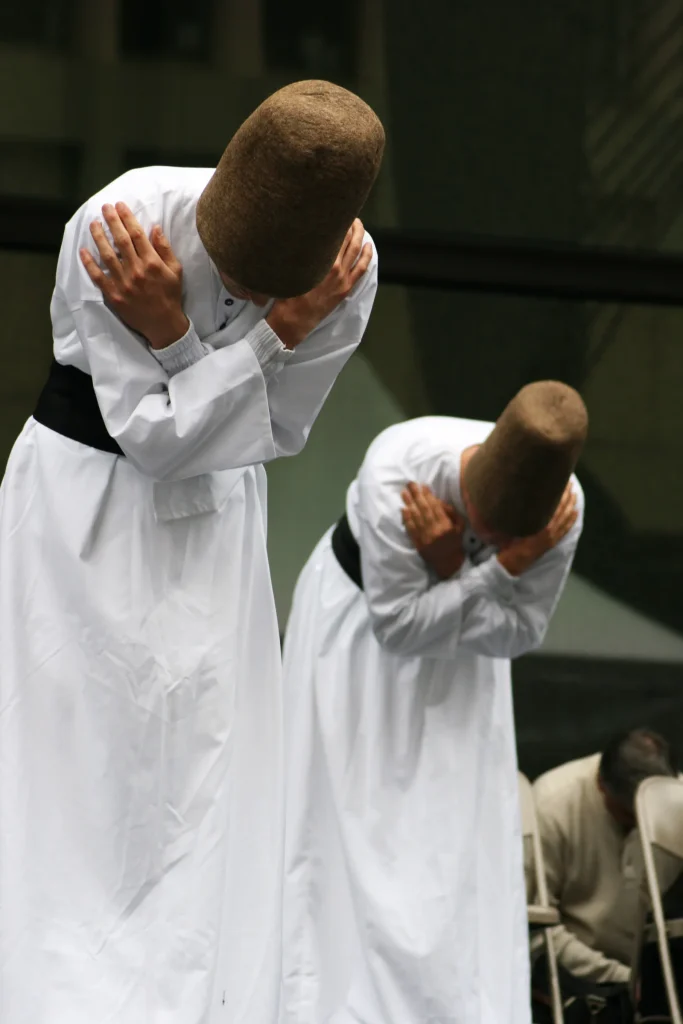
- Mevlevi Sema ceremony (2008, File No. 00089): The whirling dervish ceremony of the Mevlevi Sufi order, originally proclaimed a UNESCO Masterpiece in 2005. The Sema is performed as a form of active meditation, with white-robed practitioners (semazen) rotating counterclockwise in a symbolic representation of the soul’s journey toward union with the divine. Developed from the teachings of the 13th-century poet Rumi (Mevlâna Jalal ad-Din Rumi) in Konya.
- Arts of the Meddah, public storytellers (2008, File No. 00094): The tradition of the Meddah — a solo storyteller who performed in public spaces, coffeehouses, and for court audiences — using voice, gesture, and a staff and cloth as the only props. Originally proclaimed a Masterpiece in 2003.
- Karagöz (2009, File No. 00180): Turkish shadow puppet theater performed using translucent camel-hide or gelatin figures backlit behind a screen. The central character Karagöz (Black Eye) represents the earthy wit of the common people; his foil Hacivat embodies the educated elite. Performances traditionally accompany Ramadan festivities.
- Âşıklık (minstrelsy) tradition (2009, File No. 00179): The tradition of the âşık — a wandering bard who improvises verse while accompanying himself on a stringed instrument (saz/bağlama), performing at weddings, village squares, and regional festivals. The tradition combines improvised poetry, folk musical performance, and oral storytelling.
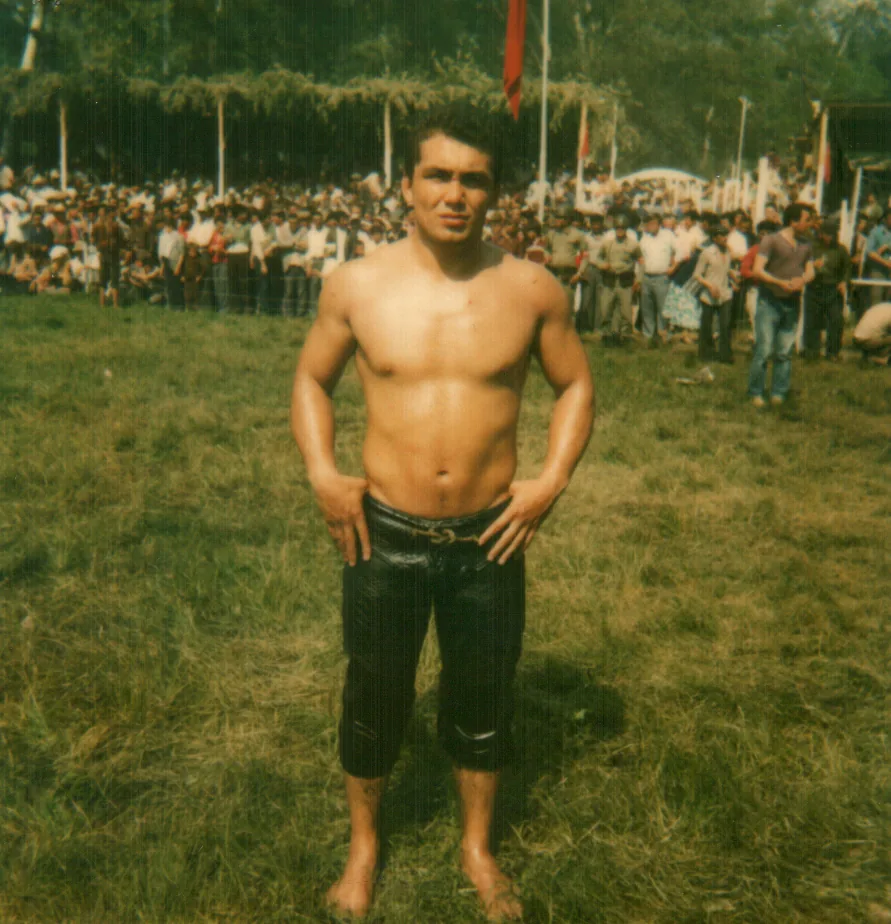
- Kırkpınar oil wrestling festival (2010, File No. 00386): The world’s oldest continuously held sporting competition — documented records date to 1346 CE. Held annually in Edirne, the festival involves wrestlers coated in olive oil competing in tournaments that last several days, culminating in the crowning of the chief wrestler (başpehlivan). The festival is embedded in Thracian agricultural and civic traditions.
- Semah, Alevi-Bektaşi ritual (2010, File No. 00384): The ritual dance-prayer of the Alevi and Bektaşi communities, performed as part of the Cem ceremony — a gathering combining prayer, music, poetry recitation, and communal judgment. Semah dancers (both men and women) perform together in a tradition rooted in Anatolian Sufi practice.
- Traditional Sohbet meetings (2010, File No. 00385): Community gathering traditions in which men or women assemble regularly for conversation, poetry recitation, musical performance, and communal storytelling. The Sohbet tradition is documented across Anatolia as a form of informal civil assembly and knowledge transmission.
- Ceremonial Keşkek tradition (2011, File No. 00388): The communal preparation and sharing of keşkek — a wheat-and-meat porridge — at weddings, religious celebrations, and public ceremonies. The tradition involves hundreds of participants working in organized preparation teams using large copper cauldrons.
- Mesir Macunu festival (2012, File No. 00487): An annual spring festival in Manisa centered on the distribution of Mesir macunu — a spiced herbal paste historically prepared in the Sultan Mosque. The festival commemorates a legend in which the paste was formulated by a royal physician to cure the Ottoman queen mother Hafsa Sultan in the 16th century.
- Turkish coffee culture and tradition (2013, File No. 00645): The preparation, serving, and cultural practices surrounding Turkish coffee — including the use of the cezve (small copper pot), serving to guests as a sign of hospitality, fortune-telling with coffee grounds (tasseography), and the role of coffeehouses as centers of social life. The inscription covers the entire social ecosystem of Turkish coffee rather than just the beverage.
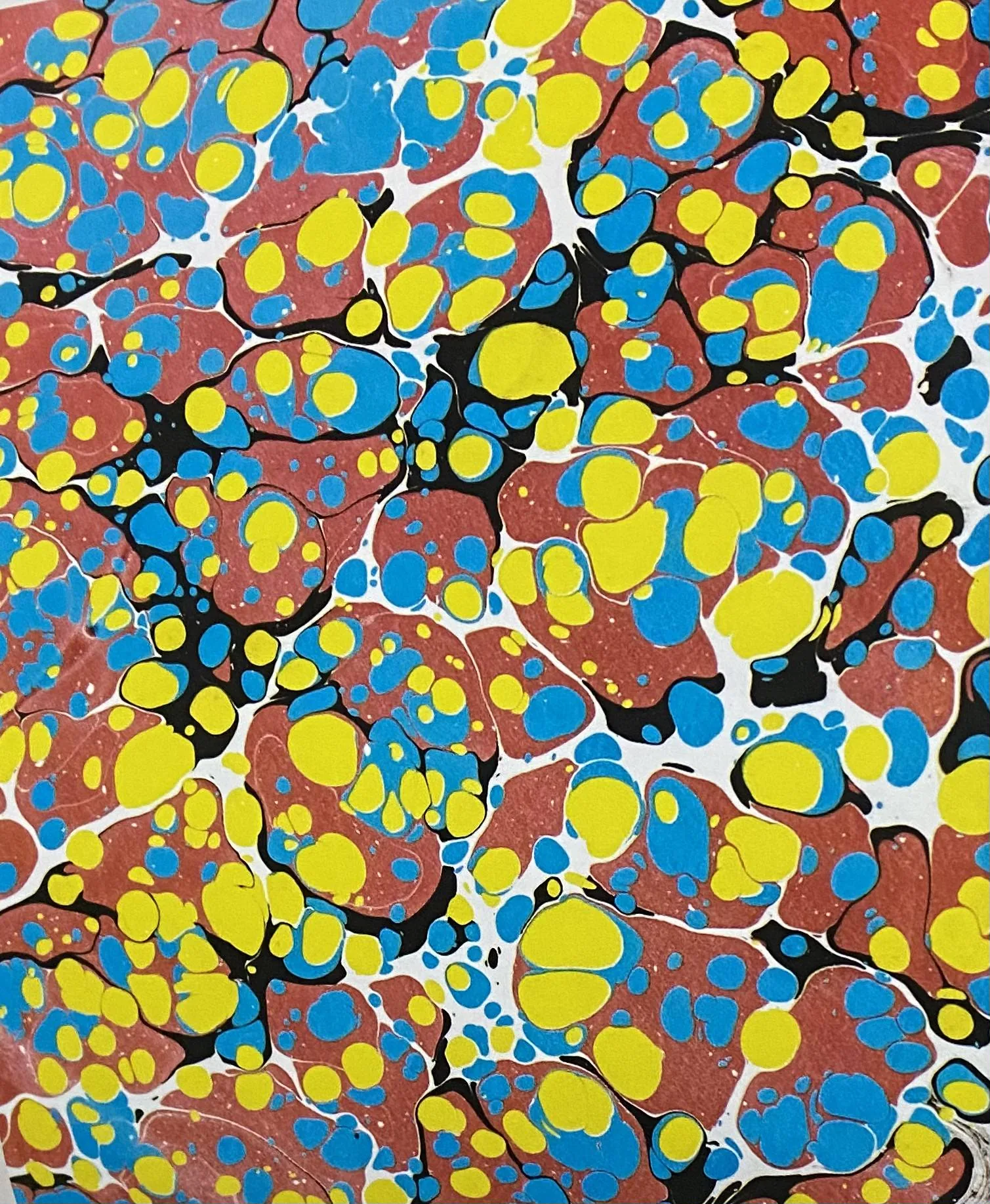
- Ebru, Turkish art of marbling (2014, File No. 00644): The craft of creating swirling, painterly designs on paper by floating pigments on a water-thickened surface and transferring the pattern to paper. Ebru patterns — including roses, leaves, and abstract geometric forms — have been used to decorate manuscripts, official documents, and devotional objects since at least the 16th century.
- Flatbread making and sharing culture: Lavash, Katyrma, Jupka, Yufka (2016, File No. 01181): A multinational inscription covering thin flatbread traditions shared with Armenia, Iran, Kazakhstan, Kyrgyzstan, and Tajikistan. The Turkish element focuses specifically on yufka — a paper-thin unleavened flatbread prepared at communal gatherings and used in everyday cooking.
- Traditional craftsmanship of Çini-making (2016, File No. 01058): The hand-production of painted glazed ceramic tiles used in mosque interiors, palace decoration, and domestic architecture. The tradition centers on İznik and Kütahya — two cities that have produced distinctive ceramic styles since the 15th century, including the Iznik tiles that line the interior of the Blue Mosque in Istanbul.
- Spring celebration, Hıdrellez (2017, File No. 01204): A celebration of spring on the night of May 5–6, marking the legendary meeting of two Islamic prophets (Hızır and İlyas) and believed to bring healing, fertility, and good fortune. Celebrations involve bonfires, picnics, making wishes written on paper, and ritual activities near water.
- Heritage of Dede Korkut (2018, File No. 01311): A multinational inscription covering the oral tradition of the Dede Korkut epic cycle — the foundational literary monument of Turkic civilization, featuring 12 epics about the Oghuz peoples. Shared with Azerbaijan.
- Traditional Turkish archery (2019, File No. 01413): The tradition of Ottoman-style horseback and foot archery, including the distinctive Ottoman composite bow construction, flight archery (menzil), and tournament practices preserved through guild associations since the Topkapı Saray archery competitions.
- Art of miniature (2020, File No. 01518): The tradition of miniature painting used to illustrate manuscripts, historical chronicles, and official Ottoman records. Turkish miniature developed a distinctive style in Ottoman imperial workshops (nakkaşhane) combining Persian and Byzantineinfluences.
- Traditional intelligence and strategy game: Togyzqumalaq, Toguz Korgool, Mangala/Göçürme (2020, File No. 01521): A multinational inscription covering mancala-family board games played across Central Asia and Turkey, shared with Kazakhstan and Kyrgyzstan.
- Hüsn-i Hat, traditional calligraphy in Islamic art (2021, File No. 01583): The art of Arabic-script calligraphy in its Ottoman and Turkish forms — including Divan, Celî, Nesih, and Rik’a scripts developed in Istanbul’s calligraphy guilds. The tradition includes production of reeds (kalem), preparation of ink, and the master-apprentice transmission of geometric letter proportions.
- Turkish coffee culture and tradition inscribed 2013; Culture of Çay (tea) (2022, File No. 01661): A multinational inscription with Azerbaijan covering the social practices surrounding tea cultivation and consumption — including çay bahçesi (tea gardens), preparation in double-boiler samovars, and the role of tea houses as centers of community life in eastern Turkey and Azerbaijan.
- Sericulture and traditional production of silk for weaving (2022, File No. 01670): A multinational inscription covering silk cultivation and weaving shared with Afghanistan, Azerbaijan, Iran, Tajikistan, Turkmenistan, and Uzbekistan.
- Telling tradition of Nasreddin Hodja anecdotes (2022, File No. 01666): The oral tradition of Nasreddin Hodja (Nasreddin Hoca) — a semi-legendary 13th-century figure known for witty, paradoxical tales that simultaneously mock and celebrate human folly. A multinational inscription shared with several Central Asian and Balkan countries.
- Art of illumination: Tezhip/Tazhib (2023, File No. 01762): A multinational inscription covering the tradition of decorating manuscript pages, Quranic texts, and official documents with intricate gold and colored geometric patterns. Shared with Afghanistan, Azerbaijan, Iran, Tajikistan, and Uzbekistan.
- Iftar/Eftari and its socio-cultural traditions (2023): The social practices surrounding the iftar meal (breaking the Ramadan fast) — including communal table-setting, charitable feeding, the cannon marking iftar time, and the role of shared meals in maintaining community bonds. A multinational inscription.
- Craftsmanship of mother-of-pearl inlay (2023): The tradition of decorating wooden furniture, musical instruments, and ceremonial objects with intricately cut shell inlay — practiced in Istanbul’s specialized workshops using techniques unchanged since Ottoman palace workshops.
- Craftsmanship and performing art of balaban/mey (2023, File No. 01792): A multinational inscription covering the double-reed wind instrument known as mey in Turkey and balaban in Azerbaijan. The instrument’s distinctive warm, breathy tone is characteristic of Anatolian and Caucasian folk music traditions.
- Traditional bagpipe (Gayda/Tulum) making and performing (2024): A multinational inscription with North Macedonia and Bulgaria, covering the construction and performance traditions of the Balkan/Anatolian bagpipe. The Turkish tulum is particularly associated with Black Sea coastal communities.
- Nawrouz (2024): A widely shared multinational inscription for the spring new year festival observed across 12+ countries. Turkey’s inclusion reflects the Nawruz/Nevruz celebration among Alevi and Kurdish communities, with particular ritual importance in southeastern Turkey.
- Antep İşı, drawn thread embroidery of Gaziantep (2025, File No. TBD): The most recent Turkish UNESCO inscription — a drawn-thread needlework tradition from Gaziantep in which threads are removed from the fabric base to create geometric openwork patterns, used for bridal trousseaux, table linens, and ceremonial textiles.
Urgent Safeguarding List: 2 Elements
- Traditional Ahlat stonework (2022, File No. 01640): The craft traditions of skilled stonecutters working with tuff (volcanic stone) in Ahlat, a town in eastern Turkey with medieval Islamic funerary monuments. The tradition produces characteristic geometric and vegetal carved tomb markers (şahide) in a distinctive style dating to the Seljuk and early Ottoman periods.
- Traditional knowledge, methods and practices concerning olive cultivation (2023): Traditional ecological knowledge of olive cultivation, including seasonal pruning techniques, intercropping practices, and ritual observances tied to the olive harvest cycle in the Aegean and Mediterranean coastal zones.
Key Elements in Depth: Mevlevi Sema, Kırkpınar, and Turkey’s Cultural Diversity
Within Turkey’s 32 UNESCO inscriptions, several elements are globally recognized — either because of their spectacular visual appeal, their historical depth, or their role as Turkey’s most internationally visible cultural exports. Three deserve particular attention for what they reveal about the breadth of Anatolian living heritage.
The Mevlevi Sema Ceremony: Turkey’s Oldest ICH Recognition
The Mevlevi Sema ceremony represents Turkey’s earliest UNESCO ICH recognition — proclaimed a Masterpiece in 2005 and incorporated into the Representative List in 2008 as File No. 00089. The Sema is the central ritual of the Mevlevi Sufi order, founded in Konya, Turkey, in the 13th century following the life and teachings of the poet-mystic Rumi. The ceremony involves white-robed practitioners (semazen) rotating in a meditative state while a musical ensemble plays the ney (reed flute) and kudüm (kettledrum). The distinctive costume — tall felt hat (sikke), white robe, and black cloak — carries symbolic meanings: the hat represents the tombstone of the ego; the cloak, the ego’s grave; the white robe, the ego’s shroud. The Sema was performed in Mevlevi tekkes (lodges) until their abolition in 1925 by Atatürk’s secular reforms; its revival as a UNESCO-recognized cultural practice has been central to Konya’s identity as a heritage tourism destination, attracting over a million visitors annually to Rumi’s mausoleum (Mevlâna Müzesi).
Kırkpınar: The World’s Oldest Continuously Held Sporting Competition
The Kırkpınar oil wrestling festival (2010, File No. 00386), held annually in Edirne in northwestern Turkey, is documented continuously since 1346 CE — making it the longest-running sporting event in recorded history, predating even the modern revival of the Olympic Games by more than five centuries. Wrestlers (pehlivan) wear traditional leather trousers (kıspet) and are coated in olive oil before competition, making grip extremely difficult. Matches are decided by pinning the opponent’s back to the ground or lifting them. The festival includes a processional march into the arena, accompanied by the davul (drum) and zurna (double-reed shawm) — instruments inseparable from Turkish folk festival tradition. The chief wrestler (başpehlivan) receives a golden belt and holds a one-year title that carries prestige across the Turkish-speaking world. The UNESCO inscription explicitly recognizes Kırkpınar as a living social tradition: its importance extends beyond sport to encompass civic identity, patron-client relationships between wrestler sponsors and their pehlivan, and the festival economy of Edirne.
Turkish Coffee, Karagöz, and the Breadth of the ICH Portfolio
Turkey’s portfolio extends well beyond the visually spectacular. The 2013 inscription of Turkish coffee culture and tradition (File No. 00645) recognized not just a beverage but an entire social ecology — the coffeehouse (kahvehane) as civil society institution, the ritual of hospitality in serving coffee to guests, and the practice of tasseography (reading futures in coffee grounds). Similarly, the 2009 inscription of Karagöz (shadow puppetry, File No. 00180) documented a performance tradition that served as social commentary and satirical theater in Ottoman coffeehouses for centuries, expressing critiques of authority through the ribald adventures of its two central characters that would have been impossible in more formal performance contexts. These inscriptions reflect UNESCO’s recognition that heritage extends beyond ceremonial arts to encompass everyday social practices — precisely the insight that motivated the 2003 Convention’s inclusive definition of intangible cultural heritage as covering “practices, representations, expressions, knowledge, skills” transmitted across generations as part of living community identity.
Frequently Asked Questions
How many UNESCO intangible cultural heritage elements does Turkey have?
As of 2025, Turkey (Türkiye) has 32 UNESCO-recognized intangible cultural heritage elements — 29 on the Representative List and 2 on the Urgent Safeguarding List, plus one 30th shared multinational element. The most recent addition is Antep İşı, the drawn thread embroidery of Gaziantep, inscribed in 2025.
What is the Mevlevi Sema ceremony?
The Mevlevi Sema ceremony is the whirling dervish ritual of the Mevlevi Sufi order, founded in Konya, Turkey, in the 13th century after the teachings of the poet Rumi. White-robed practitioners (semazen) rotate counterclockwise in a meditative state representing the soul’s journey. It was proclaimed a UNESCO Masterpiece in 2005 and formally incorporated into the Representative List in 2008 as File No. 00089.
What is the Kırkpınar oil wrestling festival and why is it UNESCO-recognized?
Kırkpınar is the world’s oldest continuously held sporting competition, documented since 1346 CE and held annually in Edirne, Turkey. Wrestlers coated in olive oil compete in leather trousers (kıspet) for the title of chief wrestler (başpehlivan). UNESCO inscribed it in 2010 (File No. 00386) as a living social tradition encompassing civic identity, patron-client networks, and the festival economy of Edirne.
What is Karagöz and why is it on UNESCO’s list?
Karagöz is Turkish shadow puppet theater using translucent figures backlit behind a screen. The central character Karagöz represents the common people’s earthy wit against his educated foil Hacivat. UNESCO inscribed it in 2009 (File No. 00180) recognizing its role as centuries-old social commentary performed in coffeehouses during Ramadan. The tradition originated in Ottoman performance culture and continues through licensed masters.
What Turkish UNESCO heritage elements are on the Urgent Safeguarding List?
Turkey has two elements on UNESCO’s List of Intangible Cultural Heritage in Need of Urgent Safeguarding: traditional Ahlat stonework (2022, File No. 01640) — the carved volcanic stone craft traditions of medieval Islamic funerary monuments in eastern Turkey — and traditional knowledge, methods and practices concerning olive cultivation (2023), covering ecological and ritual knowledge tied to the Aegean and Mediterranean olive harvest cycle.