UNESCO Intangible Cultural Heritage of China: All 44 Inscriptions from Kun Qu Opera to Spring Festival
China has 44 elements inscribed on UNESCO’s Intangible Cultural Heritage lists as of 2025 — more than any other country, ranking first globally. The inscriptions span the Representative List of the Intangible Cultural Heritage of Humanity, the List of Intangible Cultural Heritage in Need of Urgent Safeguarding, and the Register of Good Safeguarding Practices. China’s inscriptions range from the inaugural 2008 session (Kun Qu Opera, Guqin, Uyghur Muqam, and Mongolian Long Song — four of the first elements on the Representative List) to the most recent (Spring Festival and three other elements inscribed in 2024, and Hezhen Yimakan storytelling transferred from Urgent Safeguarding to the Representative List in 2025). China’s 2009 batch — 22 elements inscribed at a single session — remains the largest single-year ICH inscription by any country in the history of the Representative List.
- China holds 44 UNESCO ICH inscriptions as of 2025 — ranking first globally. The inscriptions span 2008 (four inaugural elements) to 2025 (Hezhen Yimakan transfer).
- China’s 2009 batch inscribed 22 elements in a single session — the largest single-year inscription by any country in ICH history, covering performing arts, craftsmanship, oral traditions, and festive culture.
- Kun Qu Opera (File 00004, 2008) was among the inaugural elements of the Representative List — one of the oldest forms of Chinese opera, rooted in the Jiangnan region with origins in the Ming dynasty (14th–17th century).
- Taijiquan (File 00424, 2020) and The Twenty-Four Solar Terms (File 00647, 2016) represent China’s globally recognized contributions to martial arts heritage and traditional astronomical knowledge.
- Spring Festival (File 02126, 2024) — the social practices of the Chinese New Year, including family reunion dinners, red envelopes, fireworks, and lantern festivals — was inscribed at 19.COM in Asunción, Paraguay.
China’s Complete List: 44 UNESCO ICH Inscriptions
The following 44 elements represent China’s complete UNESCO Intangible Cultural Heritage portfolio as of 2025, organized chronologically. Elements marked with (US) are on the List in Need of Urgent Safeguarding; elements marked with (GSP) are on the Register of Good Safeguarding Practices; all others are on the Representative List.
2008: The Inaugural Inscriptions
- Kun Qu Opera — File 00004, 2008. The oldest surviving form of Chinese classical opera, originating in the Jiangnan region (Suzhou, Kunshan) in the Ming dynasty. Characterized by its slow, melodic singing style, elaborate costumes, and refined gestures, Kun Qu is considered the “mother of Chinese opera” — the artistic ancestor from which Peking Opera and many other regional forms descended. By the 1990s, fewer than 100 trained Kun Qu performers remained; UNESCO recognition catalyzed major revival efforts.
- Guqin and its Music — File 00061, 2008. The seven-stringed plucked zither that has been central to Chinese literati culture for over 3,000 years. The guqin is associated with Confucius, Daoist hermits, and scholar-officials; its repertoire of over 3,000 historical pieces represents the longest continuous musical tradition in China. The instrument is played solo or with a single voice, and its quiet, intimate sound was considered an expression of inner cultivation rather than public entertainment.
- Uyghur Muqam of Xinjiang — File 00109, 2008. The classical musical suite tradition of the Uyghur people of Xinjiang, consisting of 12 suites (On İki Muqam) each comprising more than 300 pieces of poetry, song, and dance. Each muqam is named after a specific mode and takes between two and three hours to perform in full. The tradition integrates music, poetry, dance, and drama into a unified performance encompassing the full range of Uyghur literary and musical culture.
- Urtiin Duu, Traditional Folk Long Song — File 00115, 2008 (multinational inscription with Mongolia). The extended melodic song tradition of Mongolian-speaking communities in Inner Mongolia and Mongolia, characterized by a free rhythm and ornate ornamentation. Each syllable of text is extended over many notes in a style that expresses the vast landscape of the steppe. China and Mongolia submitted this joint nomination recognizing the shared cultural tradition that crosses the international border.
2009: The Largest Single-Year Batch
- Sericulture and Silk Craftsmanship of China — File 00197, 2009. The full chain of silk production — raising silkworms on mulberry leaves, reeling cocoons, weaving, and dyeing — practiced continuously in China for approximately 5,000 years. The tradition represents China’s most historically significant contribution to global material culture and trade.
- Nanyin — File 00199, 2009. The ancient ensemble music tradition of the Hokkien-speaking community of Fujian province and diaspora communities in Southeast Asia and Taiwan. Nanyin uses a distinctive combination of instruments — including the pipa (lute), dongxiao (end-blown flute), and erxian (two-stringed fiddle) — and preserves musical forms dating to the Tang dynasty.
- Craftsmanship of Nanjing Yunjin Brocade — File 00200, 2009. The production of Yunjin (“cloud brocade”), the most technically complex silk textile tradition in China, using large traditional looms operated by two weavers working in coordination to produce designs that cannot be reproduced by machine.
- Traditional Handicrafts of Making Xuan Paper — File 00201, 2009. The production of Xuan paper (xuanzhi) in Jing County, Anhui — the specialized paper used for Chinese calligraphy and painting, made from sandalwood bark and rice straw through a process of more than 100 manual steps taking over a year.
- Grand Song of the Dong Ethnic Group — File 00202, 2009. The polyphonic choral tradition of the Dong people of Guizhou, Guangxi, and Hunan provinces — one of the few polyphonic singing traditions in East Asian music. Dong Grand Song is performed without instrumental accompaniment by choirs of men or women; the texts concern nature, history, love, and social ethics.
- Yueju Opera — File 00203, 2009. The operatic tradition of the Zhejiang region (Shaoxing), one of the most popular forms of Chinese opera outside of Peking Opera, distinctive for its predominantly female performers and its lyrical, melodic style that influenced modern Chinese popular music.
- Gesar Epic Tradition — File 00204, 2009. The oral epic tradition of the Tibetan and Mongolian communities of the Qinghai-Tibet Plateau and Inner Mongolia, centered on the legendary hero King Gesar of Ling. At over one million lines, the Gesar epic is one of the longest epic traditions in the world, transmitted by professional bards who perform from memory.
- Traditional Firing Technology of Longquan Celadon — File 00205, 2009. The production of Longquan celadon — the blue-green glazed stoneware from Zhejiang province that was China’s most exported ceramic ware along the Maritime Silk Road from the Song dynasty onward, prized across Asia, the Middle East, Africa, and Europe.
- Regong Arts — File 00207, 2009. The sacred decorative arts tradition of the Tibetan and Tu communities of the Regong area (Tongren, Qinghai), encompassing thangka painting, clay sculpture, sand mandala, and architectural decoration for Buddhist temples. Regong artists receive training from childhood within a community apprenticeship system.
- Tibetan Opera — File 00208, 2009. The theatrical tradition of Tibet, known as Lhamo, combining dance, song, masked performance, and narrative in productions lasting several days. Tibetan opera draws on Buddhist cosmology and Tibetan history and is performed at major festivals including the Shoton Festival in Lhasa.
- Manas — File 00209, 2009. The Kyrgyz oral epic tradition of the Kirghiz people of Xinjiang — an epic of approximately 500,000 lines recounting the heroic deeds of the warrior Manas and his descendants across eight generations. China and Kyrgyzstan submitted this jointly; Chinese Kirghiz communities maintain independent performance lineages.
- Mongolian Art of Singing, Khoomei — File 00210, 2009. The overtone singing tradition of Inner Mongolia — a technique in which a single singer simultaneously produces a fundamental tone and one or more harmonic overtones, creating chords with a single voice. China and Mongolia submitted this joint nomination recognizing the shared tradition.
- Hua’er — File 00211, 2009. The folk song tradition of the Muslim Hui, Han, Tu, Salar, Dongxiang, Baoan, and Tibetan communities of Qinghai, Gansu, and Ningxia — an open-air singing tradition performed in mountain passes and at annual festivals where communities gather to compete in improvised lyric composition.
- Xi’an Wind and Percussion Ensemble — File 00212, 2009. The ritual instrumental music tradition of Xi’an, Shaanxi — an ensemble practice using a distinctive set of wind and percussion instruments preserved by hereditary musician guilds and performed at weddings, funerals, and temple festivals.
- Farmers’ Dance of China’s Korean Ethnic Group — File 00213, 2009. The collective dance and drum tradition of the Korean ethnic community of Jilin province (Yanbian), performed at harvest festivals and community events, characterized by coordinated group movement with drum, gong, and the distinctive spinning of long ribbons attached to hats.
- Chinese Calligraphy — File 00216, 2009. The art of writing Chinese characters with brush and ink — practiced for over 2,000 years as the preeminent literary and aesthetic discipline in Chinese education, considered the highest art form in the classical tradition, integrating visual art, philosophy, and scholarship.
- Art of Chinese Seal Engraving — File 00217, 2009. The carving of personal seals used to authenticate documents, artworks, and official correspondence — a tradition combining calligraphy, sculpture, and compositional art in miniature format, practiced by literati and professional seal-carvers since the Qin dynasty (221–206 BCE).
- Chinese Paper-Cut — File 00219, 2009. The tradition of cutting decorative patterns from paper using scissors or knives, practiced across China for decorating windows, doors, and gifts at festivals — one of the most widely practiced folk arts in China, with distinct regional styles in Shaanxi, Shandong, Hebei, and Guangdong.
- Chinese Traditional Architectural Craftsmanship for Timber-Framed Structures — File 00223, 2009. The knowledge and skills for designing and constructing traditional Chinese buildings using interlocking timber frames without nails — a system that produced the imperial palaces of Beijing, temple complexes, and vernacular architecture across East Asia.
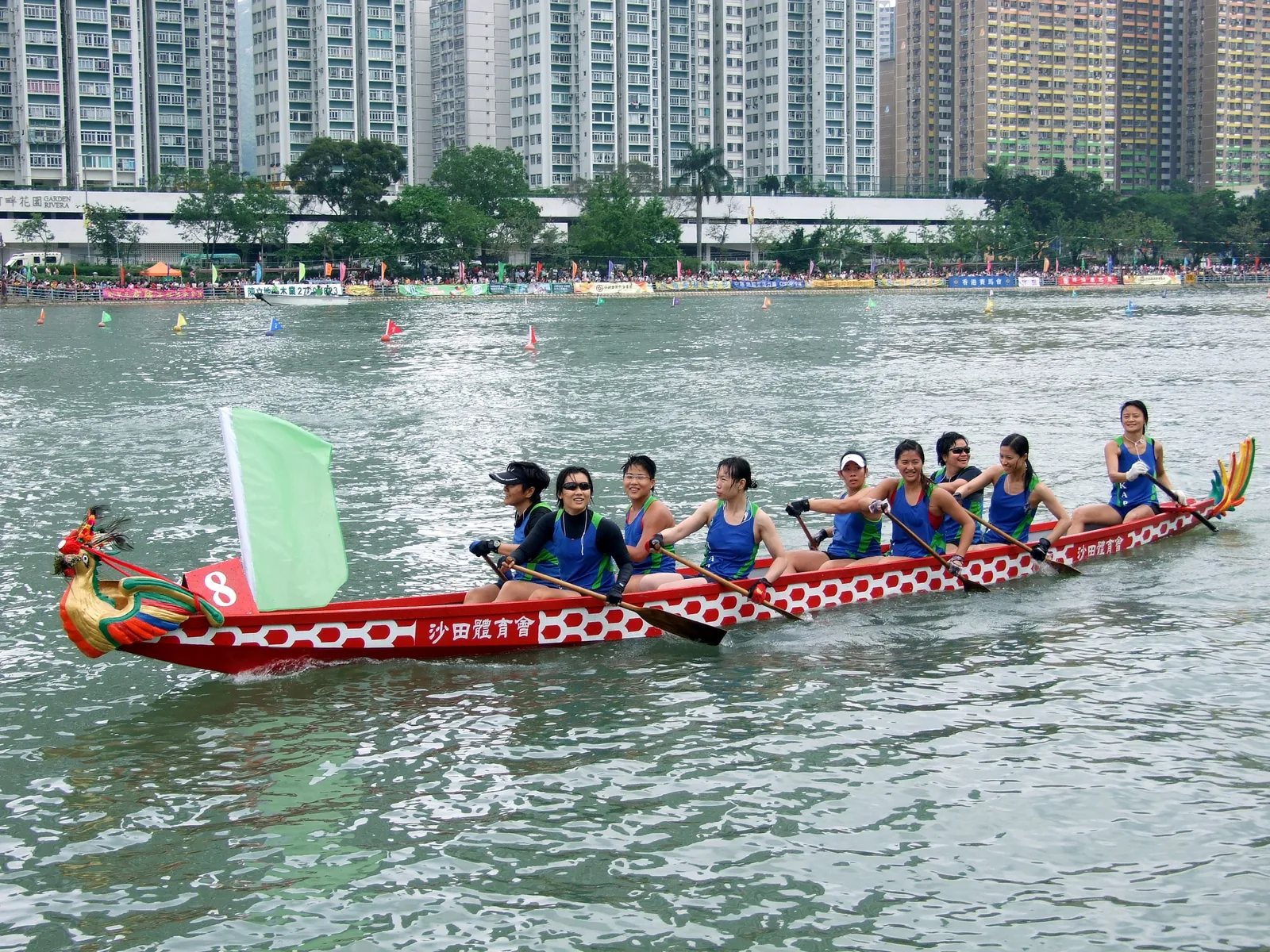
- Dragon Boat Festival — File 00225, 2009. The fifth-day-of-the-fifth-month festival (Duanwu), traditionally commemorating the death of the poet Qu Yuan (340–278 BCE) through dragon boat racing, eating zongzi (sticky rice dumplings), and hanging protective herbs. The festival encodes cultural practices of community cohesion, river ritual, and seasonal transition.
- Mazu Belief and Customs — File 00227, 2009. The worship tradition surrounding Mazu (also known as Tianhou), the sea goddess venerated by coastal communities of Fujian, Guangdong, Taiwan, and the Chinese diaspora worldwide. The inscription covers the rituals, beliefs, temple festivals, and community organizations centered on Mazu worship.
- China Engraved Block Printing Technique — File 00229, 2009. The woodblock printing tradition of China — one of the most significant inventions in the history of information technology — including the techniques, tools, and community knowledge of carving text and illustrations into wooden blocks for reproduction.
2010–2013: Urgent Safeguarding, Peking Opera, and Acupuncture
- Meshrep — File 00304, 2010 (Urgent Safeguarding). The social gathering tradition of the Uyghur people of Xinjiang, combining music, dance, oral literature, cooking, and performance in a community event that functions as a vehicle for transmitting cultural norms and identity. Inscribed on the Urgent Safeguarding list due to declining intergenerational transmission.
- Watertight-Bulkhead Technology of Chinese Junks — File 00321, 2010 (Urgent Safeguarding). The traditional shipbuilding knowledge of the Fujian coast for constructing junks with compartmentalized watertight hulls — a design principle that later influenced Western naval architecture. Facing extinction as steel construction has replaced traditional wooden boatbuilding.
- Wooden Movable-Type Printing of China — File 00322, 2010 (Urgent Safeguarding). The wooden movable-type printing tradition of Rui’an, Zhejiang — used continuously since the Song dynasty (960–1279) primarily for printing genealogical records of Chinese lineage groups. Only a handful of practitioners remain.
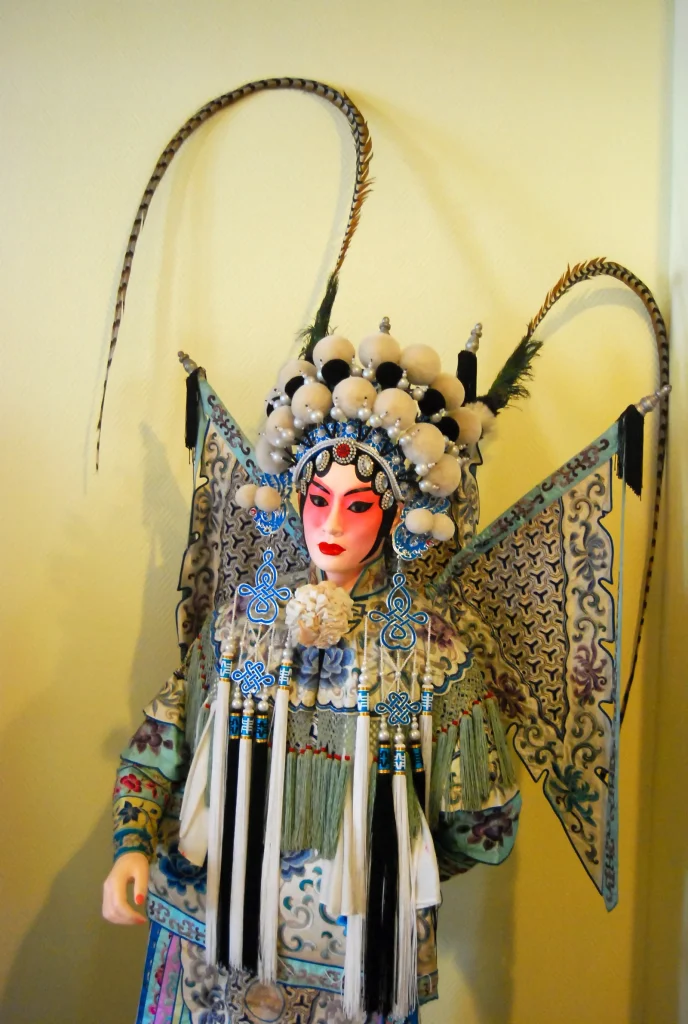
- Peking Opera — File 00418, 2010. The theatrical tradition that synthesizes singing (changqiang), recitation (nianba), acting (zuo), and acrobatic combat (da) — considered the most representative form of Chinese cultural expression internationally. Peking Opera developed in the late 18th century from regional opera traditions and became the dominant court entertainment of the Qing dynasty.
- Acupuncture and Moxibustion of Traditional Chinese Medicine — File 00425, 2010. The therapeutic practice of inserting fine needles at specific points on the body (acupuncture) and applying heat from burning dried herbs to the same points (moxibustion) — a system of medical knowledge dating to at least the 2nd century BCE and practiced by an estimated 1 billion people globally.
- Chinese Shadow Puppetry — File 00421, 2011. The theatrical tradition of manipulating translucent leather or paper figures behind an illuminated screen, practiced across many Chinese regions with distinct local styles — a 2,000-year-old performing arts tradition used for storytelling, festive entertainment, and ritual purposes.
- Strategy for Training Coming Generations of Fujian Puppetry Practitioners — File 00624, 2012 (Register of Good Safeguarding Practices). Recognized not as an ICH element but as an exemplary safeguarding methodology — Fujian’s structured program for training young practitioners in string-puppet theater, combining formal school education with master-apprentice transmission.
- Chinese Zhusuan — File 00853, 2013. The knowledge and practices of mathematical calculation using the abacus (suanpan) — a computing method using beads on a frame that has been fundamental to Chinese commerce, education, and administration for centuries and is still taught in schools today.
2016–2025: Solar Terms, Taijiquan, Tea, and Spring Festival
- The Twenty-Four Solar Terms — File 00647, 2016. The ancient Chinese knowledge system for dividing the solar year into 24 segments based on the sun’s position in the ecliptic, each associated with specific agricultural practices, seasonal foods, and cultural observances. The system was developed over thousands of years and is still used to guide farming, health practices, and festival timing across China and the Chinese diaspora.
- Lum Medicinal Bathing of Sowa Rigpa — File 01386, 2018. The Tibetan medical practice of therapeutic bathing in water infused with medicinal herbs and minerals, used for treating a range of conditions within the Sowa Rigpa (Tibetan medicine) system. The tradition preserves knowledge of medicinal plants, water therapy, and the philosophical framework of Tibetan medicine’s four-element theory.
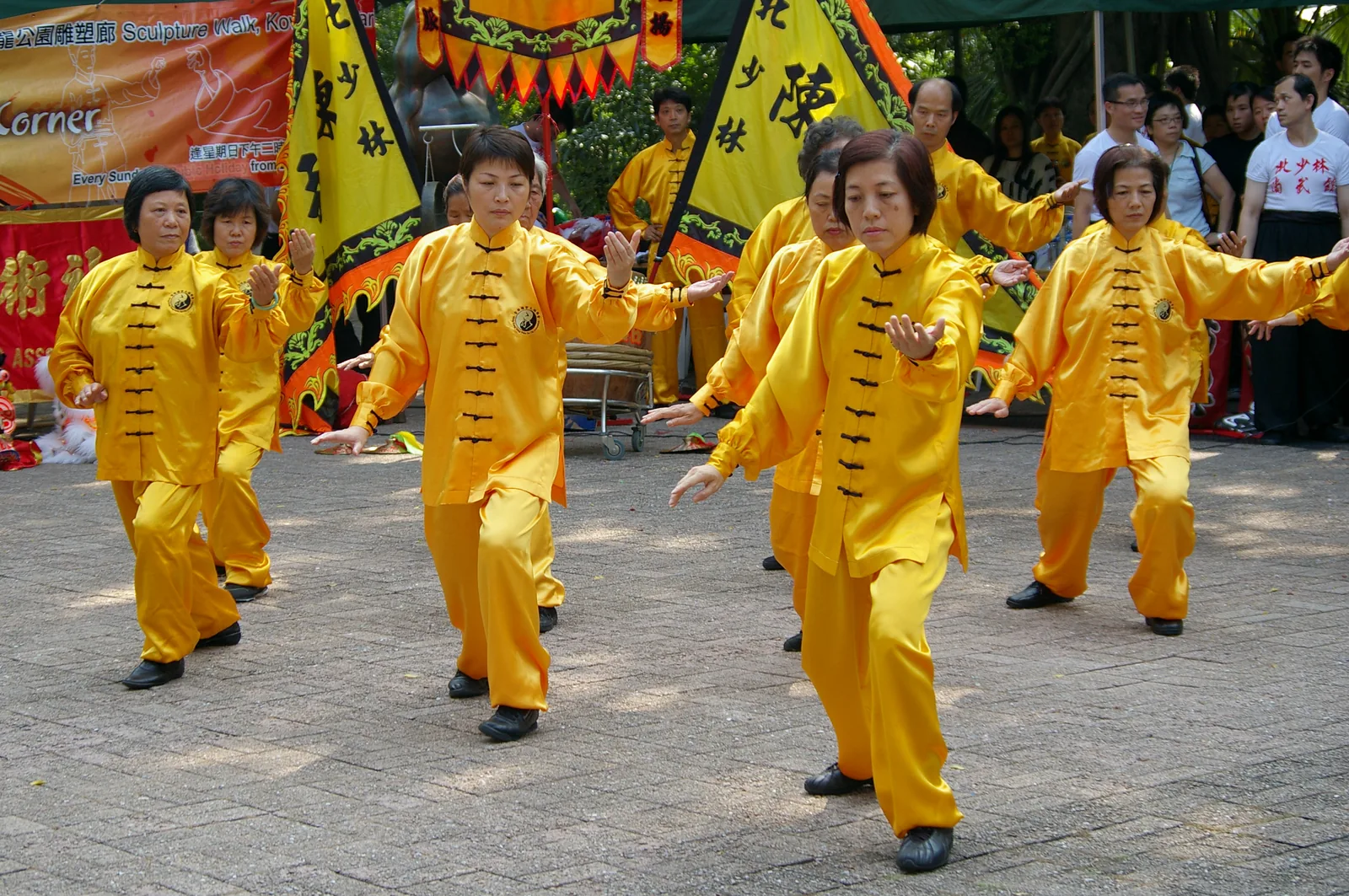
- Taijiquan — File 00424, 2020. The internal martial art and health practice originating in Chenjiagou village, Henan province, based on principles of yielding and using soft force against hard force. Taijiquan is practiced by an estimated 300–400 million people worldwide across multiple styles (Chen, Yang, Wu, Sun, and others). The UNESCO inscription covers the original Chen-style tradition as the root form from which all other styles derive.
- Ong Chun/Wangchuan/Wangkang Ceremony — File 01608, 2020 (multinational inscription with Malaysia). The ritual tradition of the Hokkien-speaking communities of Fujian and Malaysia’s Melaka, in which a large wooden boat loaded with offerings is ceremonially burned to send prayers and blessings to the sea. The tradition expresses the maritime culture’s relationship with the ocean and is observed every three years in both communities.
- Traditional Tea Processing Techniques and Associated Social Practices in China — File 01884, 2022. The inscription covers the full knowledge system of Chinese tea: the cultivation of tea plants, the processing techniques for the six major categories of tea (green, yellow, white, oolong, black, and dark), the social rituals of tea preparation and service, and the culture of tea houses and tea ceremonies. China’s tea traditions directly seeded the tea cultures of Japan, Korea, Taiwan, and Southeast Asia.
- Spring Festival, Social Practices of the Chinese People in Celebration of Traditional New Year — File 02126, 2024. The social practices surrounding Chinese New Year — including the ritual cleaning of homes, family reunion dinners (nianyefan), the exchange of red envelopes (hongbao), setting off fireworks, the Lantern Festival on the 15th day, and the associated beliefs about fortune and renewal. Spring Festival is observed by approximately 1.4 billion people in China and hundreds of millions in diaspora communities worldwide.
- Traditional Li Textile Techniques: Spinning, Dyeing, Weaving and Embroidering — File 02153, 2024. The textile tradition of the Li ethnic minority of Hainan island — a pre-loom weaving system using a back-strap loom to produce intricate geometric patterns. Li textiles are considered among the oldest textile traditions in China and face transmission risks as younger generations migrate from traditional communities.
- Qiang New Year Festival — File 02155, 2024. The harvest and new year festival of the Qiang people of Sichuan province — a community event combining sacrificial offerings on hilltop towers, communal feasting, traditional music and dance, and the recitation of oral epics. The inscription was particularly significant following the 2008 Wenchuan earthquake, which devastated Qiang communities.
- Traditional Design and Practices for Building Chinese Wooden Arch Bridges — File 02156, 2024. The engineering knowledge and construction practices for building wooden arch bridges (gongqiao) of the Zhejiang and Fujian highlands — a tradition that uses interlocking wooden planks to create arched structures without metal fasteners, a form of structural engineering with documented history of over 800 years.
- Hezhen Yimakan Storytelling — File 02224, 2025 (transferred from Urgent Safeguarding to Representative List). The oral narrative tradition of the Hezhen people of Heilongjiang province — a form of solo performance combining epic narrative, sung verse, and dramatic characterization. Originally inscribed on the Urgent Safeguarding list, its transfer to the Representative List reflects successful community-based revitalization efforts. UNESCO simultaneously recognized China’s safeguarding programme for this tradition as a model practice.
Five Landmark Inscriptions: Kun Qu, Peking Opera, Solar Terms, Taijiquan, and Spring Festival
Within China’s portfolio, five inscriptions stand out for their global reach, institutional influence on the ICH system, or historical depth.
Kun Qu Opera: The Mother of Chinese Opera
Kun Qu Opera (File 00004) was among the inaugural elements when UNESCO formally established the Representative List in 2008, transferred from the earlier Masterpieces of the Oral and Intangible Heritage program (where it had been recognized in 2001, one of 19 inaugural masterpieces). Kun Qu’s roots trace to the Kunshan region of Jiangnan in the late Ming dynasty, when the composer Wei Liangfu reformed local folk melodies into a refined operatic style characterized by slow, melismatic singing, flowing water-sleeve gestures, and elaborate staging. For two centuries, Kun Qu was the dominant art form of the Chinese literati class, generating a vast repertoire that included the landmark Peony Pavilion (Mudan Ting), Tang Xianzu’s 1598 masterpiece of Chinese romantic drama. By the early 20th century, Kun Qu had been largely displaced by Peking Opera and regional forms. UNESCO recognition in 2001/2008 catalyzed a national revival program that trained a new generation of performers and brought Kun Qu back to major stages.
Peking Opera: The National Art Form
Peking Opera (File 00418, 2010) occupies the position Kun Qu once held: the most internationally recognized form of Chinese performing arts. Developed in the late 18th century when troupes from Anhui and Hubei brought their regional styles to Beijing for the Qianlong Emperor’s birthday celebrations in 1790, Peking Opera synthesized multiple regional traditions into a new form that became the dominant expression of Chinese theatrical culture. The four performance skills (chang, nian, zuo, da — singing, speech, gesture, combat) demand years of training beginning in early childhood. The jing (painted-face roles) representing warriors and demons are the most visually distinctive element globally recognized from Chinese performance culture.
The Twenty-Four Solar Terms: Living Astronomical Knowledge
The inscription of the Twenty-Four Solar Terms (File 00647, 2016) was among the most distinctive in the ICH system’s history — recognizing not a performance tradition or craft but an entire astronomical knowledge system still actively used in contemporary Chinese life. The system divides the solar year into 24 segments of approximately 15 days each based on the sun’s position in the ecliptic, assigning specific names that encode agricultural, meteorological, and health guidance: the Start of Spring, Rain Water, Awakening of Insects, Spring Equinox, and so on through the year. Chinese meteorological authorities, farmers, and traditional medicine practitioners still consult the solar terms calendar. The inscription’s framing of ancient astronomical knowledge as living, community-maintained heritage influenced subsequent nominations in the knowledge and practices domain.
Taijiquan and Spring Festival: Global Reach
Taijiquan (File 00424, 2020) and Spring Festival (File 02126, 2024) together represent the two most globally practiced Chinese ICH elements. Taijiquan — with its slow, circular movements and emphasis on internal energy cultivation — is practiced across more than 150 countries; UNESCO recognized the Chen-style origin tradition that generated all modern derivatives. Spring Festival — the social practices of Chinese New Year — is observed by the largest annual population of any cultural festival on Earth, uniting the 1.4 billion people of mainland China with over 60 million overseas Chinese diaspora communities in a shared calendar of family reunion, ancestor veneration, and community renewal.
For the complete official database of China’s inscribed elements with full nomination files and Committee decisions, ich.unesco.org/en/state/china-CN is the authoritative source. For context on China’s inscriptions within the global ICH system — including how China’s 2009 batch shaped the scale of subsequent inscription rounds — the UNESCO intangible cultural heritage examples overview covers the global landmarks, and the UNESCO intangible cultural heritage overview traces the full 2003 Convention framework.
Frequently Asked Questions
How many UNESCO intangible cultural heritage elements does China have?
China has 44 UNESCO ICH elements as of 2025 — the most of any country, ranking first globally. The inscriptions span all three lists: the Representative List of the Intangible Cultural Heritage of Humanity, the List in Need of Urgent Safeguarding, and the Register of Good Safeguarding Practices. The inscriptions cover 2008 (Kun Qu Opera, Guqin, Uyghur Muqam, Mongolian Long Song) through the most recent additions in 2024 (Spring Festival, Li textiles, Qiang New Year, wooden arch bridges) and 2025 (Hezhen Yimakan transfer).
What was China’s first UNESCO intangible cultural heritage inscription?
China’s first four UNESCO ICH inscriptions came at the inaugural 2008 session that formally established the Representative List: Kun Qu Opera (File 00004), Guqin and its Music (File 00061), Uyghur Muqam of Xinjiang (File 00109), and Urtiin Duu Traditional Folk Long Song (File 00115, joint with Mongolia). Kun Qu Opera had also been recognized in 2001 in the earlier Masterpieces of the Oral and Intangible Heritage program before being transferred to the Representative List.
What was the largest single-year ICH inscription by any country?
China’s 2009 batch — 22 elements inscribed at a single UNESCO Committee session — remains the largest single-year ICH inscription by any country in the history of the Representative List. The 2009 batch covered performing arts (Peking opera, Tibetan opera, Yueju opera), oral traditions (Gesar epic, Manas), craftsmanship (silk, Xuan paper, celadon, calligraphy, seal engraving, paper-cut), and festive practices (Dragon Boat Festival, Mazu belief).
Is Taijiquan a UNESCO intangible cultural heritage?
Yes. Taijiquan was inscribed on UNESCO’s Representative List of the Intangible Cultural Heritage of Humanity in 2020 under File 00424. The inscription covers the Chen-style tradition originating in Chenjiagou village, Henan province — the root form from which all modern Taijiquan styles (Yang, Wu, Sun, and others) descend. Taijiquan is practiced by an estimated 300–400 million people worldwide across more than 150 countries.
What is China’s most recent UNESCO intangible cultural heritage inscription?
China’s most recent inscriptions were at the 19.COM session (Asunción, Paraguay, December 2024): Spring Festival — Social Practices of the Chinese People in Celebration of Traditional New Year (File 02126), Traditional Li Textile Techniques (File 02153), Qiang New Year Festival (File 02155), and Traditional Design and Practices for Building Chinese Wooden Arch Bridges (File 02156). In December 2025, at 20.COM in New Delhi, Hezhen Yimakan Storytelling (File 02224) was transferred from the Urgent Safeguarding list to the Representative List.