 Representative ListInscribed 2010
Description
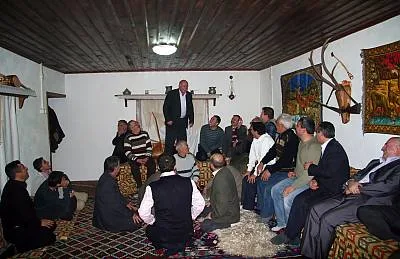
Traditional Sohbet meetings play a crucial role in transmitting Turkish folk literature, folk dances and music, village plays as well as societal values. Turkish men meet regularly indoors, especially in winter, to discuss local social and cultural issues, safeguard traditions, and encourage solidarity, mutual respect and a sense of community. Meetings may include music, dances and plays, all enjoyed while consuming local dishes. A traditional Sohbet meeting may last until the early morning. Meetings are open to men above the age of 15 or 16, regardless of ethnicity, religion or status, with the basic requirement that members be of honest families, be trustworthy and respectful of their elders, and not gamble or display public drunkenness. Members may be penalized with a fine for missing a meeting, except under extenuating circumstances. Mothers and wives encourage male members to attend because of the associated social and cultural benefits. Communities usually comprise five to thirty persons and are guided by leaders, appointed by election or proposed by elders. Members of the community all have equal rights and commitments. The Sohbet meetings fulfil an important educational function by transferring ethical values such as social justice, tolerance, benevolence and respect.
Country
TurkeyOther heritage elements in Turkey
Representative List · Inscribed 2025Antep İşi, drawn thread embroidery of GaziantepRepresentative List · Inscribed 2024Nawrouz, Novruz, Nowrouz, Nowrouz, Nawrouz, Nauryz, Nooruz, Nowruz, Navruz, Nevruz, Nowruz, NavruzRepresentative List · Inscribed 2024Traditional bagpipe (Gayda/Tulum) making and performingRepresentative List · Inscribed 2023Craftsmanship and performing art of balaban/meyRepresentative List · Inscribed 2023Iftar/Eftari/Iftar/Iftor and its socio-cultural traditionsRepresentative List · Inscribed 2023Art of illumination: Təzhib/Tazhib/Zarhalkori/Tezhip/Naqqoshlik
More Representative List elements
Inscribed 2008Arts of the Meddah, public storytellersInscribed 2008Palestinian HikayeInscribed 2015Majlis, a cultural and social spaceInscribed 2019Traditional turkmen carpet making art in TurkmenistanInscribed 2014Askiya, the art of witInscribed 2025Ayeneh-Kari, the art of mirror-work in Persian architecture
Also inscribed in 2010
- Chhau dance
- Kalbelia folk songs and dances of Rajasthan
- Ritual dramatic art of Ta‘zīye
- Semah, Alevi-Bektaşi ritual
- Mudiyettu, ritual theatre and dance drama of Kerala
- Music of the Bakhshis of Khorasan
Data Source: UNESCO Intangible Cultural Heritage · UNESCO listing