 Representative ListInscribed 2010
Description
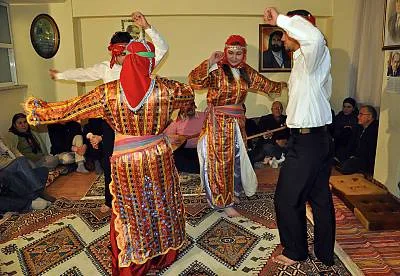
Semahs can be described as a set of mystical and aesthetic body movements in rhythmic harmony. They constitute one of the twelve main services found in ''Cem'' rituals, religious practices performed by adherents of Alevi-Bektaşi, a belief system based on admiration for Ali, the fourth caliph after the prophet Muhammed. Semahs are performed by ''semahçıs'' (Semah dancers), accompanied by devout musicians playing the ''saz'' long-necked lute. Various forms of Semah exist in Alevi-Bektaşi communities across Turkey, each with distinct musical characteristics and rhythmic structures. One consistent characteristic is the performance of the ritual by both men and women, side by side. Semah rituals are founded upon the concept of unity with God as part of a natural cycle: people come from God and return to God. There are two forms of Semah: ''İçeri'' Semahs are performed in ''Cems'' only among adherents as part of the twelve services; ''Dışarı'' Semahs are performed independent of services to promote Semah culture to younger generations. Semahs are the most crucial means for the transmission of the Alevi-Bektaşi tradition. All practices, traditional motifs and teachings are passed on orally, and distinct genres of art and literature associated with the tradition continue to thrive. In this way, Semahs play a crucial role in fostering and enriching the traditional music culture of Turkey.
Country
TurkeyOther heritage elements in Turkey
Representative List · Inscribed 2025Antep İşi, drawn thread embroidery of GaziantepRepresentative List · Inscribed 2024Nawrouz, Novruz, Nowrouz, Nowrouz, Nawrouz, Nauryz, Nooruz, Nowruz, Navruz, Nevruz, Nowruz, NavruzRepresentative List · Inscribed 2024Traditional bagpipe (Gayda/Tulum) making and performingRepresentative List · Inscribed 2023Craftsmanship and performing art of balaban/meyRepresentative List · Inscribed 2023Iftar/Eftari/Iftar/Iftor and its socio-cultural traditionsRepresentative List · Inscribed 2023Art of illumination: Təzhib/Tazhib/Zarhalkori/Tezhip/Naqqoshlik
More Representative List elements
Inscribed 2024Arabic coffee, a symbol of generosityInscribed 2023Craftsmanship and performing art of balaban/meyInscribed 2010Traditional skills of carpet weaving in KashanInscribed 2018Dondang SayangInscribed 2016YogaInscribed 2025Al-Mihrass tree: knowledge, skills and rituals associated with it
Also inscribed in 2010
- Chhau dance
- Kalbelia folk songs and dances of Rajasthan
- Ritual dramatic art of Ta‘zīye
- Mudiyettu, ritual theatre and dance drama of Kerala
- Music of the Bakhshis of Khorasan
- Pahlevani and Zoorkhanei rituals
Data Source: UNESCO Intangible Cultural Heritage · UNESCO listing