 Representative ListInscribed 2025
Description
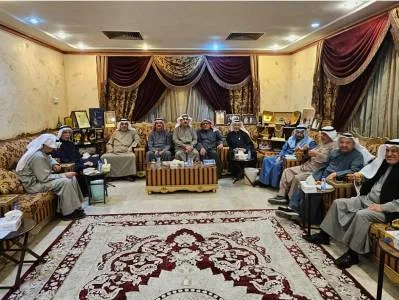
The Diwaniya is a space where men of all ages and backgrounds come together to talk, connect and share ideas. It can take place in a home, a public space, or even a tent, and serves as a key setting for family members, neighbours and friends to discuss topics such as family matters, community issues, politics and current events. While the gatherings can be small, they often grow larger during special occasions such as Ramadan, weddings, funerals or election campaigns.
Young men learn how to participate in Diwaniyas by observing how conversations are held, how guests are welcomed and how respect is shown to elders. Over time, they learn the unspoken rules, such as appropriate greetings, seating arrangements and conversation topics. Some Diwaniyas are formal, with traditional clothing and customs, while others are informal and may include games and entertainment. There are also specialized Diwaniyas where people from similar professions gather to share their experiences. Although they are traditionally male-centred, women have increasingly created their own Diwaniyas, establishing new spaces for dialogue and leadership. A strong symbol of social life and connection, the Diwaniya plays an important role in passing down the community’s values, customs and knowledge to younger generations.
Young men learn how to participate in Diwaniyas by observing how conversations are held, how guests are welcomed and how respect is shown to elders. Over time, they learn the unspoken rules, such as appropriate greetings, seating arrangements and conversation topics. Some Diwaniyas are formal, with traditional clothing and customs, while others are informal and may include games and entertainment. There are also specialized Diwaniyas where people from similar professions gather to share their experiences. Although they are traditionally male-centred, women have increasingly created their own Diwaniyas, establishing new spaces for dialogue and leadership. A strong symbol of social life and connection, the Diwaniya plays an important role in passing down the community’s values, customs and knowledge to younger generations.
Country
KuwaitOther heritage elements in Kuwait
Representative List · Inscribed 2025Traditional weaving of Al SaduRepresentative List · Inscribed 2025Bisht (men's Abaa): skills and practicesRepresentative List · Inscribed 2024Henna: rituals, aesthetic and social practicesRegister of Good Safeguarding Practices · Inscribed 2022Al Sadu Educational Programme: Train the trainers in the art of weavingRepresentative List · Inscribed 2022Date palm, knowledge, skills, traditions and practicesRepresentative List · Inscribed 2021Arabic calligraphy: knowledge, skills and practices
More Representative List elements
Inscribed 2024The Epic of Samba GueladioInscribed 2017Art of crafting and playing with Kamantcheh/Kamancha, a bowed string musical instrumentInscribed 2008Cultural space of the Bedu in Petra and Wadi RumInscribed 2020Traditional intelligence and strategy game: Togyzqumalaq, Toguz Korgool, Mangala/GöçürmeInscribed 2022Sericulture and traditional production of silk for weavingInscribed 2023Craftsmanship and performing art of balaban/mey
Also inscribed in 2025
- Traditional Saree weaving art of Tangail
- Boreendo, Bhorindo: ancient dying folk musical instrument, its melodies, knowledge, and skills
- The zaffa in the traditional wedding
- Al-Muhaibis: social practices and traditions associated with it
- Bisht (men's Abaa): skills and practices
- Kithul Madeema/Kithul Kapeema, an ancient indigenous technology for tapping Kithul in Sri Lanka
Data Source: UNESCO Intangible Cultural Heritage · UNESCO listing