 Representative ListInscribed 2010
Description
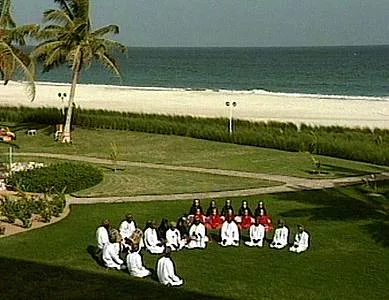
Al-Bar’ah is a Bedouin musical tradition from the Dhofar mountains in southern Oman. It takes the form of a warlike dance performed to drums and the chanting of poetry in a local tribal dialect. Al-Bar’ah is performed in a half circle formed by ten to thirty men and women. As they chant and clap, two male dancers holding ''khanjars'' (daggers) perform codified dance movements, brandishing their daggers above shoulder level. The dancers’ steps are uncomplicated, but coordination with other performers and the music requires considerable skill. Each tribe has its own characteristic form of al-Bar’ah, possessing different drum rhythms and dance movements. The musical accompaniment is provided by the ''al-kasir, al-rahmâni'' and ''ad-daff ''drums and ''al-qassaba'' flute. The dance is performed outdoors, on occasions such as weddings, circumcisions and religious feasts. As for other Omani Bedouin dances, class and other distinctions are erased, as tribal leaders perform alongside the most humble of the population. The tradition represents the chivalric spirit, strength, courage, generosity and hospitality associated with Bedouins. The dance also emphasizes poetic themes of love and flirtation. Al-Bar’ah has many practitioners from Dhofar, who contribute to maintaining and transmitting its poetic variety and practice.
Country
OmanOther heritage elements in Oman
Representative List · Inscribed 2025Arabic KohlRepresentative List · Inscribed 2025Bisht (men's Abaa): skills and practicesRegister of Good Safeguarding Practices · Inscribed 2024Oman Youth Sail Training Ship (Safinat Shabab Oman) programme for peace and sustainable cultural dialogueRepresentative List · Inscribed 2024Arabic coffee, a symbol of generosityRepresentative List · Inscribed 2024Henna: rituals, aesthetic and social practicesRepresentative List · Inscribed 2023Harees dish: know-how, skills and practices
More Representative List elements
Inscribed 2021FjiriInscribed 2013Traditional art of Jamdani weavingInscribed 2017Dolma making and sharing tradition, a marker of cultural identityInscribed 2012Buddhist chanting of Ladakh: recitation of sacred Buddhist texts in the trans-Himalayan Ladakh region, Jammu and Kashmir, IndiaInscribed 2016Oshi Palav, a traditional meal and its social and cultural contexts in TajikistanInscribed 2012Cherry festival in Sefrou
Also inscribed in 2010
- Chhau dance
- Kalbelia folk songs and dances of Rajasthan
- Ritual dramatic art of Ta‘zīye
- Semah, Alevi-Bektaşi ritual
- Mudiyettu, ritual theatre and dance drama of Kerala
- Music of the Bakhshis of Khorasan
Data Source: UNESCO Intangible Cultural Heritage · UNESCO listing