 Representative ListInscribed 2012
Description
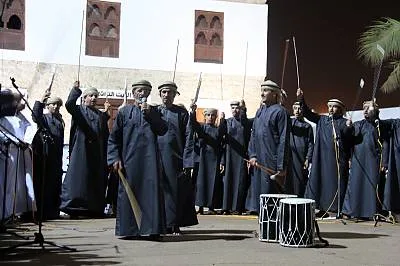
Al ‘azi is a genre of sung poetry performed in the northern regions of the Sultanate of Oman. It constitutes one of the major expressions of Omani cultural and musical identity. It takes the form of a poetry contest punctuated by sword and step movements and poetic exchanges between a singer poet and a choir. It may involve a large number of participants from one village or tribe, guided by the poet who recites improvised and memorized poems in Arabic. The performers must pay attention to his movements and recitation, and respond with appropriate replies and movements. The poems express pride of belonging and may eulogize the tribe, important people or historical moments. Al 'azi enriches the cultural and intellectual side of the community through creative reinvention of existing poems, and plays a great role in conserving society’s oral memory. It also promotes unity and communication and emphasizes the need to overcome disagreements between members of society. Al 'azi is performed at all national and social occasions as an emblem of social pride, strength and unity. At present it is practised by over a hundred ensembles.
Country
OmanOther heritage elements in Oman
Representative List · Inscribed 2025Arabic KohlRepresentative List · Inscribed 2025Bisht (men's Abaa): skills and practicesRegister of Good Safeguarding Practices · Inscribed 2024Oman Youth Sail Training Ship (Safinat Shabab Oman) programme for peace and sustainable cultural dialogueRepresentative List · Inscribed 2024Arabic coffee, a symbol of generosityRepresentative List · Inscribed 2024Henna: rituals, aesthetic and social practicesRepresentative List · Inscribed 2023Harees dish: know-how, skills and practices
More Representative List elements
Inscribed 2008Mevlevi Sema ceremonyInscribed 2010Traditional skills of carpet weaving in FarsInscribed 2025Culture of Sumanak/Sumalak cookingInscribed 2015Epic art of GoroglyInscribed 2025Traditional Saree weaving art of TangailInscribed 2020Charfia fishing in the Kerkennah Islands
Also inscribed in 2012
- Craftsmanship and performance art of the Tar, a long-necked string musical instrument
- Qālišuyān rituals of Mašhad-e Ardehāl in Kāšān
- Cherry festival in Sefrou
- Mesir Macunu festival
- Al-Taghrooda, traditional Bedouin chanted poetry in the United Arab Emirates and the Sultanate of Oman
- Buddhist chanting of Ladakh: recitation of sacred Buddhist texts in the trans-Himalayan Ladakh region, Jammu and Kashmir, India
Data Source: UNESCO Intangible Cultural Heritage · UNESCO listing